
The forgotten few
Five threatened plants of the Kloof area — and how you can help save them
Text Suvarna Parbhoo Photographs As credited
The Kloof suburb is celebrated for its dramatic gorges, thundering waterfalls, and rich forest canopy, but hidden in the cliffs, grasslands, and ravines are plants so rare that scientists know next to nothing about them. Some are found almost nowhere else on Earth. A handful exist in fewer than three locations worldwide. And yet, on the global citizen science platform iNaturalist, each of these extraordinary species has been recorded fewer than ten times in total.
That is where you come in.
This article introduces five threatened plants known to occur in or very near Kloof. For each one, we explain what it looks like, why it is in trouble, and most importantly, how a photograph taken on your morning walk could genuinely advance its conservation. By uploading your observations to iNaturalist and adding them to the RedList (S. Afr) project, you provide SANBI’s Threatened Species Programme with the field data required to reassess these species and keep them from slipping through the cracks.
Drimia flagellaris
Red List status: Rare | Family: Hyacinthaceae
Described as a new species to science only in 2005, Drimia flagellaris was first discovered in the Krantzkloof Gorge and remains restricted to cliff faces within this gorge system. A narrow endemic known from a tiny range of just 30 km², the species is stable largely because its sheer cliff habitat provides natural protection from disturbance.
This bulbous, evergreen plant grows in colonies anchored into cracks in sandstone cliff faces – in both dry and permanently moist conditions, shady and exposed alike. The angular and slightly ridged bulbs sit above the rock surface, with loosely overlapping green or reddish outer scales, and produce up to five long, slender, cylindrical leaves that hang vertically like ropes of green cord, sometimes reaching 80 cm or more. From late winter through spring (July to October), the bulbs send up tall flowering stems carrying up to 90 small white flowers, each with a faint green or brown stripe along the centre. Uniquely, the flowering stem remains green and continues to photosynthesise even after the seeds have been shed. The fruits release masses of slender, elongated black seeds.
Where to look: Rocky cliff faces in Krantzkloof Nature Reserve, particularly on south- or south-east-facing outcrops.
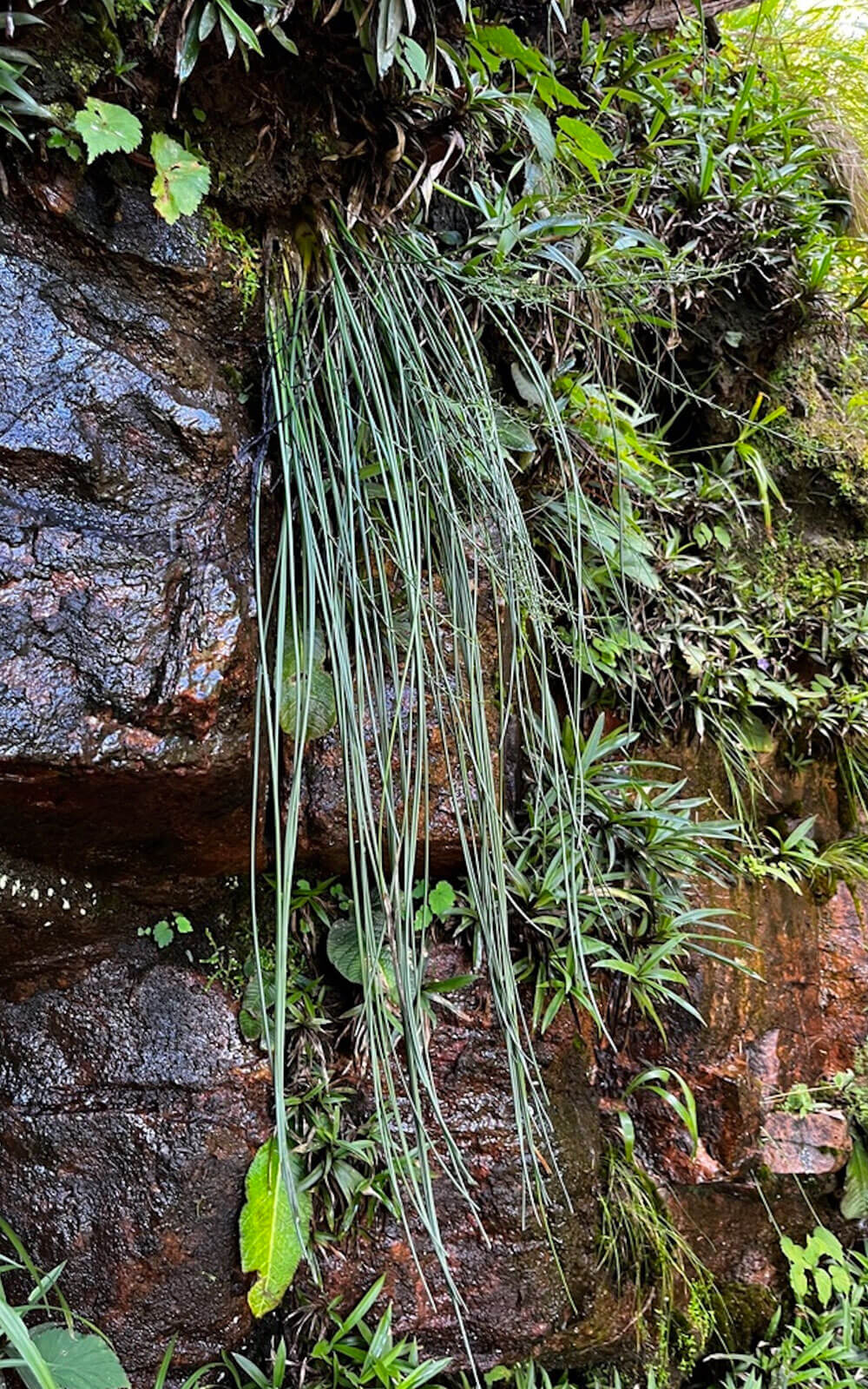
Drimia flagellaris
Photo: James Halle
Geranium ornithopodioides
Red List status: Endangered | Family: Geraniaceae
G. ornithopodioides is a delicate, many-stemmed herb that scrambles through other vegetation on forest margins or forms soft tangles along shaded, sandstone-bedded streams at elevations of roughly 300–700 m. Its stems and leaf stalks are covered in long, fine, spreading hairs – a feature that immediately distinguishes it from its close relative G. flanaganii, with which it grows side by side along the Molweni River. What sets it apart most strikingly are its large, deeply lobed leaves, where the stalk attaches to the centre of the blade rather than the edge, like an umbrella – a feature found in no other southern African geranium. The flowers are a soft pink.
It is known from only two to three locations in KwaZulu-Natal: the Molweni River Valley, with one population protected within Krantzkloof Nature Reserve and another in the unprotected valley outside, and a more southerly site near Ixopo where it was collected in 2015. That southern record is encouraging as the species may yet occur in suitable scarp forest habitat anywhere between Kloof and Ixopo in gorges and ravines that have never been properly surveyed. The unprotected Molweni populations face ongoing pressure from urban expansion and dense alien plant infestations along the river corridor, and the species population trend is decreasing.
Where to look: Forest margins and stream banks in the Molweni River Valley and within Krantzkloof Nature Reserve.
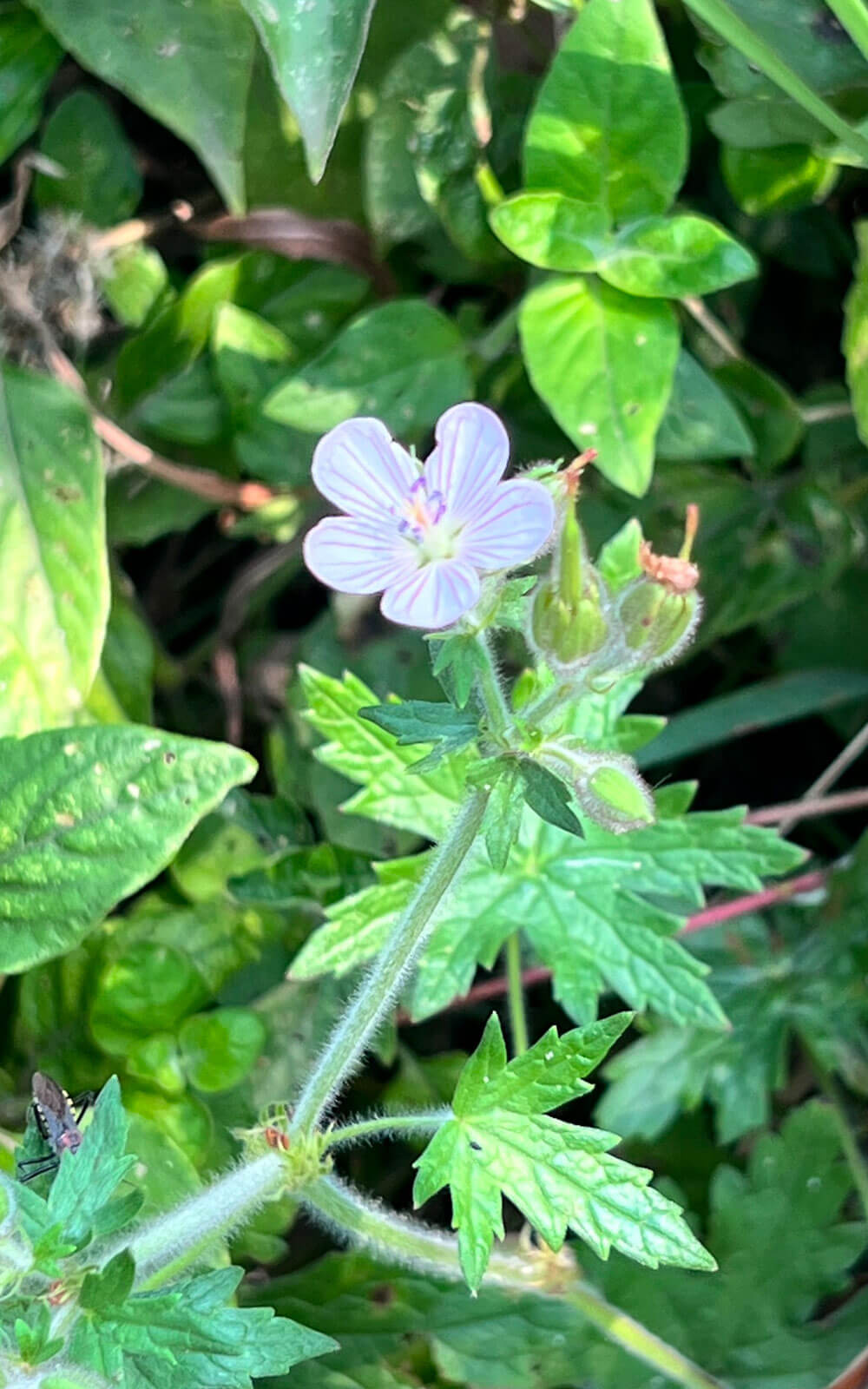
Geranium ornithopodioides
Photo: Paolo Candotti
Gerrardanthus tomentosus
Red List status: Vulnerable | Family: Cucurbitaceae
Hidden among boulders in the steep, wooded sandstone ravines around Durban is one of the rarest members of the cucumber family in South Africa – a robust climber with a dramatic swollen woody stem base, known to science since 1874 but almost invisible to observers. Confined to coastal forest at 100–400 m within the greater Durban region (including Inanda, Umbumbulu, and the steep wooded ravines of our Outer West) G. tomentosus is known from just five sites, with fewer than 1,000 mature individuals estimated in total. Thankfully this species is protected within Krantzkloof Nature Reserve.
What makes this creeper so visually striking is its large, gnarled stem base – woody, grey, and sitting camouflaged at the soil surface among boulders and screes, blending seamlessly with the surrounding stone. Field notes from a 2000 survey record stem bases up to 95 cm in diameter in mature plants — roughly the size of a large car tyre. From this base, the vine climbs trees and shrubs to 15 m, sending out dark green, kidney-shaped leaves that are strongly lobed and densely hairy on the undersides, with long, twisting tendrils. Small, brownish, star-shaped flowers appear from January to March.
First collected at Inanda by John Medley Wood in 1874, the species even has a Kloof Conservancy Fact Sheet dedicated to it (factsheet #10). Its inaccessible ravine habitat has, to a degree, shielded it from urban development, but firewood harvesting in at least one site is gradually altering the habitat structure, and alien plant invasion is a concern at another. Porcupines are known to eat the stem bases.
Where to look: Shaded, rocky ravines with boulders and screes in steep, wooded sandstone kloofs at lower elevations.
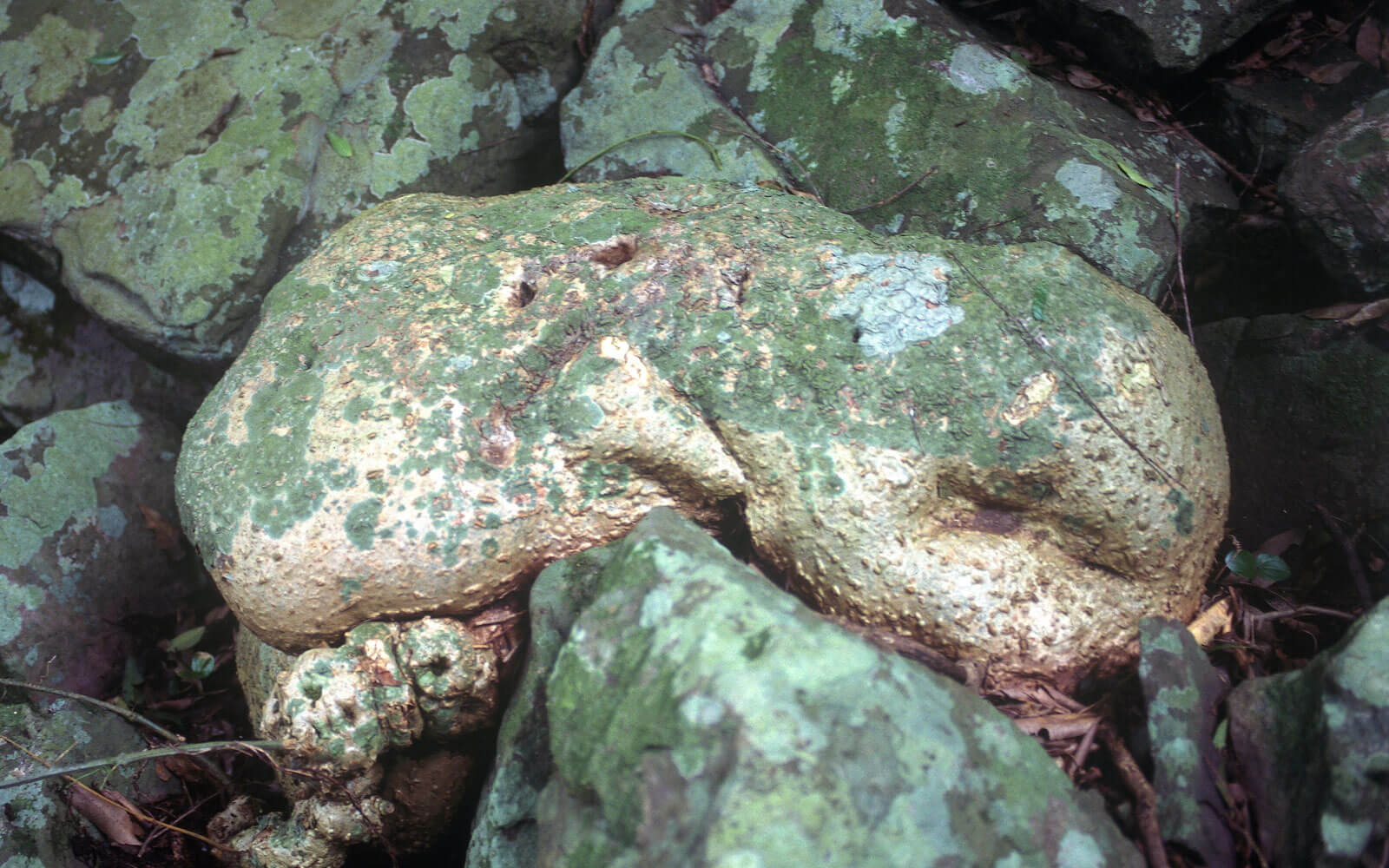
Gerrardanthus tomentosus
Photo: Neil Crouch
Helichrysum woodii
Red List status: Rare | Family: Asteraceae
H. woodii is one of only twelve plant species considered endemic diagnostic taxa of the KwaZulu-Natal Sandstone Sourveld, a threatened grassland vegetation type that is listed as Endangered. This makes it not merely a rare plant, but an indicator species for one of the most imperilled habitat types in KwaZulu-Natal.
It is a small, well-branched shrublet reaching about 300 mm in height, its stems clothed in greyish-white woolly hair and densely packed with rounded, oval-shaped leaves which are thinly woolly on top and thickly white-woolly below. In mid-winter (July), the branch tips carry compact, rounded clusters of pale straw-yellow flowerheads, modest but easily spotted against grey rock. Its range spans the south-facing Natal Group sandstone cliffs at 600–900 m. The species sheltered cliff habitat provides a degree of natural protection from the urban expansion, alien plant invasion, and agricultural transformation that affect the surrounding landscape. However H. woodii remains poorly recorded with just six herbarium records in total (the oldest gathered by John Medley Wood in 1889) and fewer than three research-grade observations exist on iNaturalist. For a species flowering reliably every July, that is a remarkable gap in the record.
Where to look: South-facing sandstone cliff faces at higher elevations in the Kloof/Gillitts/Hillcrest hinterland, in mid-winter when the pale yellow flowerheads are visible.
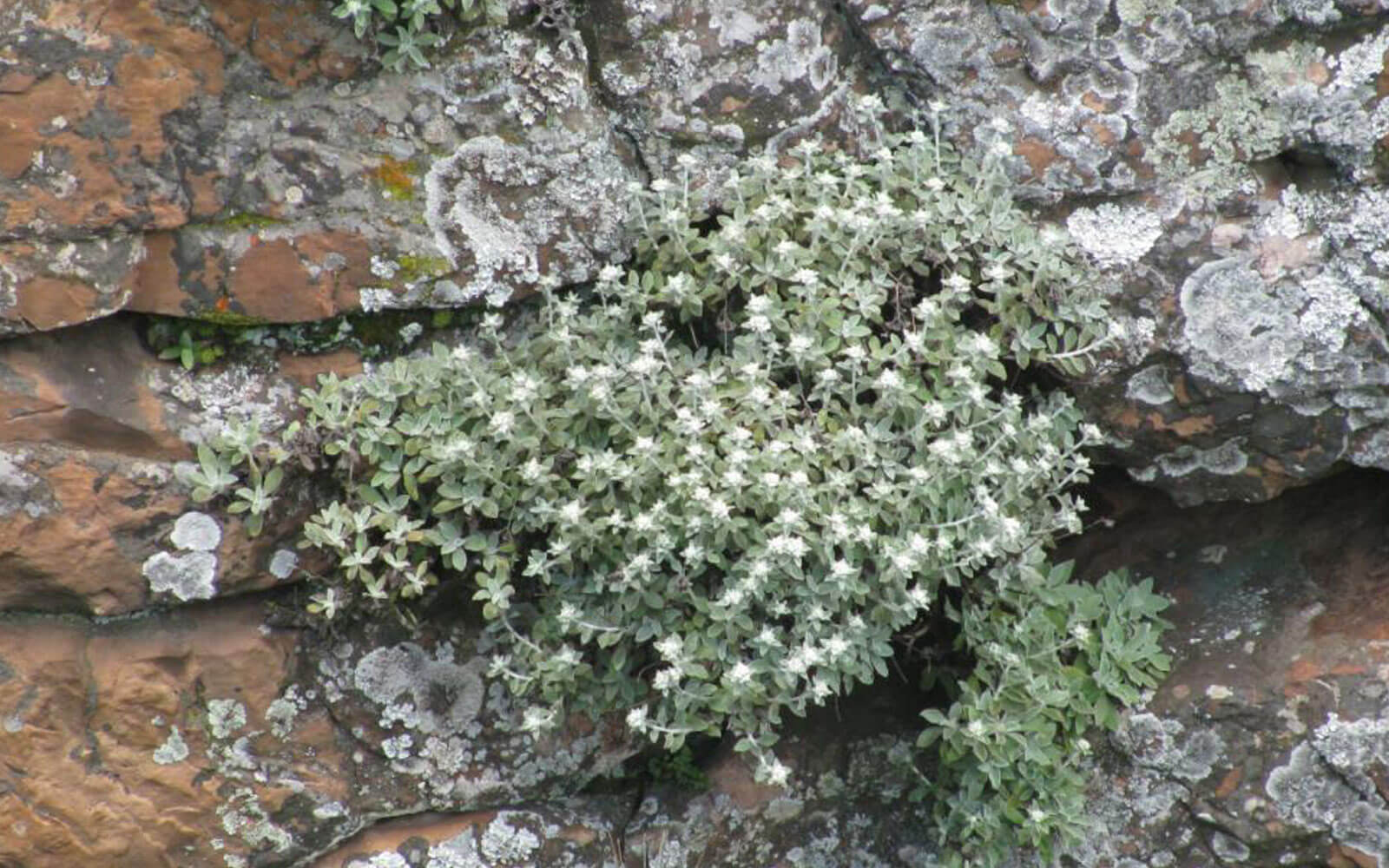
Helichrysum woodii
Photo: Alison Young
Sisyranthus anceps
Red List status: Rare | Family: Apocynaceae
Sisyranthus is a small, little-known genus of Southern African climbers in the Milkweed family, and Sisyranthus anceps is among its most poorly documented members — with fewer than three observations recorded globally on iNaturalist to date. The genus name refers to a group of slender-stemmed plants that are easily overlooked against dense shrub or forest-edge vegetation, which may partly explain why so little is known about many of its species. Its species name, anceps, means “two-edged,” referring to the distinctly flattened, two-angled stems that are one of its most reliable identification features. Growing to about 50 cm tall, it produces very narrow, almost grass-like leaves, and small, tight clusters of bell-shaped flowers at the top of the stem in November and December, with densely hairy throats characteristic of the milkweed family to which it belongs.
The plant was known from a single specimen collected at Inanda by John Medley Wood in 1880, and remained virtually unknown for over a century. Since 2010, four subpopulations have been found, (including one below Sherwood Drive in Kloof, directly above Krantzkloof Nature Reserve, and another off Ashley Drive in Hillcrest) but all are confined to tiny grassland fragments within urban areas. Two of these consist of fewer than 50 individual plants. Its historical range of 98 km² has contracted to just 11 km², and continues to shrink. The threats are those facing grassland everywhere in the Outer West: urban development consuming the last open patches, a lack of fire allowing bush encroachment, and alien invasive plants choking what little remains.
This is precisely the kind of species where a single photograph by a Conservancy member walking their local grassland patch could be genuinely significant, any new population found would represent a meaningful contribution to what is known about this plant’s survival.
Where to look: Forest margins, scrubby grassland edges, and disturbed natural vegetation in the broader Kloof, Hillcrest, Inanda and Pinetown areas.
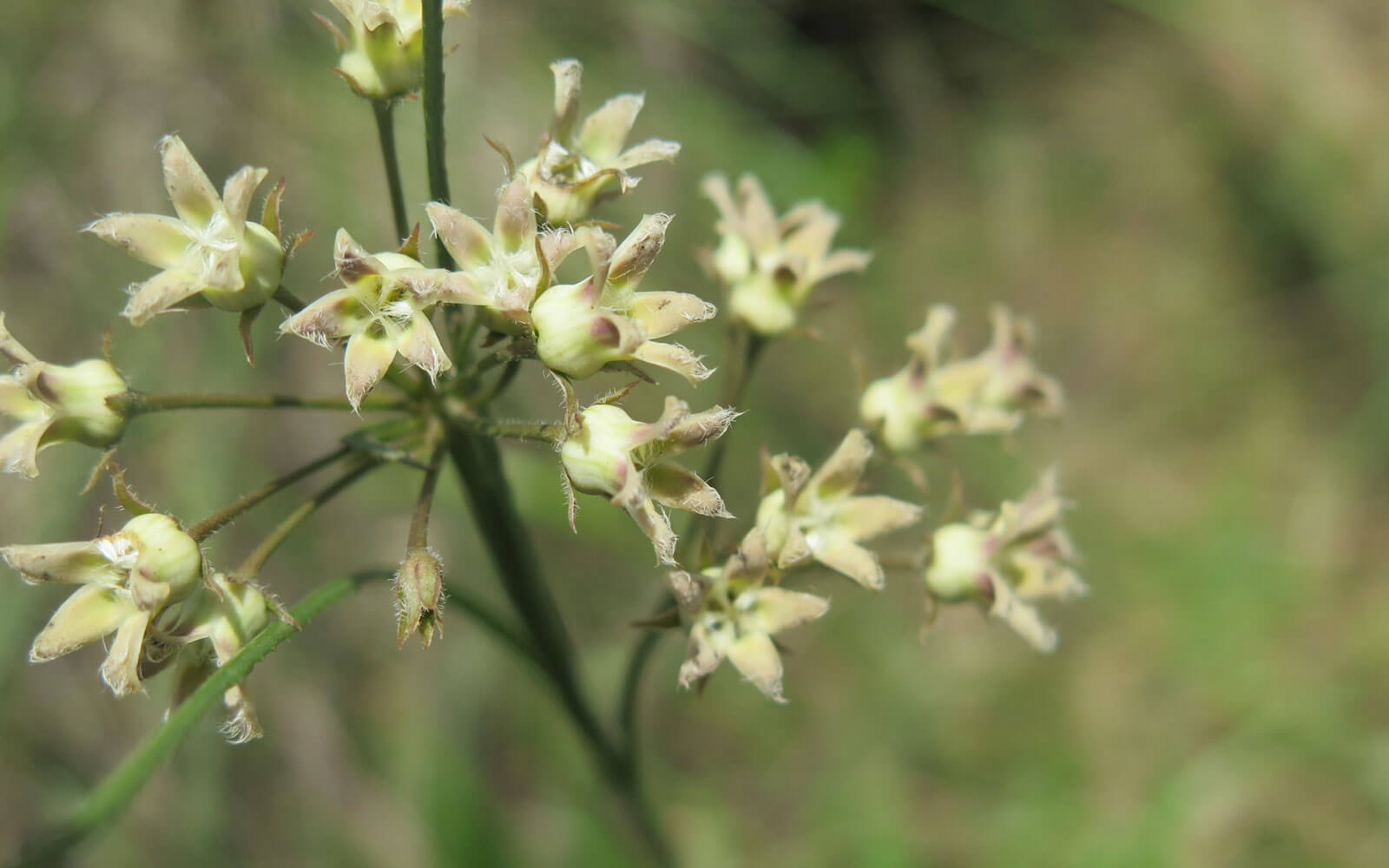
Sisyranthus anceps
Photo: Hlengiwe Mtshali
How you can help: recording these plants on iNaturalist
Every observation you upload matters. Here is a simple step-by-step guide to making your sightings count for conservation.
Step 1: Download iNaturalist
Download the free iNaturalist app on your smartphone (iOS or Android), or visit www.inaturalist.org on your computer. Create a free account.
Step 2: Photograph and upload
When you spot one of these species, take as many photographs as possible, including:
- The whole plant in its habitat
- A close-up of the leaves (both top and underside if possible)
- Flowers or fruit if present
- The stem or any distinctive features (e.g. the caudex of Gerrardanthus, the hanging leaves of Drimia)
Upload the photos to iNaturalist, pin the location accurately, and submit your identification. The iNaturalist community, including expert botanists, will help confirm your ID.
Step 3: Add the observation to the RedList (S. Afr) Project
This is the step that transforms a simple photograph into genuine Red List data. Once your observation is uploaded:
1. Join the project by visiting inaturalist.org/projects/redlist-s-afr and clicking Join.
2. Add your observation to the project — either when uploading (type “redlist” in the Projects box) or afterwards by visiting your observation’s page and adding the project there.
3. Fill in the two project fields that appear:
– Population Size & Extent — how many plants did you see, and over roughly what area?
– Population Threats — what threats did you observe at the site? (e.g. alien invasive plants nearby, signs of construction, evidence of fire)
These two fields are what SANBI’s Red List scientists need to update the Red List. Even a rough estimate is far more useful than nothing.
Step 4: Join the South African Red List Plants and Animals Project
This project automatically flags your observations for you. Once you’re a member, any time you record a plant (or one of a select few animal taxa) of conservation concern, you’ll be notified — helping you know which of your sightings matter most for the Red List.
Why it matters
South Africa was the first megadiverse country in the world to assess the conservation status of its entire flora, a remarkable achievement. But Red List assessments are only as good as the field data behind them. Taxa may have had their status assessed decades ago, based on a handful of herbarium specimens. New, georeferenced observations from citizen scientists can trigger reassessments, alert conservation planners to previously unknown populations, and provide the evidence needed to motivate for the protection of critical sites.
The Kloof area sits in the heart of the Maputaland-Pondoland-Albany Biodiversity Hotspot, one of the most species-rich and most threatened in the world. As a Conservancy member, you are the eyes on the ground. The gorges, grasslands, and forest fringes on your doorstep may harbour plants that exist nowhere else. All it takes is a walk, a photograph, and five minutes on iNaturalist.
To explore more threatened plants of the Outer West, visit kloofconservancy.org.za/rare-and-endangered-plants. To join the CREW (Custodians of Rare and Endangered Wildflowers) citizen science programme, contact crew@sanbi.org.za.
About the author
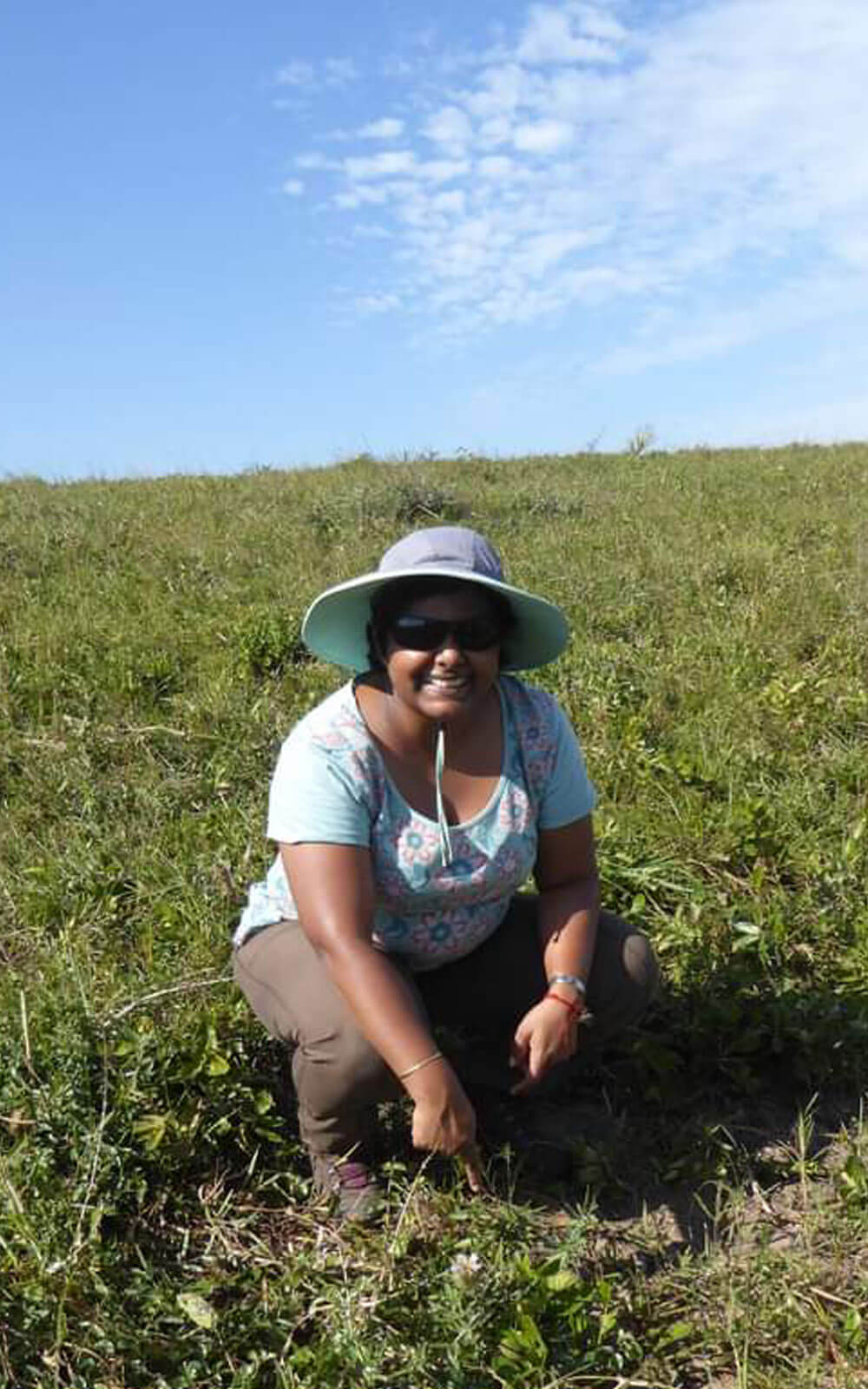
Suvarna Parbhoo Mohan joined the Custodians of Rare and Endangered Wildflowers (CREW) citizen science programme at the South African National Biodiversity Institute (SANBI) in 2006, a journey that has spanned twenty years and seen her progress to leading the programme today. As iNaturalist’s southern African coordinator, she curates South Africa’s threatened plant taxonomy on the platform and coordinates citizen science initiatives including the City Nature Challenge and Great Southern Bioblitz. Closer to home, she serves as Chairperson of the Botanical Society KZN Coastal Branch.