
What do we do about our invasive or exotic reptile species
Text and photographs Pat McKrill
If they’re not indigenous, they can become a problem.
Most readers who have an interest in the subject of our environmental health, might recall some of the more famous, deliberately or unwittingly, introduced environmental problems somewhere in the world, caused when man introduced alien species into regions, countries, continents etc. where they do not belong. A number of factors could be fed into the animal aspect in this article on alien incursions, and there are many examples from the past, of what can eventuate as a result of poor planning or ignorance when this takes place. Three of them stick in my mind:
- The introduction of the South American Cane Toad (Rhinella marina) into Australia in 1935. The intention was to introduce a known predatorial frog from another country, to control the local ‘cane beetles’ that were giving the cane farmers plenty of grief. Instead of solving the problem, it created a major – even bigger problem – that continues to plague Australia to this day.
- The Brown Tree snake (Boiga irregularis) from Australia, seems to have been accidentally introduced into Guam in the Pacific region, via American troop carrier vessels working in the area during WW2. It settled in, adapted, and its liking for the local food sources has allowed it to breed copiously and wreak havoc on the indigenous birdlife and other animals on the Island.
- The release of unwanted ‘pet’ snakes into the Florida Everglades. An historical problem that was allowed to linger to the point where it has become extremely difficult to control or eliminate. A number of the introduced exotic species have become acclimatised to the environment and the food it has to offer. It was assumed that many of the original invasives were dumped pets – mainly the larger species of snake – which had grown larger than the owners had anticipated, and were released into the wilder areas they’ve now taken over – to the detriment or worse, of the indigenous inhabitants.
Similar scenarios could certainly take place anywhere else in the world, where alien imports purchased locally, become a problem for the purchaser, and get surreptitiously ‘relocated’ into the nearest unoccupied piece of land, in the hope that they wouldn’t be noticed. Here in South Africa, there are occasional reports of ‘lost pet snakes’ on social media, and what could stop us from having a similar problem if we are not careful? How many South Africans could tell the difference between an alien species – if they encountered one – and one of our 170 odd, indigenous species?
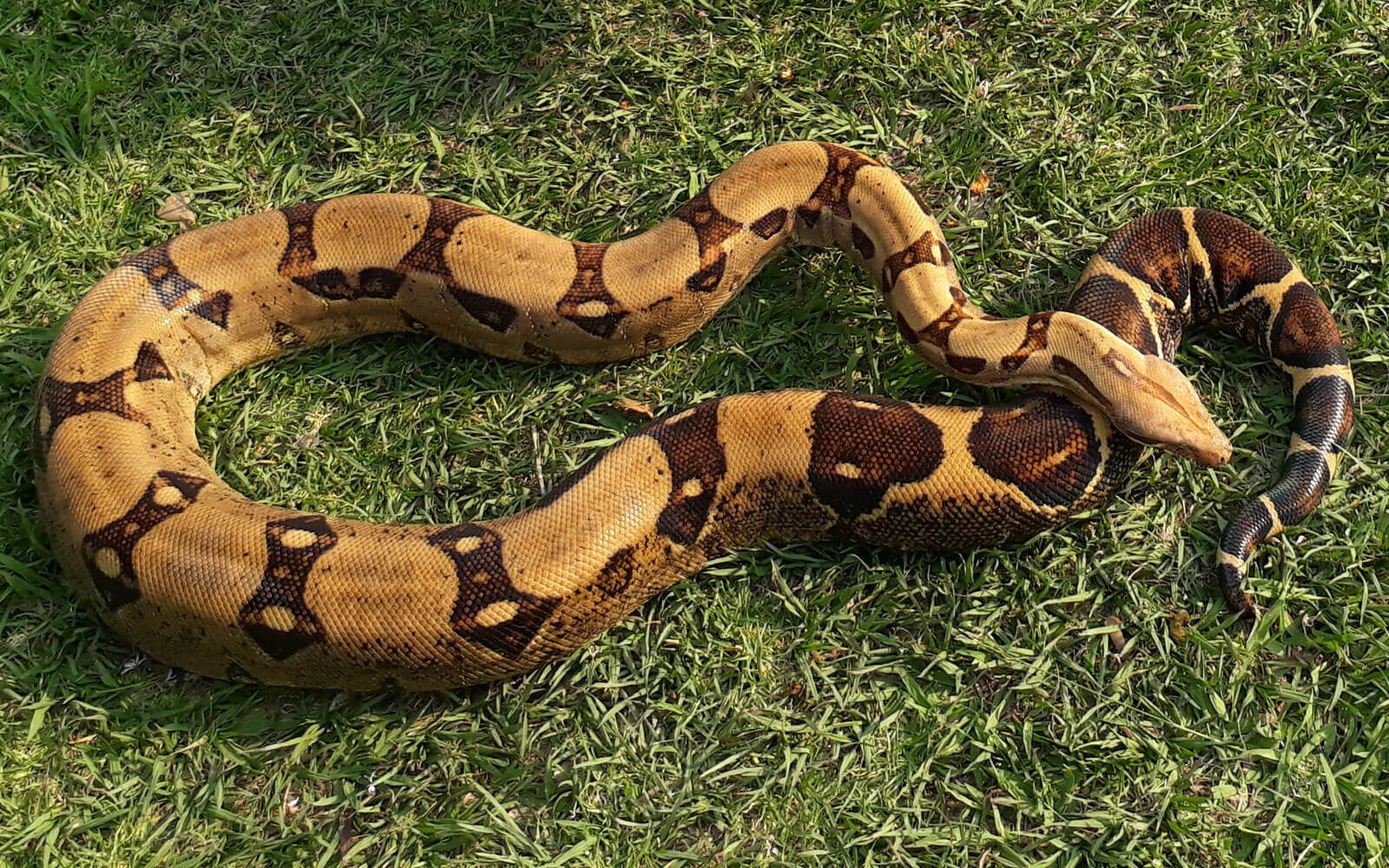
An alien Boa, in excess of 5 metres, would eat the same sized prey as our indigenous Southern African python
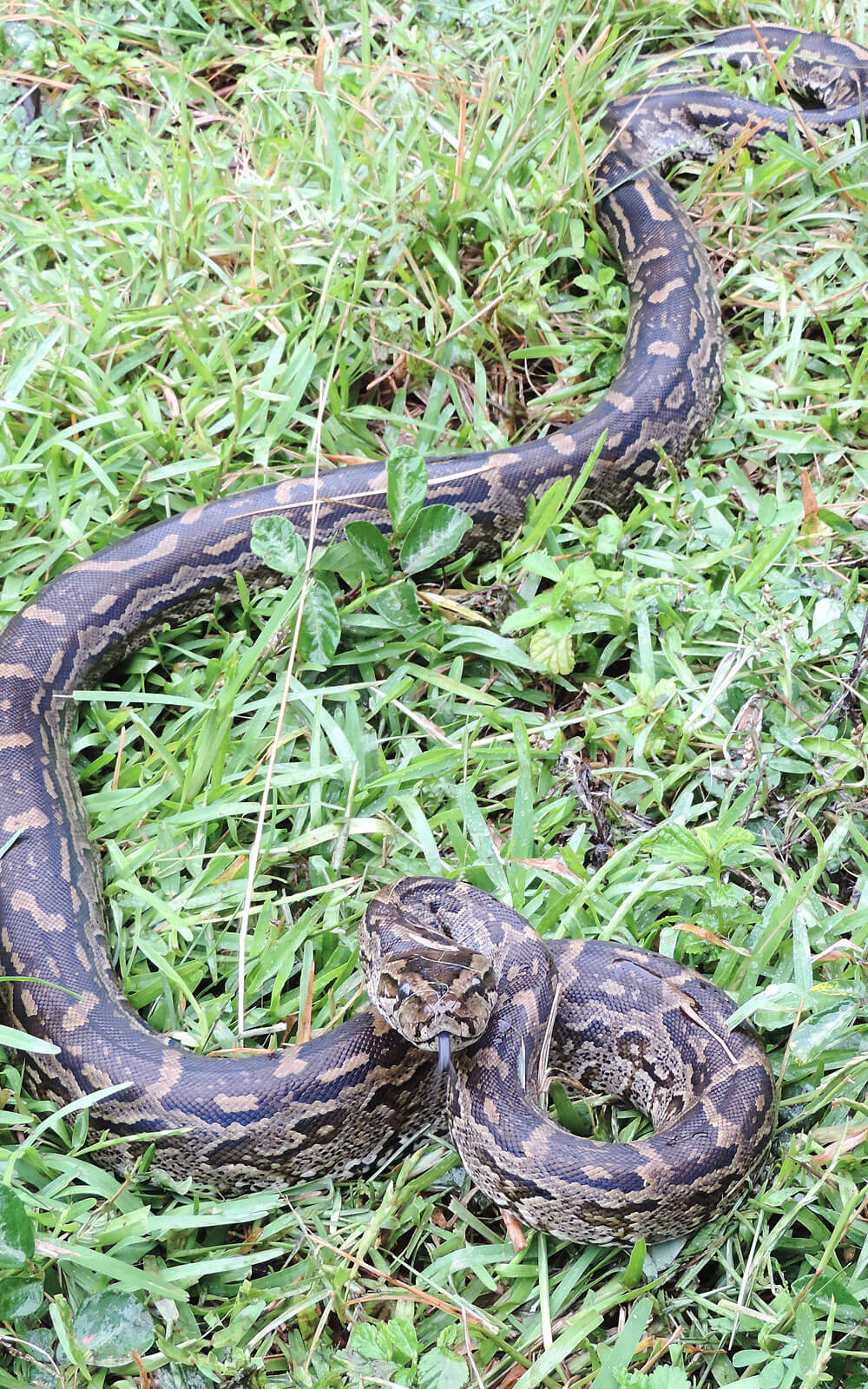
The indigenous Southern African python is an ambush feeder that grows up to about 5 m. It is a Protected species
The dangers posed by ignoring invasive aliens.
Fairly often, on reading historical publications on any environmental subject and comparing it with the current reality and updated research information, we’ll find numerous changes and updates on the various subjects. Until new facts are unearthed, we’ll continue to base most of our thinking on the previously held assumptions and suppositions, until a new discovery comes along to correct and updates the information. Until then, or until we start asking questions, as in any other country, there’s a chance that we could be welcoming aliens into our environments without actually knowing we’re doing it.
Reptiles, particularly snakes, are a case in point, and not so far back in the time zone, they were not generally seriously studied and researched as were many other interesting creatures. A lot of what was published when I was growing up – through the 50s onwards into the early 70s, often recounted those chilling, sometimes apocryphal, encounters with snakes in the wild, including many close shaves and escapes it seems. There were many erroneous identifications for various reasons, merely muddying the waters of ‘what lives where’, but as our awareness and understanding of the animal continues to grow, we can reach the point of understanding and disseminating the truth, not the horror stories. This will help us to determine what’s indigenous and what’s not, thereby reducing potential environmental damage.
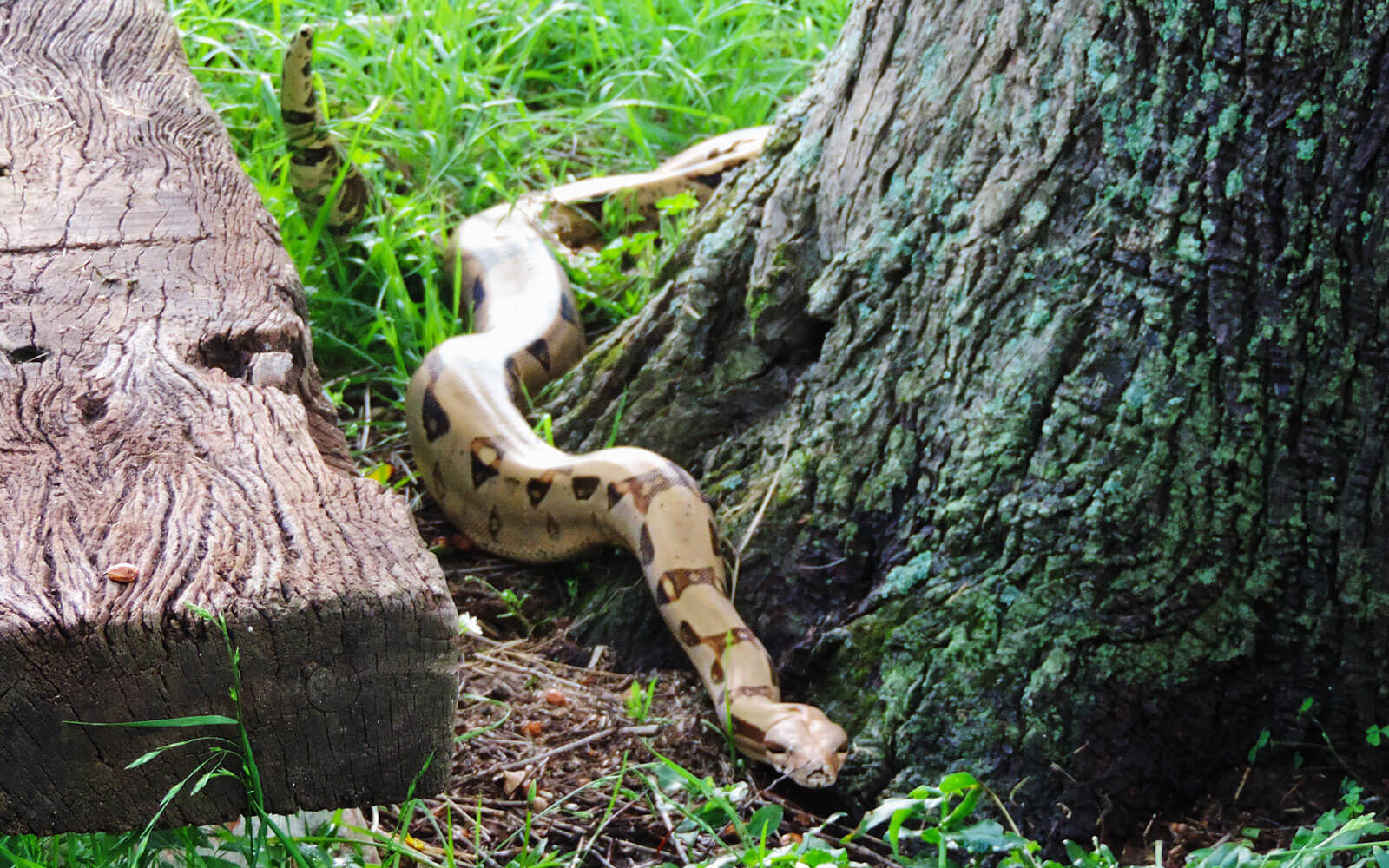
This alien Boa, could be confused with our Python.
Our snakes, as with many other species – lead part or most of their lives secretively, and this will continue. If we are observant enough to discover alien species living in our country, we’d need to know a number of things about them, and act accordingly before they become firmly established, and contribute to the destruction of our eco systems.
I always tell people I’m talking to or teaching about snake behaviour, that “a snake is a snake” no matter where it lives, and that refers to the way snakes carry on with their lives, and what they do to survive, no matter where they live. It’s all about their behaviour as a predatory animal, not about the different species types, colours and patterns, whether venomous or not, the countries they each inhabit or the food they eat. Those are very different aspects because there will undoubtedly be major differences in food sources in each country, and what ‘weaponry’ teeth, venom etc. is required to immobilise their prey.
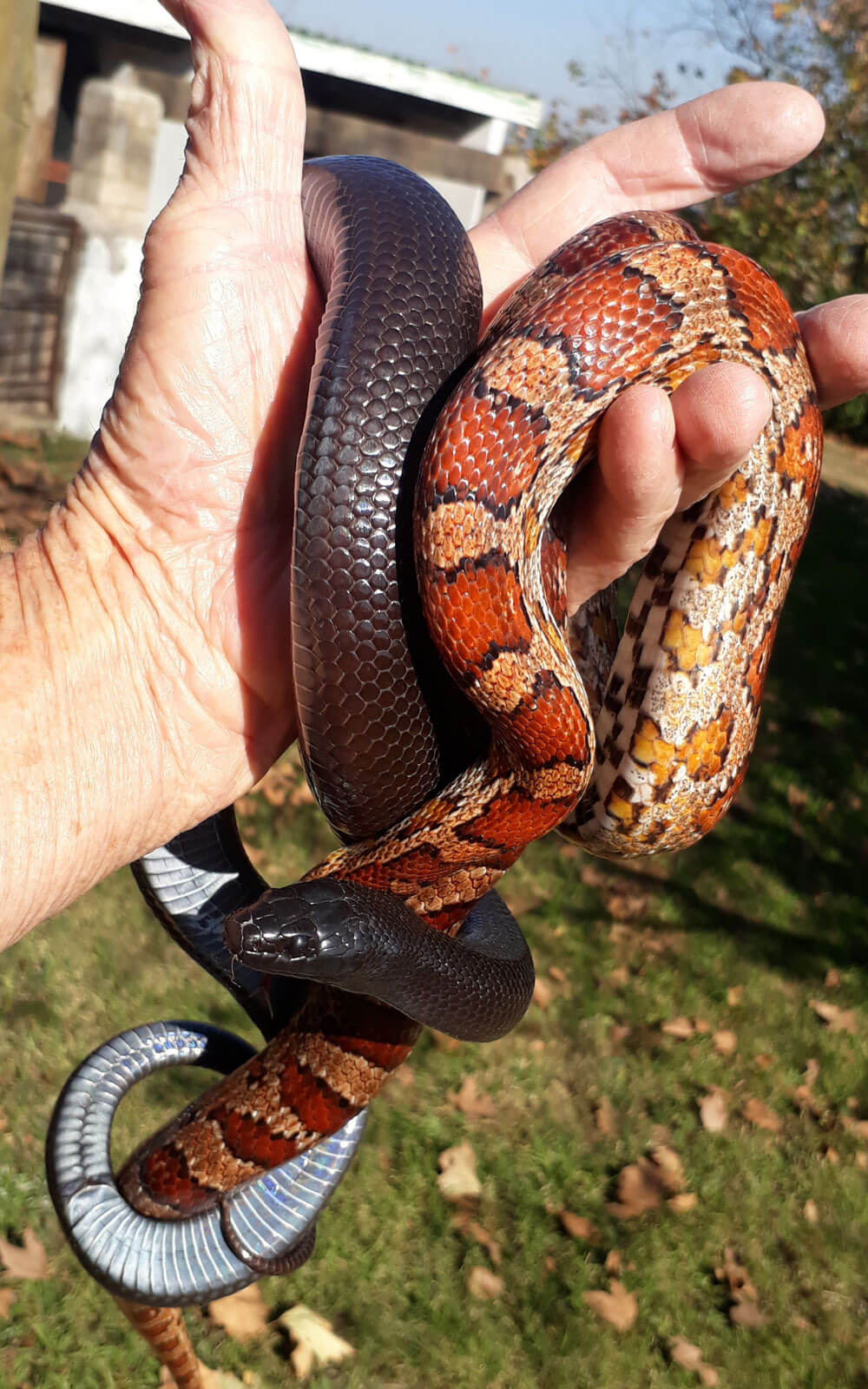
Alien Mexican Black snake and a Corn snake. Readily available at Pet Shops. These species compete with our constrictors for food.
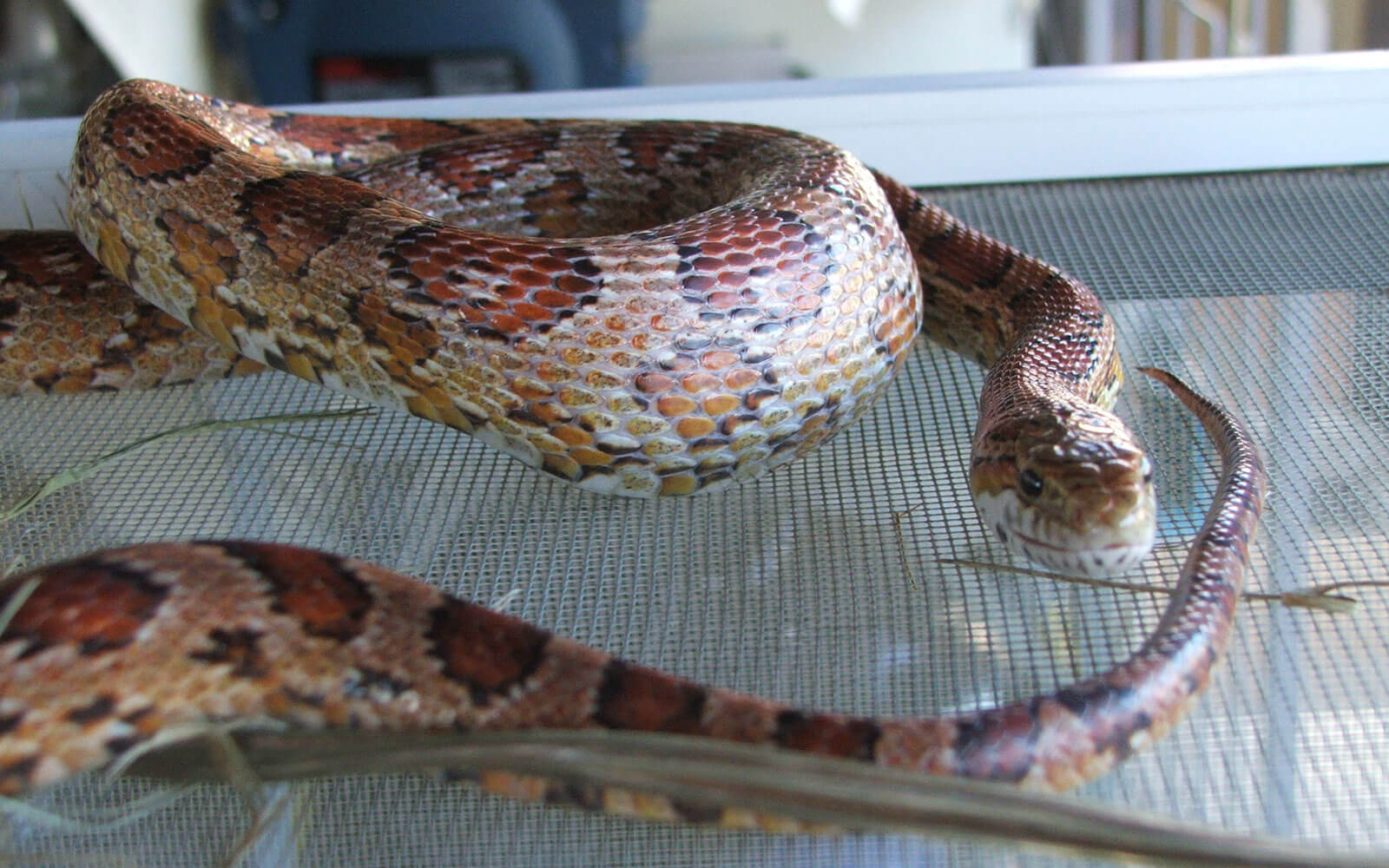
The alien Corn snake is a rodent eating species
It’s time for us to learn about, and teach others about, saving our environment.
It would do South Africans no harm to read up on some of the known alien species of snakes that have been discovered/introduced in the country and find out what we can do to help eliminate the threats. Social media and websites dealing with South African species identifications can be useful when we’re obtaining information on your findings in the wild, just remember to fact check.
When it comes to snakes, there’s a growing tendency to take up the breeding of alien species – mainly the more spectacular Boas and other Python species from other countries – and selling them into the open pet market. Not a bad business when your female Boa mates with the male you already own, and produces multiple babies that can fetch in excess of R1000 each in the open market. This is only part of the problem. That comes later, when either the breeder cannot find enough buyers for the excess stock, or the purchasers ultimately decide to release their grown snakes into the veld, once they’ve outgrown the pet snake fad. Another common problem is when the pet snake escapes from the not-so-snakeproof cage and finds a similar species mate.
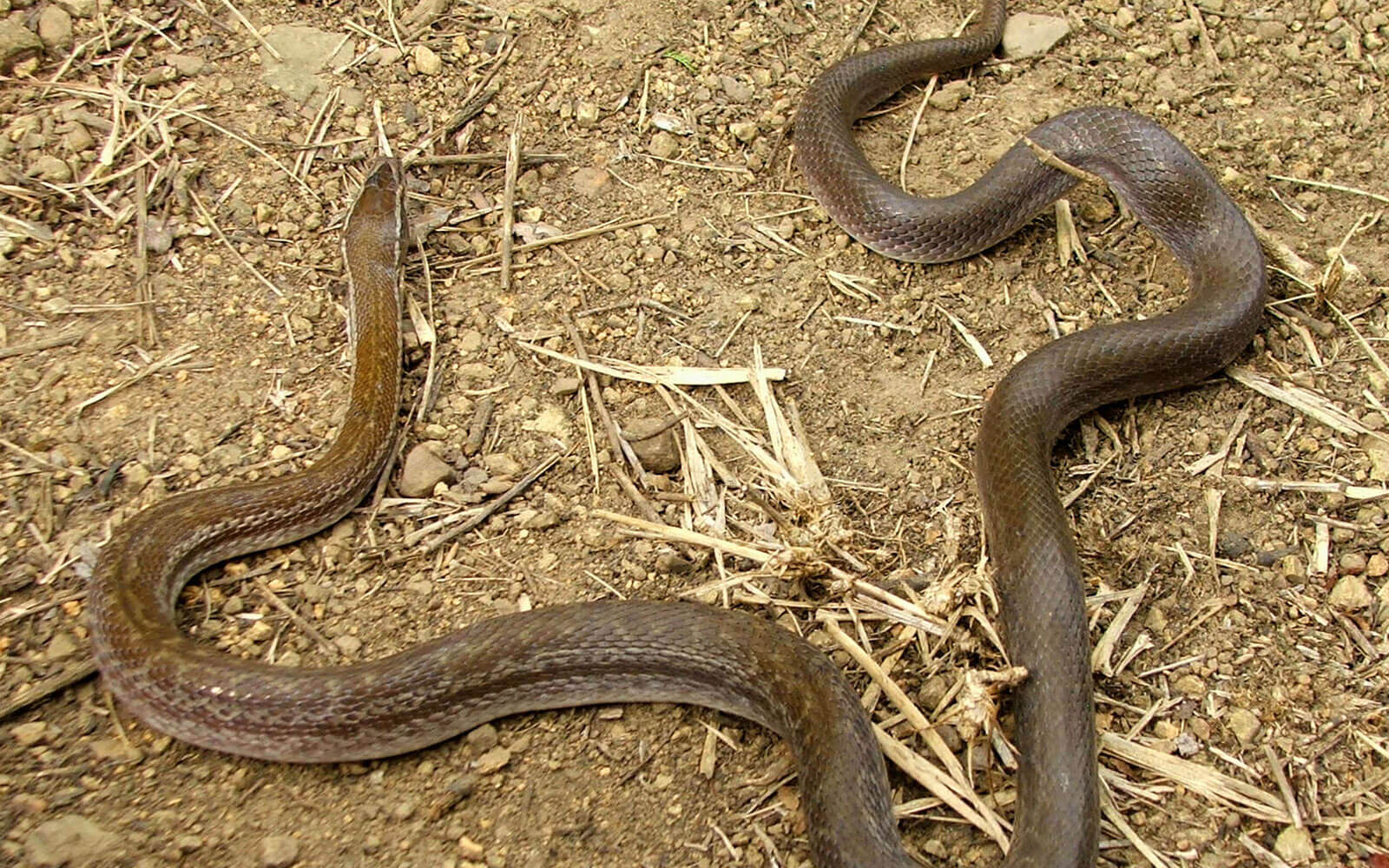
The Indigenous Brown house snake is a constrictor that primarily eats rodents. An extremely valuable species which helps keep the ecosystem in balance
We mustn’t forget that many animals can, and do, communicate over huge distances, without having to physically bump into each other. Once they’ve connected, they’ll find a way to meet up.
I mentioned my fear of the replication of the Florida Everglades situation, and I feel there is a need for us to be on our guard. I am not aware of any potential alien invasive snake species in our country or for that matter, any of the countries close to us – Zambia, Zimbabwe, Namibia or Malawi – where I still visit and work. But as our populations grow and ‘fads’ come and grow with them, there’s an increasing likelihood…..
Once introduced – accidentally or otherwise – into our wild areas and having adapted to our environmental conditions, we could very soon become another Florida Everglades Environmental Fiasco.
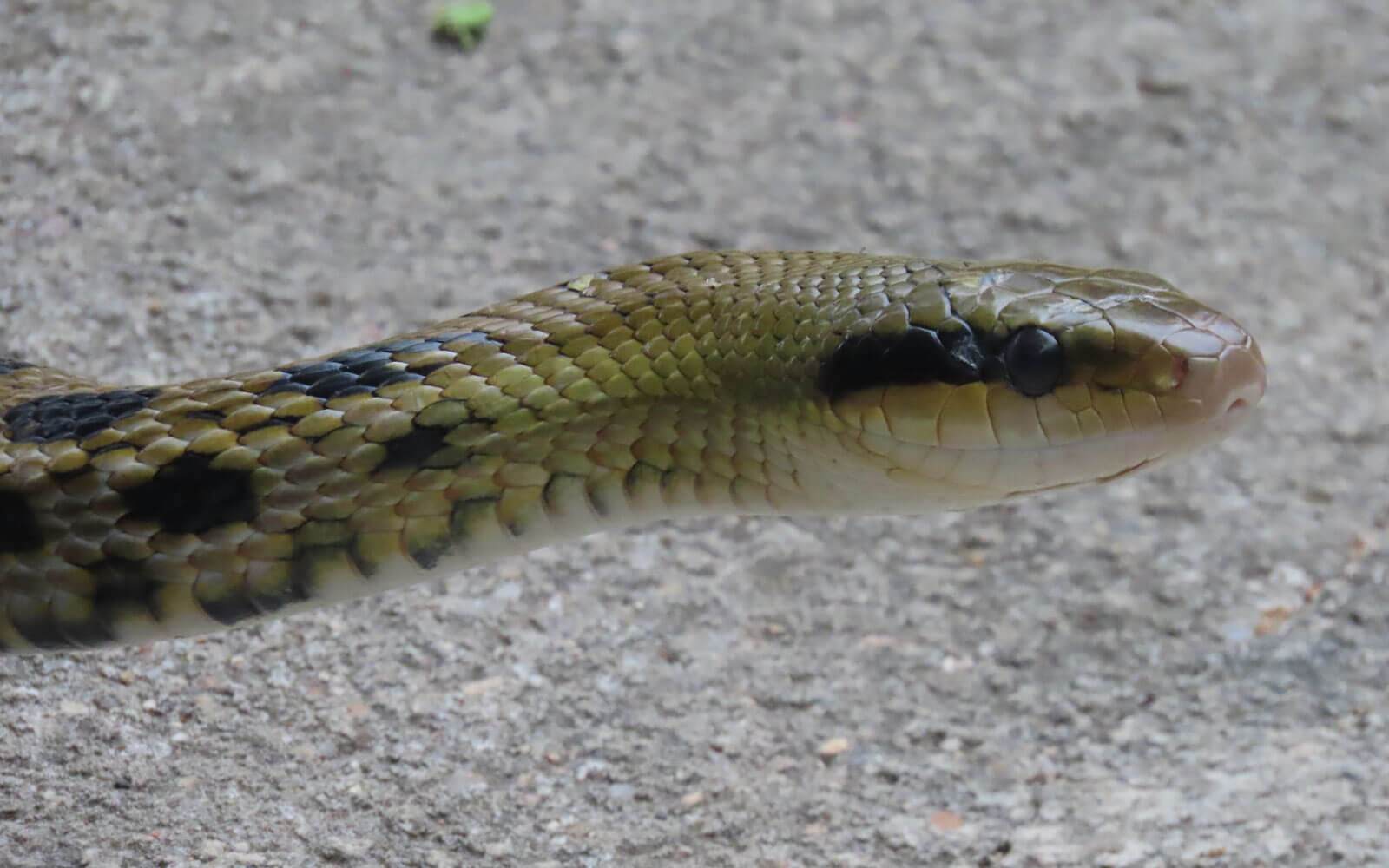
The alien Taiwanese Rat snake grows to about 2.6m long. This species would compete with our rodent eaters
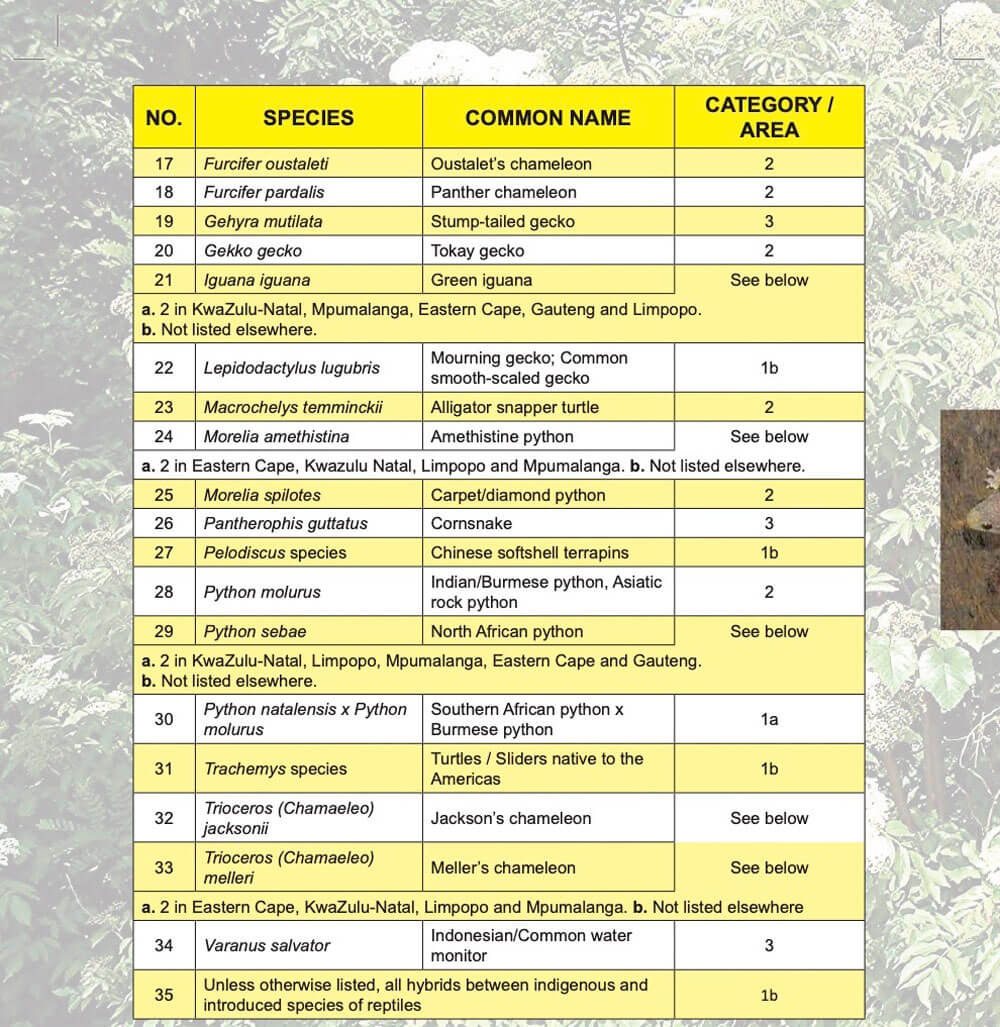
NEMBA list of invasive reptile species
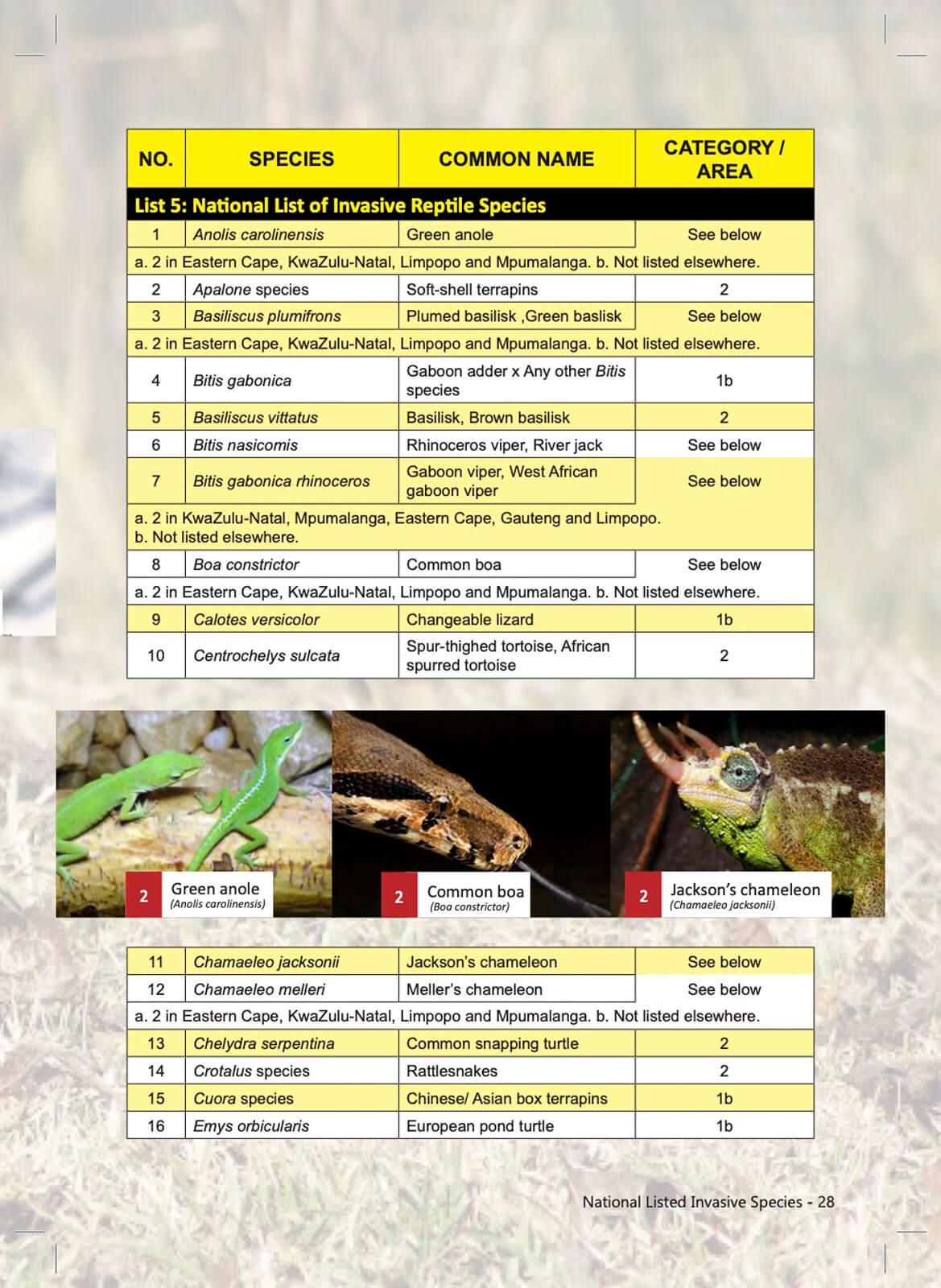

About the author
Pat was born in the UK, educated and brought up in Rhodesia/Zimbabwe, and came to South Africa in 1983. He developed an early interest in the study of the behavioural aspects of insects and animals, rather than the deeper scientific side, and he’s worked with snakes for most of his life. Pat conducts educational walks and talks throughout SA and into neighbouring countries where snakes are grossly misunderstood and needlessly killed. He writes articles for a number of publications, and has written the book ‘Getting to Know the Neighbours’, which is all about understanding snake behaviour and is aimed at teaching others how to come to terms with them.
Pat can be contacted at: herpet@patmckrill.co.za