
Gardening for wildlife
Pig's ears
Text and photographs Charles and Julia Botha or as credited
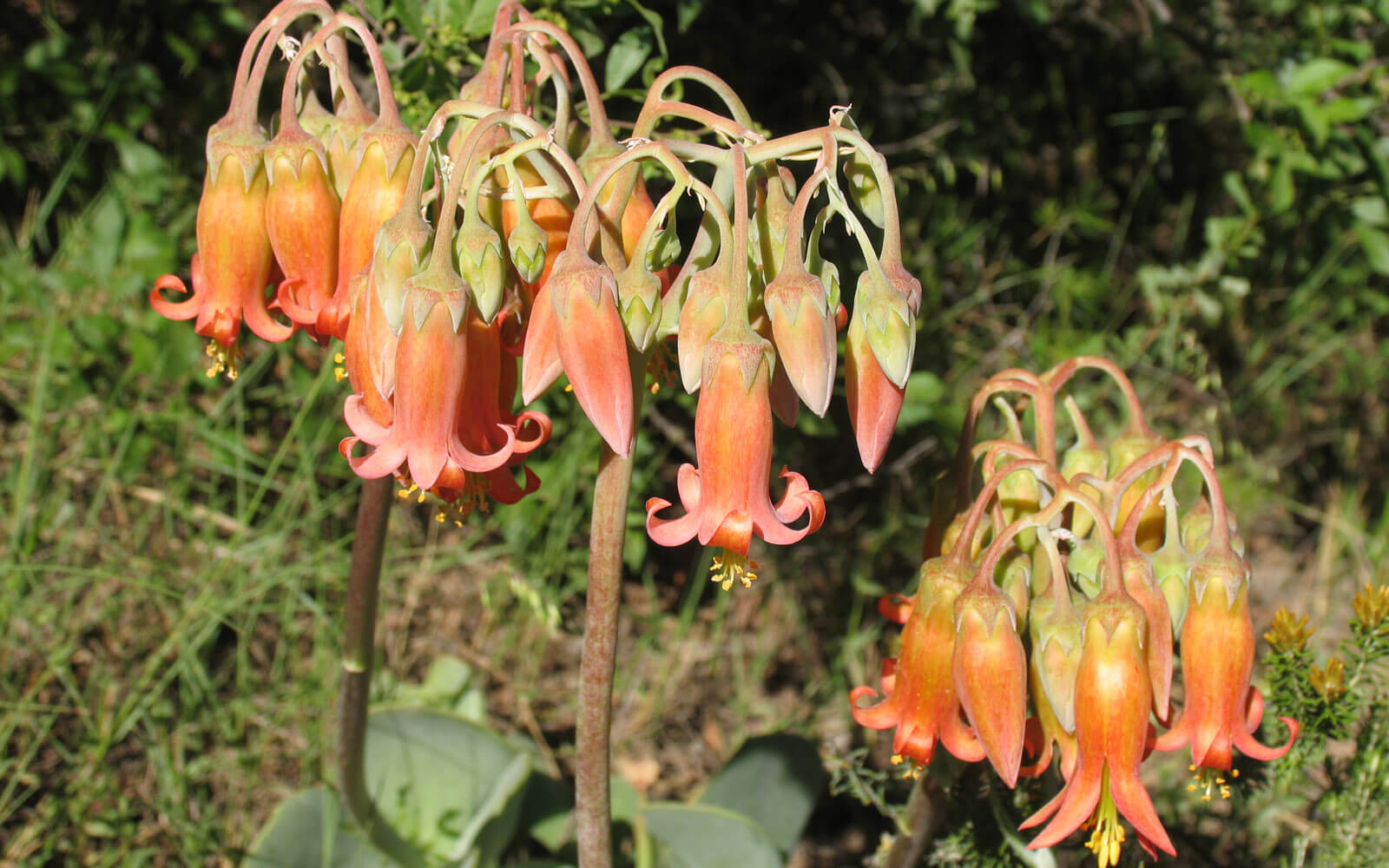
The most frequently seen variety of Cotyledon orbiculata.
Photograph: C Dalzell
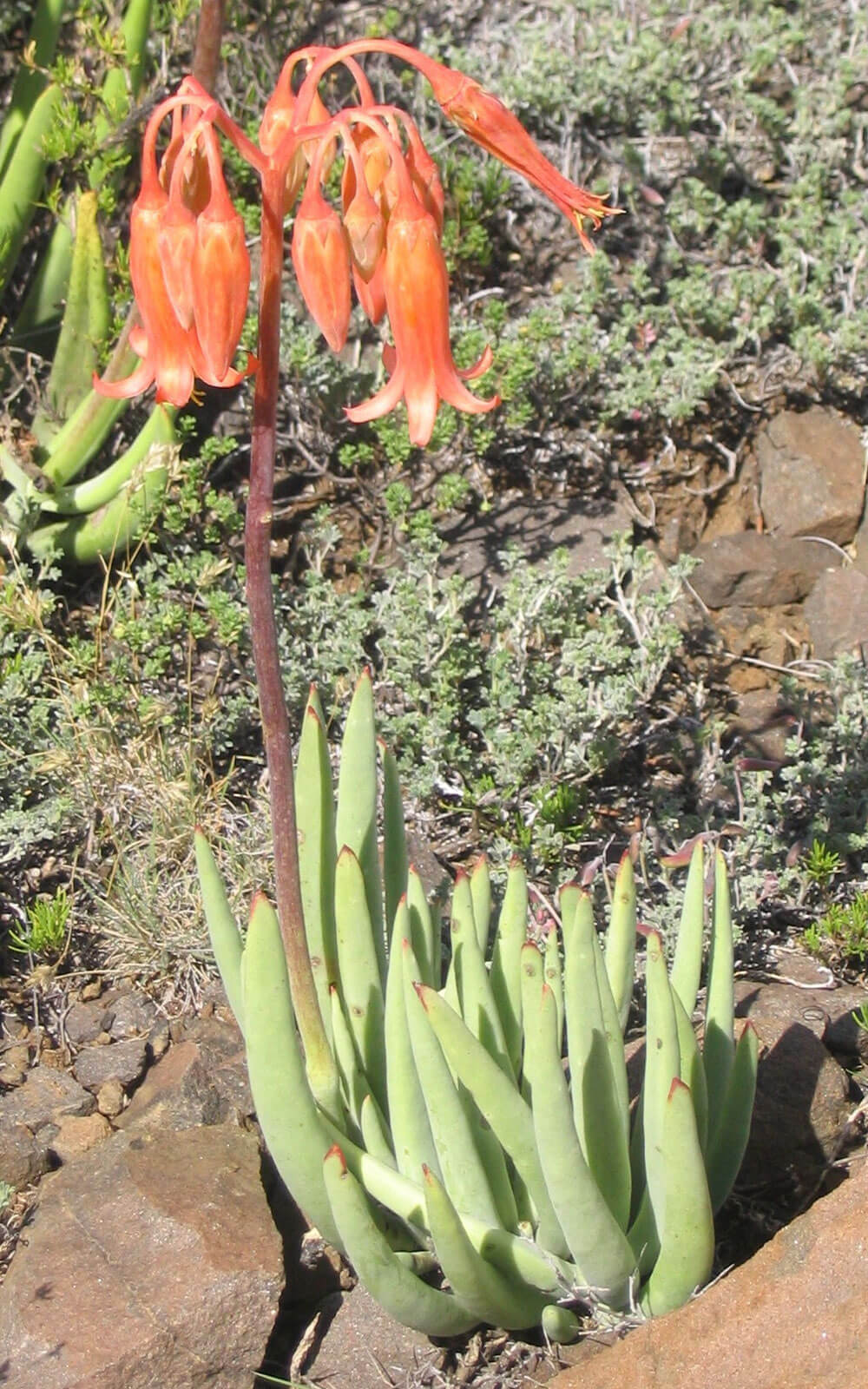
Less frequently seen is the variety of Cotyledon orbiculata with cylindrical leaves.
Photograph: W Menne
South Africa boasts the richest concentration of succulents in the world and one of the very first of these to be recorded was Pig’s Ears Cotyledon orbiculata. In 1624 the boat on which Dr Justus Heurnius was traveling, between Holland and Indonesia, stopped over in Table Bay. Heurnius, a missionary and medical practitioner, was the first European to record South African plants and his drawing of C. orbiculata was published in Amsterdam during 1644. This was several years before Van Riebeeck arrived at the Cape but, even today, C. orbiculata is still found growing wild on the lower slopes of Table Mountain. It is not known who actually introduced C. orbiculata plants into Europe but they have flourished there, in cultivation, for several hundred years.
Of the eleven South African species in the genus Cotyledon, C. orbiculata is the most widespread. Divided into five natural varieties, and several more created cultivars and hybrids, C. orbiculata is found in every province of the country as well as in Namibia and Angola. Only in parts of the Mpumalanga and Limpopo lowveld is it replaced by the similar looking C. barbeyi, which is a tropical species reaching right up to Ethiopia and Arabia.
While some botanists consider C. orbiculata to be the most variable plant species in all of southern Africa, it certainly holds that distinction within the Cotyledon genus, the most obvious differences between the varieties being evident mainly in the leaf and flower shape. Derived from the Greek, kotyle, which means cavity or small cup, the genus name Cotyledon refers to the shape formed by the leaves of newly germinated plants of some species. Part of the Crassulaceae family (crassus means thick in Latin), many of these fleshy plants, especially the deciduous ones, have been transferred from Cotyledon to the closely related genus Tylecodon. Interestingly, this name is an anagram of Cotyledon! The plants remaining in the genus Cotyledon are all evergreens.
C. orbiculata is generally shrubby with a thick stem, which is sometimes woody at the base. While specimens may reach 1.5 meters, the plant is usually much smaller. Its clusters of decorative, thick, fleshy, grey or greyish-green leaves, often with red margins, are frequently carried close to the ground. Although the leaves are rounded or disc-shaped in most varieties, in a few they are cylindrical and finger-like while those of one cultivar even resemble stag antlers. Young leaves usually have an attractive, waxy covering which reflects the sun’s rays so reducing transpiration and water loss. Some may have a velvety feel to the touch.
Reference is made to the shape of the leaves in the species name, orbiculata, which in Latin means round. Likewise, the leaves give rise to the common name of Pig’s Ears, as well as to one of the Afrikaans names, Hondeoor (Dogs’ Ear). The most frequently used Afrikaans name, Plakkie, derives from a Dutch word meaning disc or patch and may also relate to the shape of the leaves. Because it is so variable and widespread, C. orbiculata has been given a host of other common names across the country such as Bergbessie, Kooltrie, Kouterie and Beesbulk. One of the most interesting is Pêpê. This is said to be linked to olden-day hunters using the flower-stalks, like a flute, to make a sound resembling that of a young klipspringer. Any adult coming to investigate the sound became an easy target.
The long, slender flower-stalks grow up from the centre of the leaf cluster and bear an attractive head of waxy, drooping, bell-shaped, red to pink, sometimes even orange or pale yellow, flowers. Sunbirds, such as Malachite, Greater Double-collared and Southern Double-collared (previously known as Lesser Double-collared), find the conspicuous, brightly- coloured blooms irresistible and, because the source of their interest is relatively close to the ground, they can be observed by gardeners at close range.
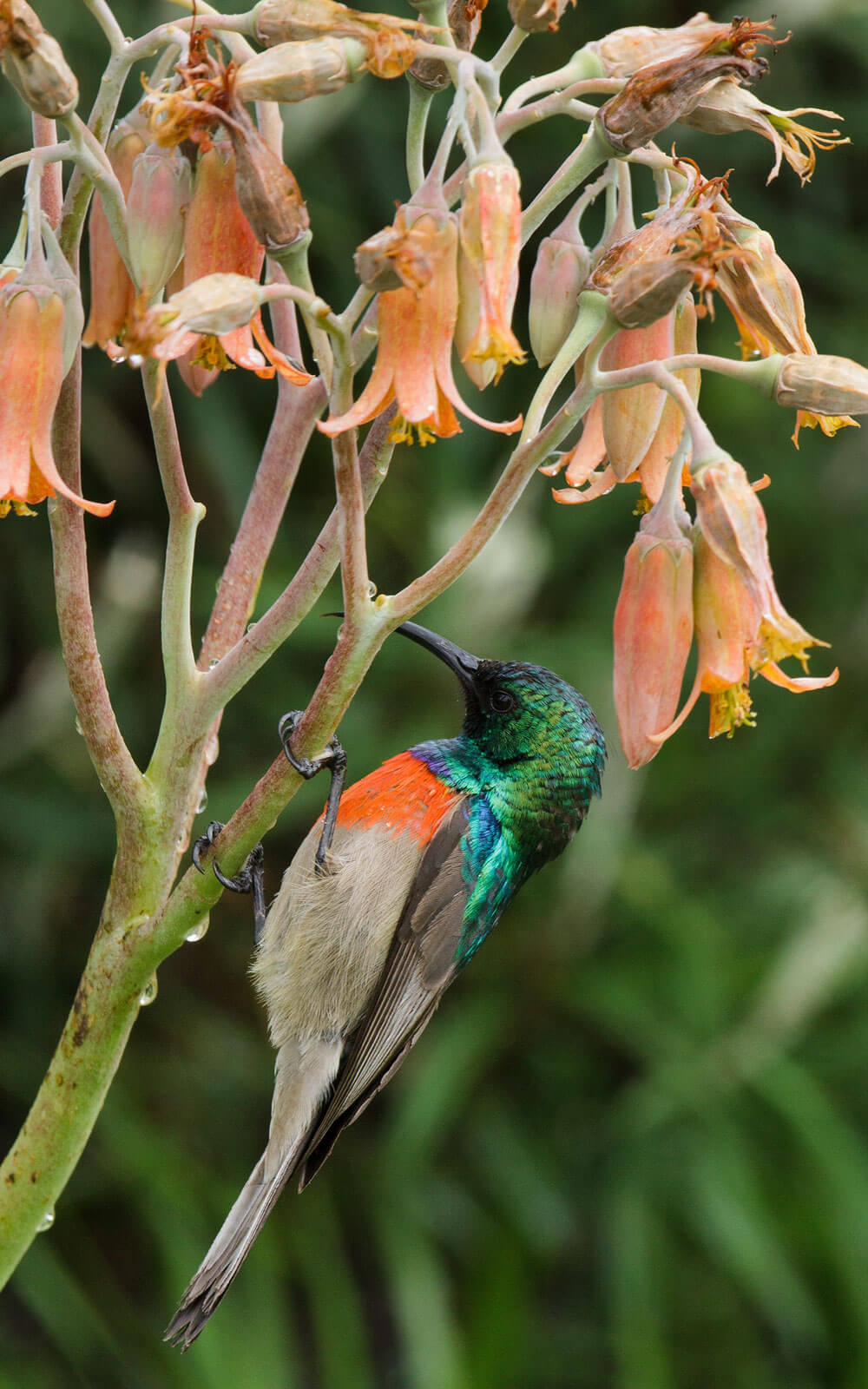
Sunbirds, such as the Greater Double-collared Sunbird, find Cotyledon orbiculata flowers irresistible.
Photograph: H Chittenden
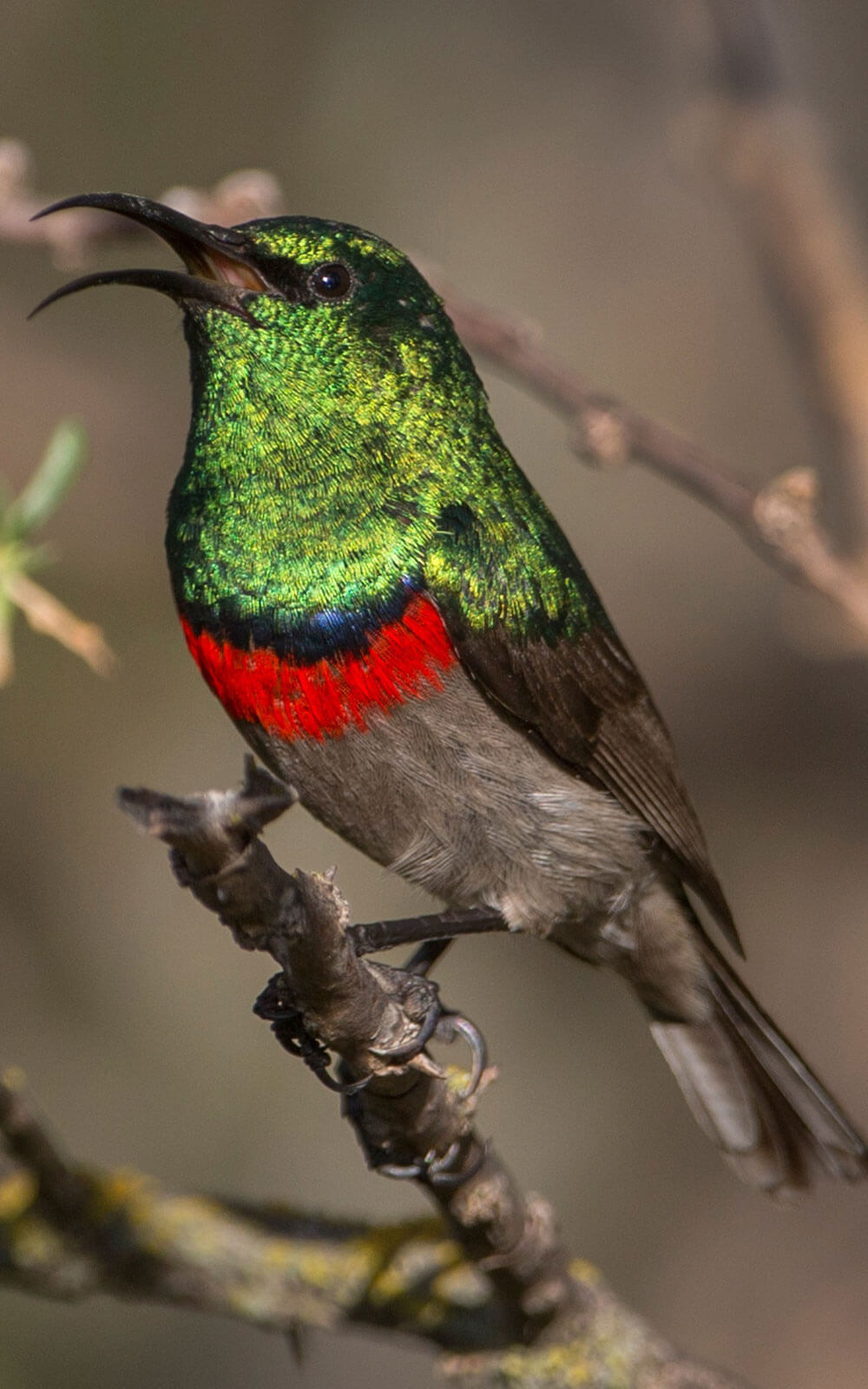
Also fond of Cotyledon orbiculata flowers, is the Southern Double-collared Sunbird with its narrower band of red.
Photograph: H Chittenden
The two different Double-collared Sunbirds are often confused by the inexperienced, but a trained ear can easily distinguish them by their song: the voice of the Greater is louder and more striking, with notes that are more clearly articulated and do not run together as in the weaker more wispy call of the smaller cousin. The Greater does not pierce the base of flowers as readily as does the Southern, because its larger, more robust and less curved bill allows it to reach the ‘goodies’ inside trumpet-shaped flowers more easily. Pricking the petals of a flower to reach nectar has, on occasion, had tragic consequences when they have been those of the exotic Rubber Tree Manihot carthaginensis. This alien from Brazil is found in some gardens often having been transplanted from an indoor container. The accumulation of latex ingested eventually forms a congealed ball in the stomach, causing the demise of the unsuspecting bird. Sunbirds are also insect-eaters with ants being popular, and caterpillars and moths especially important when chicks are being fed. Spiders taken out of their webs are high on the menu.
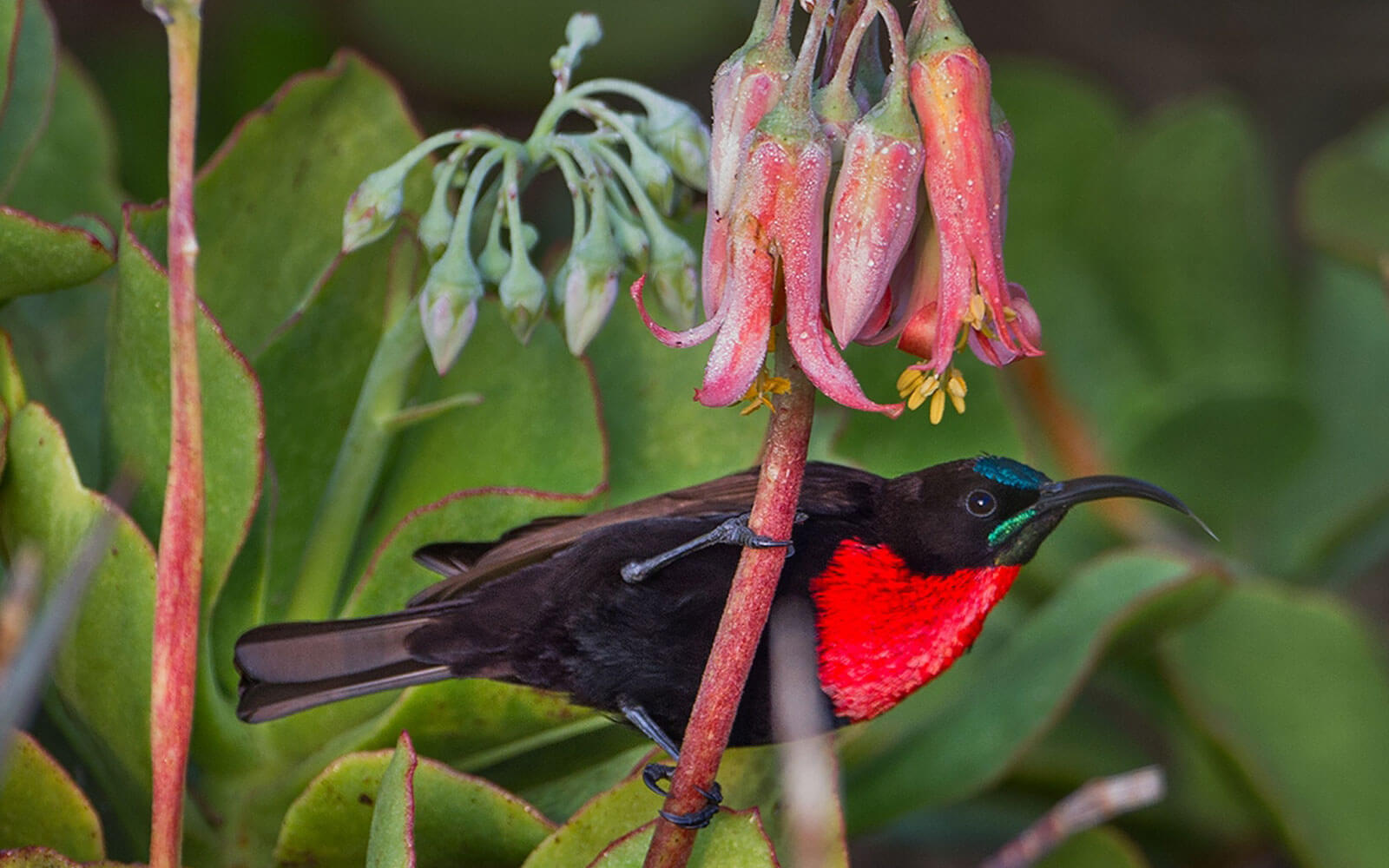
The beautiful Scarlet-chested Sunbird is one of many nectar-eaters attracted to the blooms of Cotyledon orbiculata.
Photograph: H Chittenden
C. orbiculata is the larval food-plant of at least half-a-dozen different butterflies, including the Pale Ciliate Blue Anthene livida. Previously known as A. butleri and by the common name Pale Hairtail, this butterfly has the word ‘ciliate’ in its current name because of its little wing tails made of bunched up cilia, which are a fine fringe of small hairs (modified scales). Small white eggs are laid on the underside of the plant before slug-like green caterpillars, with teeth-like ridges on the back, burrow into the fleshy food supply. Following pupation, which is usually on the under surface of a leaf or sometimes on a stem near the ground, the pretty little bluish butterfly emerges. Although it does prefer hilly terrain, the Pale Ciliate Blue may be seen by observant gardeners across South Africa, except in the far west of the country.
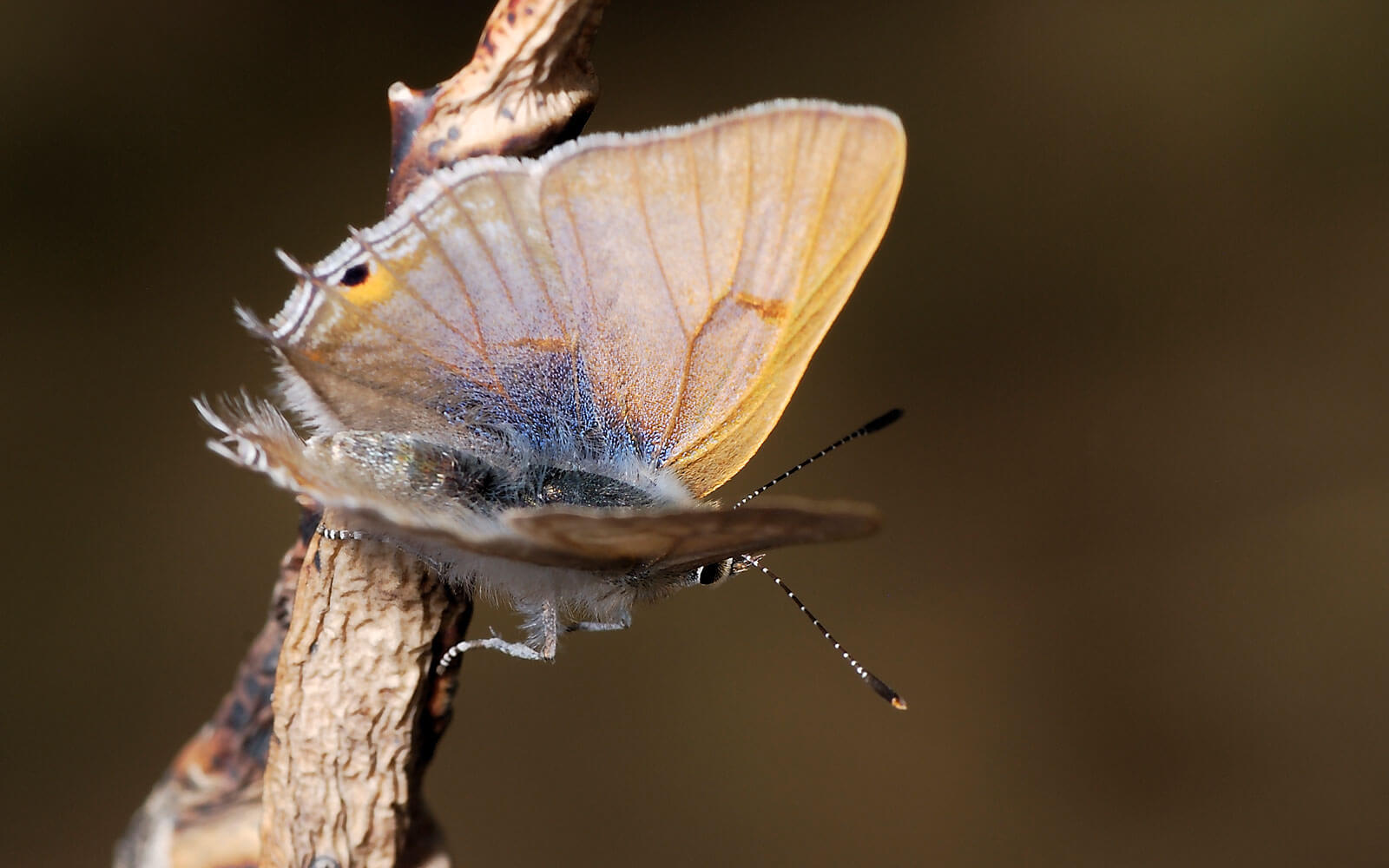
Cotyledon orbiculata is one of the larval host-plants of the Pale Ciliate Blue butterfly Anthene livida.
Photograph: S Woodhall
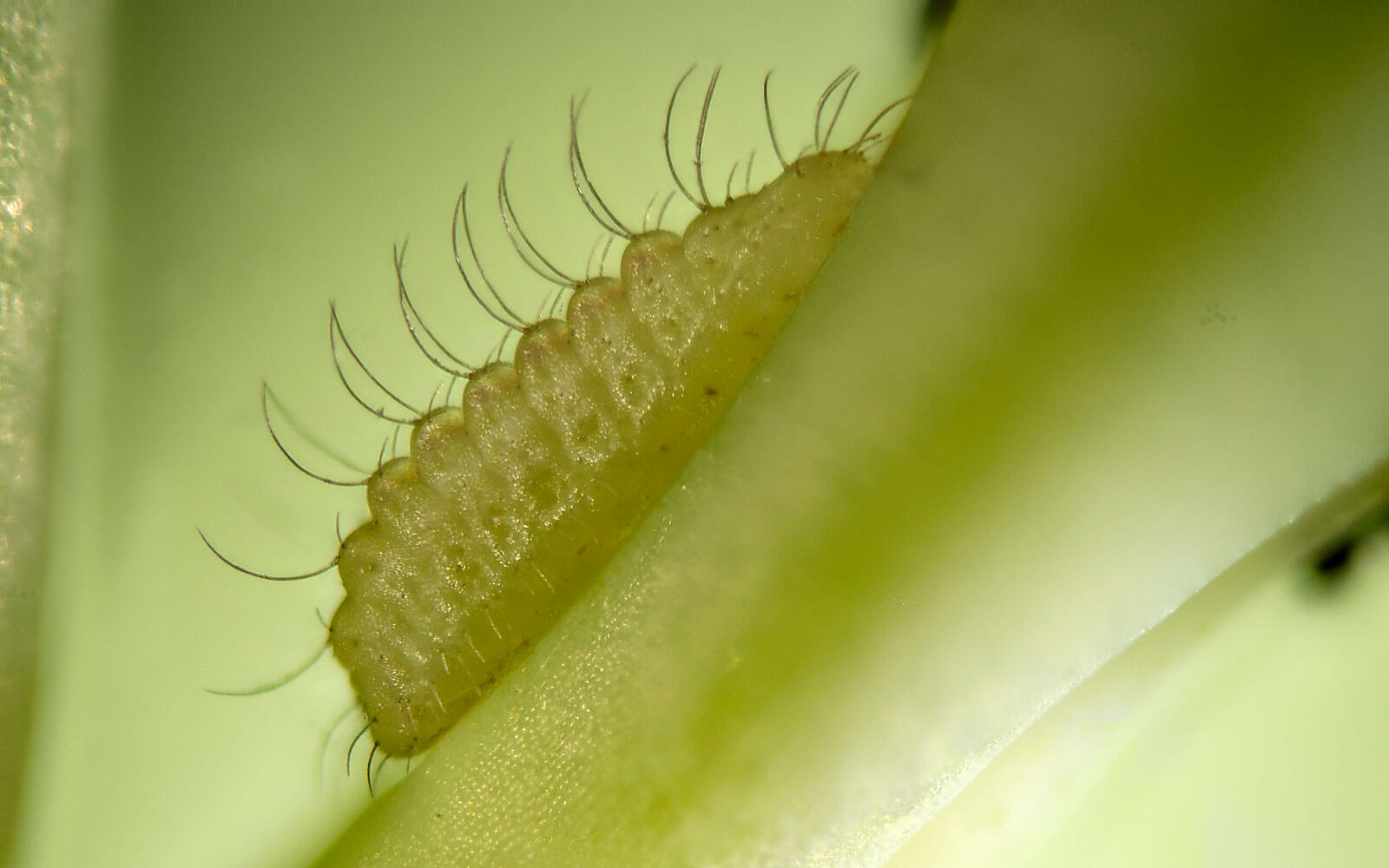
The slug-like, green caterpillar of the Pale Ciliate Blue Anthene livida.
Photograph: S Woodhall
However, the easiest butterflies to attract with C. orbiculata are the Plain Black-eye Leptomyrina henningi, for inland gardeners, and the Lilac-based Black-eye L. gorgias for those closer to the eastern coast. (These butterflies were known before as Henning’s Black-eye and Common Black-eye respectively.) Neither of these species occurs naturally in the south western part of the country where they are replaced by the Cape Black-eye L. lara. Although the pretty Lilac-based Black-eye L. gorgias is sometimes nicknamed ‘gorgeous’ by its admirers, all three species of these smallish butterflies look very similar. They have prominent black ‘eyes’, encircled by white rings, on the outer edges of their bronze-brown wings. Seldom moving far from their food-plants, they usually fly close to the ground. Females lay white eggs and the green, slug-like caterpillars bore into the leaves where their presence inside is easily detected by the droppings which appear from the resulting holes.
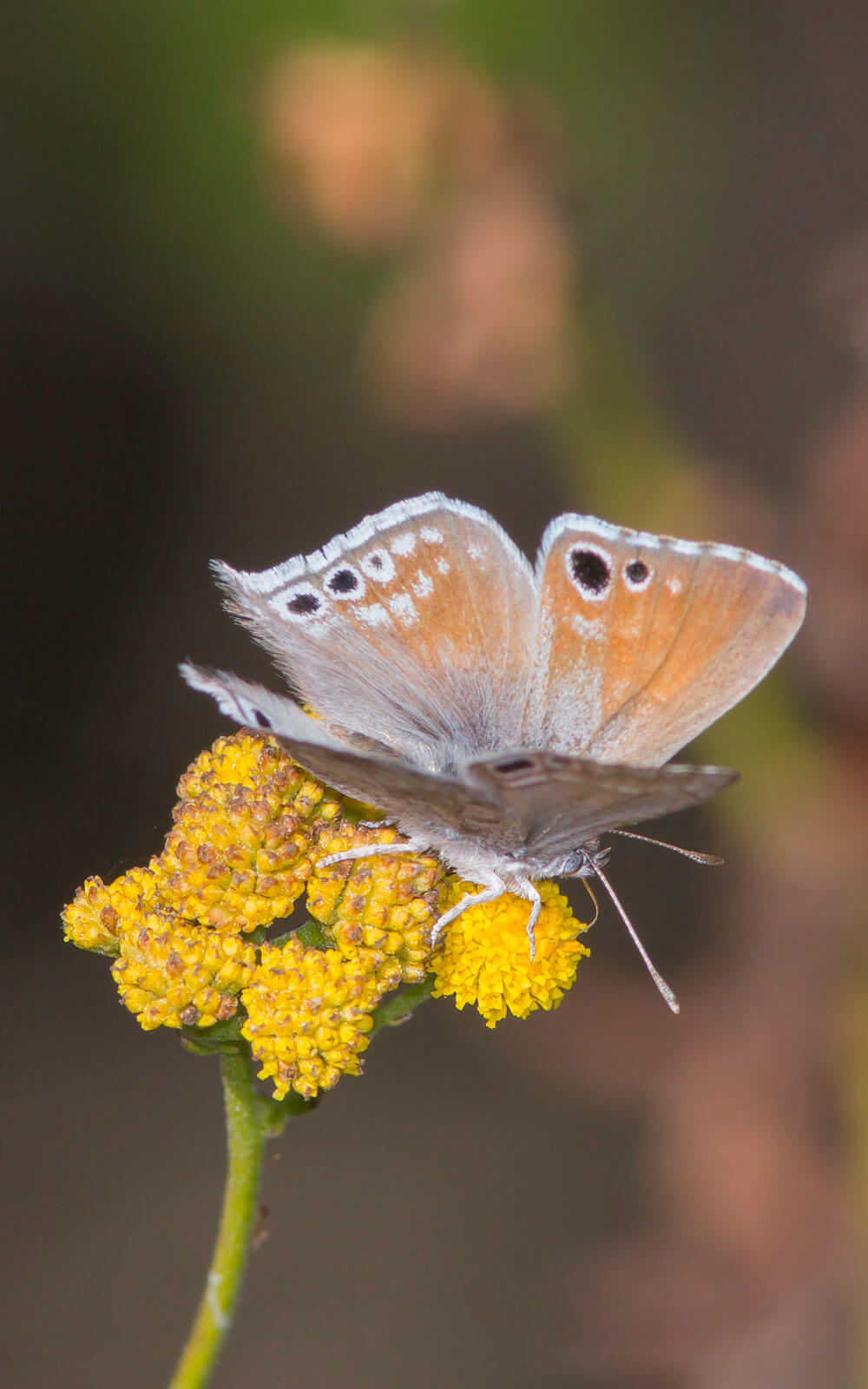
The Lilac-based Black-eye Leptomyrina gorgias may be seen by eastern gardeners who grow Cotyledon orbiculata.
Photograph S Woodhall
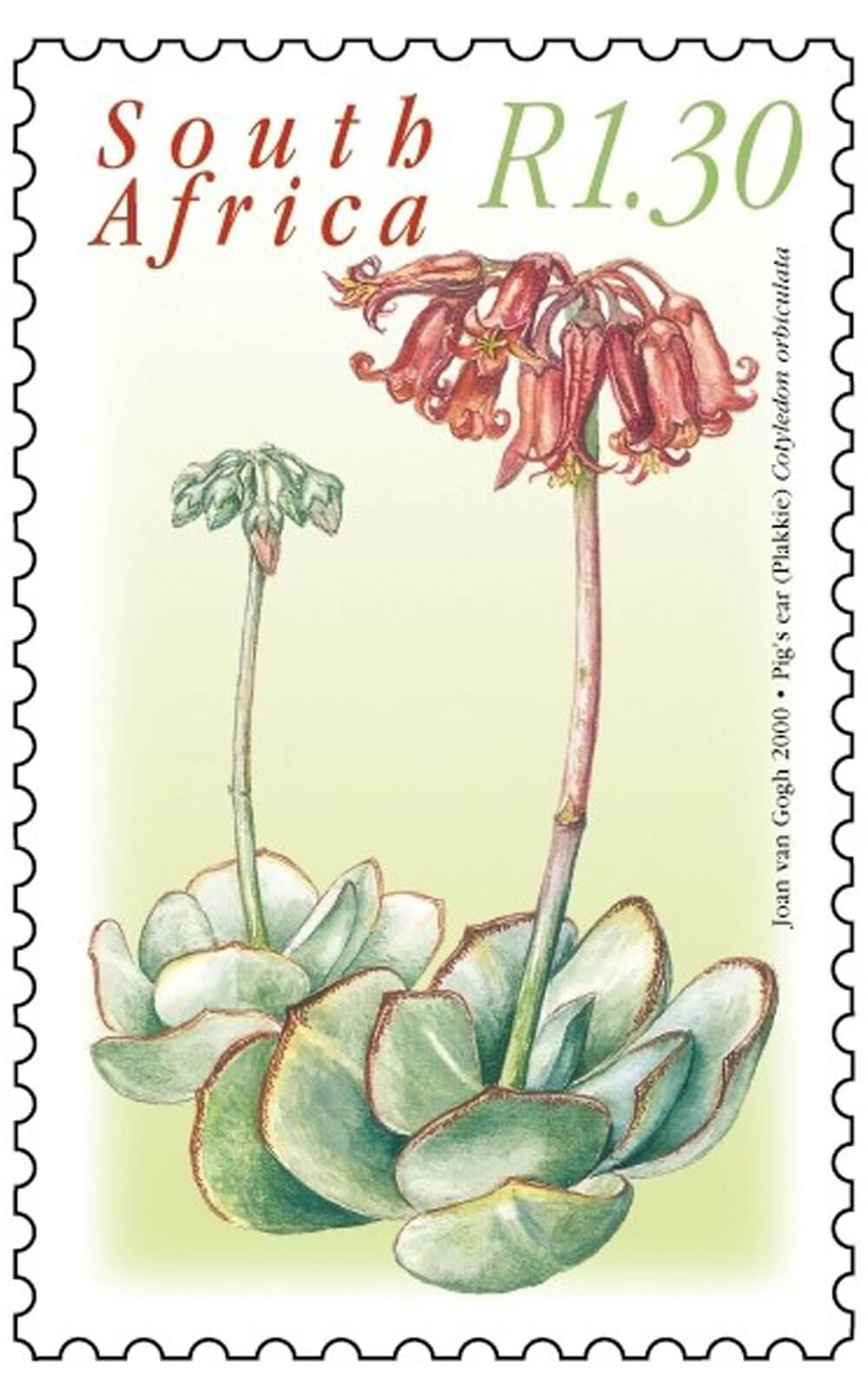
Cotyledon orbiculata featured on a South African stamp
All C. orbiculata asks, in return for the pleasure it gives environmentally-friendly gardeners, is to be given lots of sunshine and well-drained soil, especially in regions of high rainfall. It will, however, tolerate some shade in drier areas and survives almost anything, from drought to moderate frost and poor soil. Being shallow rooted, the lightest rain shower can replenish the fleshy leaves, which serve as water reservoirs. In nature, the different varieties are found in various habitats with extremely diverse soil conditions. They occur in rocky outcrops, on slopes, cliffs and coastal dunes, in inland and coastal scrub, grassland, valley bushveld and sometimes even along roadways.
In the garden the best location for this ‘no nonsense’ plant is, without doubt, in a rockery where the leaves can blend in with round stones while the flowers rise well above them. Very useful in landscaping, C. orbiculata is excellent as a border plant or along pathways. They also make great container plants, especially around swimming pools, because they are not messy. However, as good drainage is essential, clay pots are best and keep in mind that over-watering frequently causes stem rot. Also, do ensure that you get plants of a variety which belongs in your particular geographical area; those from the winter rainfall region will not be too happy at the humid KwaZulu-Natal coast or on the frosty Gauteng Highveld and vice versa. Indeed, these plants seldom flower prolifically when outside of their natural area.
For many gardeners, one of the best features of C. orbiculata is its easy propagation. New plants often arise when brittle parts, such as a leaf, fall to the ground and take root on the spot. In fact, bits of a plant, disposed of by a gardener, may simply re-root and form new plants even on the garbage heap. This is one of the reasons they are so popular with nurseries and landscapers who find them an easy source of income. However, to be sure of propagation success when taking cuttings, it is best to leave them for a week or so to form ‘scabs’ at the cut ends and then to plant them in moist, clean sand. Although a slower method of propagation, C. orbiculata can also be grown from the many minute seeds contained in the small pods. After the seeds have been sown, they should be watered with a very fine spray to avoid disturbing them.
Being so easily cultivated, it is not surprising that C. orbiculata has become a popular garden plant in warmer areas all over the world. It is now so well settled in other countries that, some years ago, overseas gardeners may have been surprised, when receiving correspondence from South Africa, to see an image of ‘their’ familiar garden plant on one of our previous postage stamps. However, easy propagation and the absence of its natural enemies has resulted in C. orbiculata escaping from gardens and becoming invasive in many parts of Australia, New Zealand and in California, where it has the alternative common name of Round-leafed Navel Wort.
Here at home, the pale orange to deep red, tubular, pendulous flowers of the nasty invasive alien Chandelier Plant Bryophyllum delagoense superficially resemble those of C. orbiculata. This erect, succulent shrublet is often mistaken as indigenous but it hails from Madagascar. Besides producing abundant seeds, B. delagoense reproduces rapidly when pieces break off, fall to the ground and strike root to form new plants, often forming dense stands in the process. In fact, this problem plant has been classified as a weed and allowing it space is actually a criminal offence.
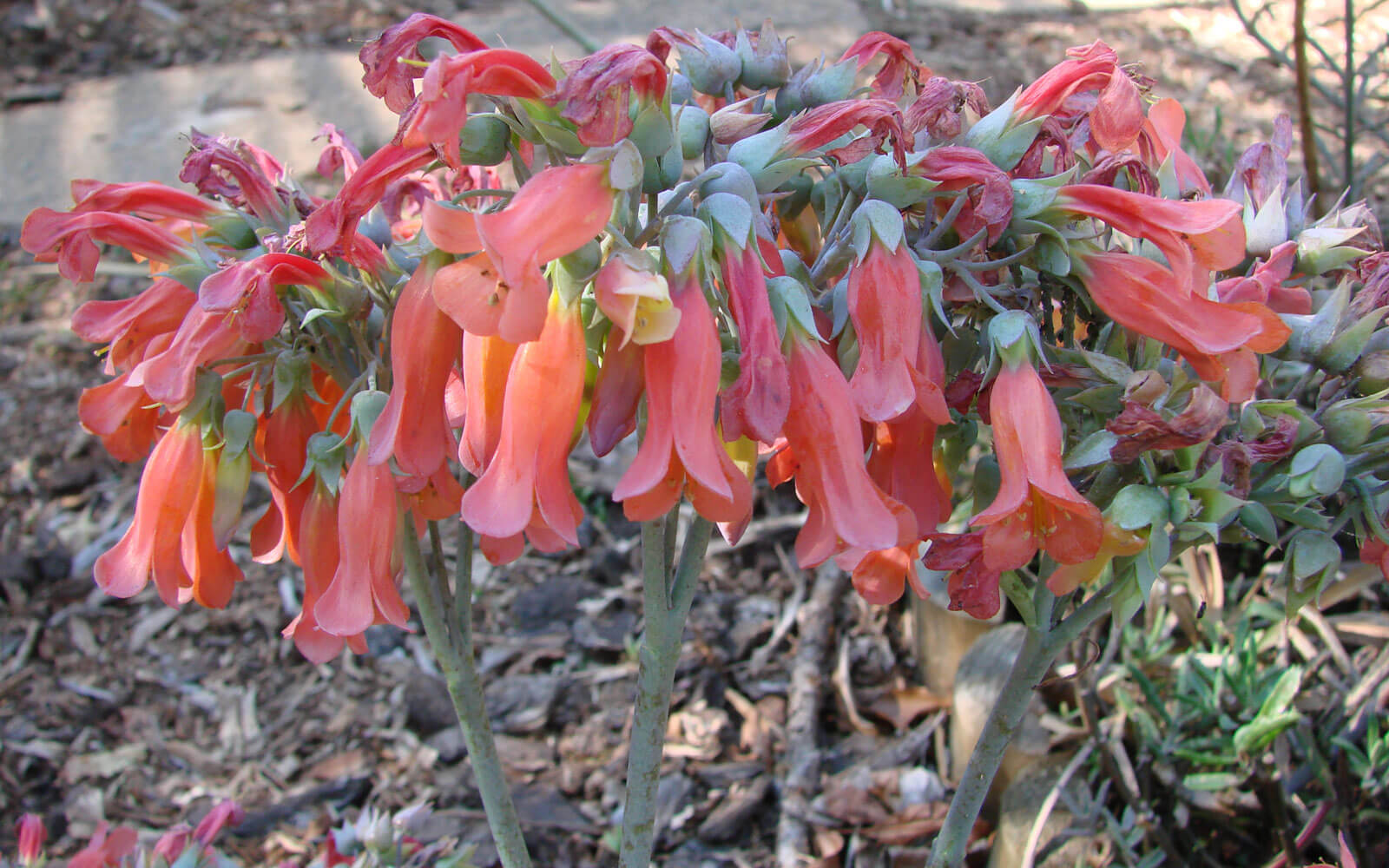
Gardeners can easily confuse the flowers of the invasive alien Bryophyllum delagoense with those of the indigenous Cotyledon orbiculata.
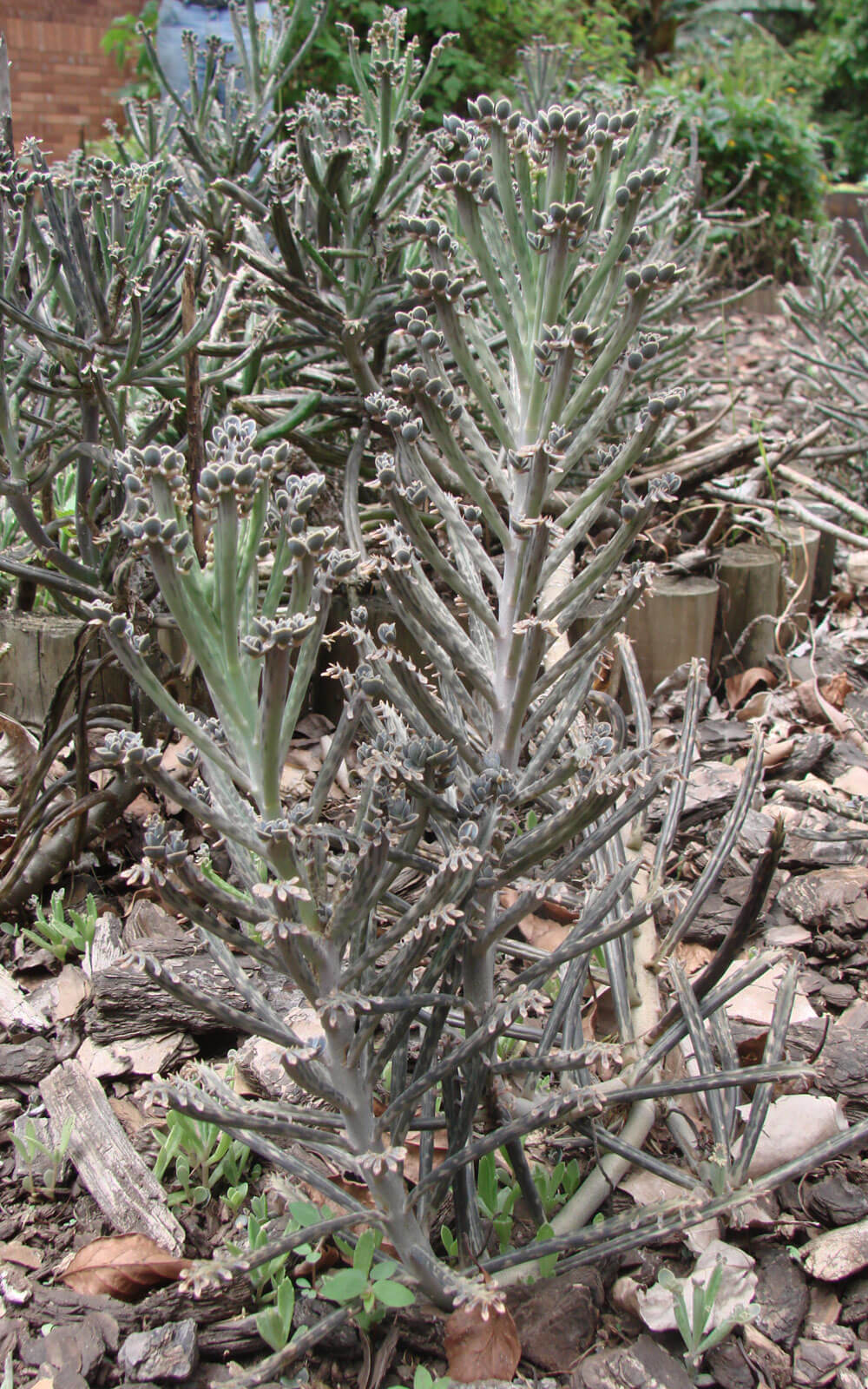
The stripy, cylindrical leaves of the alien invasive Bryophyllum delagoense distinguish it from Cotyledon orbiculata.
Unfortunately C. orbiculata plants are, understandably, sometimes not popular with farmers. When the veld is poor, often as a result of overgrazing, their livestock resort to eating the fleshy leaves which contain various toxins. Affecting the nervous and muscular systems, poisoning can result in paralysis and is also characterised by contractions of the muscles, hence the popular name of krimpsiekte (shrinking disease). This has, in turn, given rise to another, uncomplimentary, common name for the plant of Krimpsiektebos. Often fatal, this ‘cotyledonosis’ can affect virtually any type of farm animal from chickens to horses, though goats and sheep have been most commonly afflicted. Even dogs eating meat from poisoned animals have developed the symptoms and this would probably also apply to humans. Apparently the concentration of toxins in C. orbiculata specimens varies with geographical area and is also influenced by the soil, the time of year and the moisture content of the leaves.
C. orbiculata has been widely used for medicinal purposes. In fact, a more likely explanation for the name Plakkie, which in Afrikaans implies ‘to stick’, relates to the practice of attaching the soft flesh of the leaves to warts or hard corns, so making them soft enough to be peeled off. The leaf has also been applied to boils and abscesses and has even been used on nappy rash! Although internal use is potentially lethal, there are records of the plant juice being used for epilepsy and being swallowed or used as a gargle to treat sore throats. Sotho people, believing the plant to have magical properties, make a protective charm from a dried leaf. Included among Swazi, Xhosa and Zulu traditional uses are such diverse ailments as syphilis, toothache and earache. Or you can eat a leaf daily as a vermifuge, but be warned it is more than just the worms that may succumb!
Acknowledgement: Steve Woodhall is thanked for generously sharing his formidable knowledge of Lepidoptera.
Notes
Reprinted with permission from African Wildlife & Environment magazine issue # 81 (2021) The journal of the Wildlife & Environment Society. Please support www.wessa.org.za

About the authors
Charles and Julia Botha are the authors of Bring Nature Back to your Garden of which the first edition won a University of KwaZulu-Natal book prize for popularizing science. It explains the important conservation-friendly gardening principles in easy-to-understand, non-scientific language and has now been split into two editions: one for the western part of the country and another for the eastern and northern regions. There is also an isiZulu edition. Their follow up book Bring Butterflies Back to your Garden, describes over 500 recorded indigenous butterfly larval host-plants. All proceeds of their books go to the Botanical Education Trust, which funds research aimed at conserving South Africa’s indigenous flora. View the Trust’s website by clicking on botanicaleducationtrust.org.za. The books are available from the Flora & Fauna Publication Trust or request your local bookstore to stock them!