
Looking after the larvae
Parental care strategies in frogs
Text and photographs Jeanne Tarrant or as credited
In the last edition of Leopard’s Echo we learnt about parental care in our local Kloof Frog, Natalobatrachus bonebergi, in which the female mother frog guards egg clumps, keeps them moist and stimulates development by massaging the egg clump with her legs. It may be that this behaviour not only helps spread moisture but also provide antifungal and antibacterial properties to the 50 – 100 tadpoles at their most vulnerable stage whilst exposed in their jelly encasing dangling up to 4 m above the stream for up to ten days. This unique behaviour continues to draw attention and is currently the subject of another MSc study by North-West University student Karla Jense van Rensberg: Reproductive strategies of the Kloof Frog (Natalobatrachus bonebergi) at Crowned Eagle Estate, KwaZulu-Natal, South Africa.
Whilst parental care might not be the first thing that leaps to mind when it comes to frogs, many species exhibit some of the most diverse and extraordinary range of behaviours geared towards ensuring the survival of their offspring. This includes, guarding, transporting and provisioning. In terms of nesting, frogs also carry out all kinds of activities to protect their eggs and tadpoles. There are incredible examples from around the globe, for example, Darwin’s Frog, in which the male broods the young inside his vocal sac until they metamorphose, or Poison Dart frogs that carry tadpoles to water and then return to feed them with unfertilised eggs. But we don’t need to look abroad to find fascinating examples of parental care strategies.
Probably the most famous example of a South African species caring for its young comes in the form of our largest species, the Giant Bullfrog, Pyxicephalus adspersus. An explosive breeder associated with highveld pans that dry out quickly following heavy storms, the Giant Bullfrog has limited time to ensure that the next generation survive metamorphosis and get to juvenile stage (think hungry teenager) before having to find underground burrows again. After the breeding frenzy, females are quick to leave the site and forage before returning underground. Unlike most species in South Africa, the males are substantially larger than females and better equipped to protect their offspring. They do this by defending a territory and herding schools of tadpoles to deeper waters to complete development over about three weeks, before pans dry out completely. Males will survey the pan dynamics and dig channels that tadpoles can swim through to remain in deep enough water to complete development. The males are fully determined and will barge down any barriers that might prevent the tadpoles getting to deeper sections. It is also thought that he communicates with the tadpoles through pulses emitted from his throat that send ripples through the water.
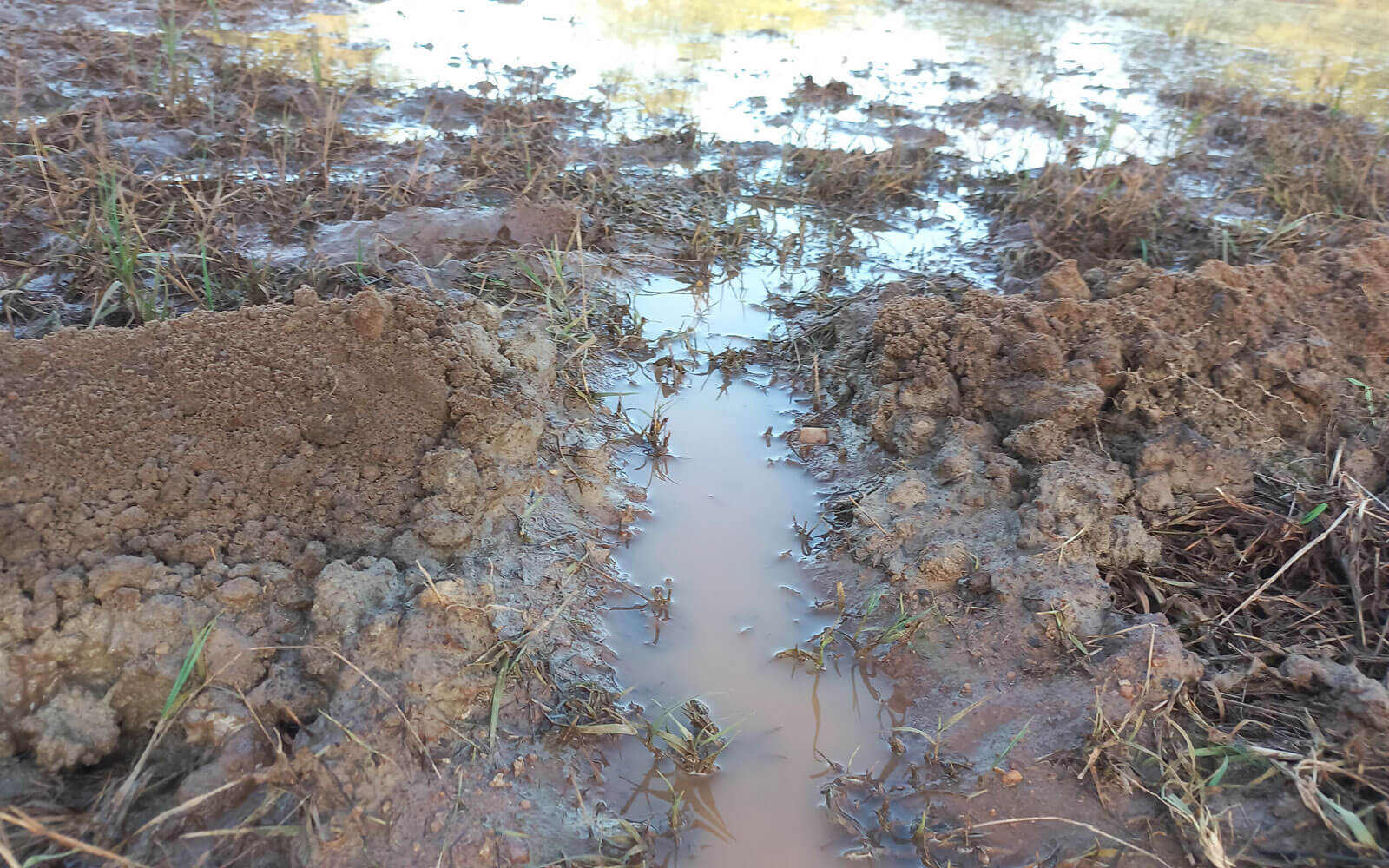
Channel suitable for Bullfrog tadpoles
Photo: Robin Matthews
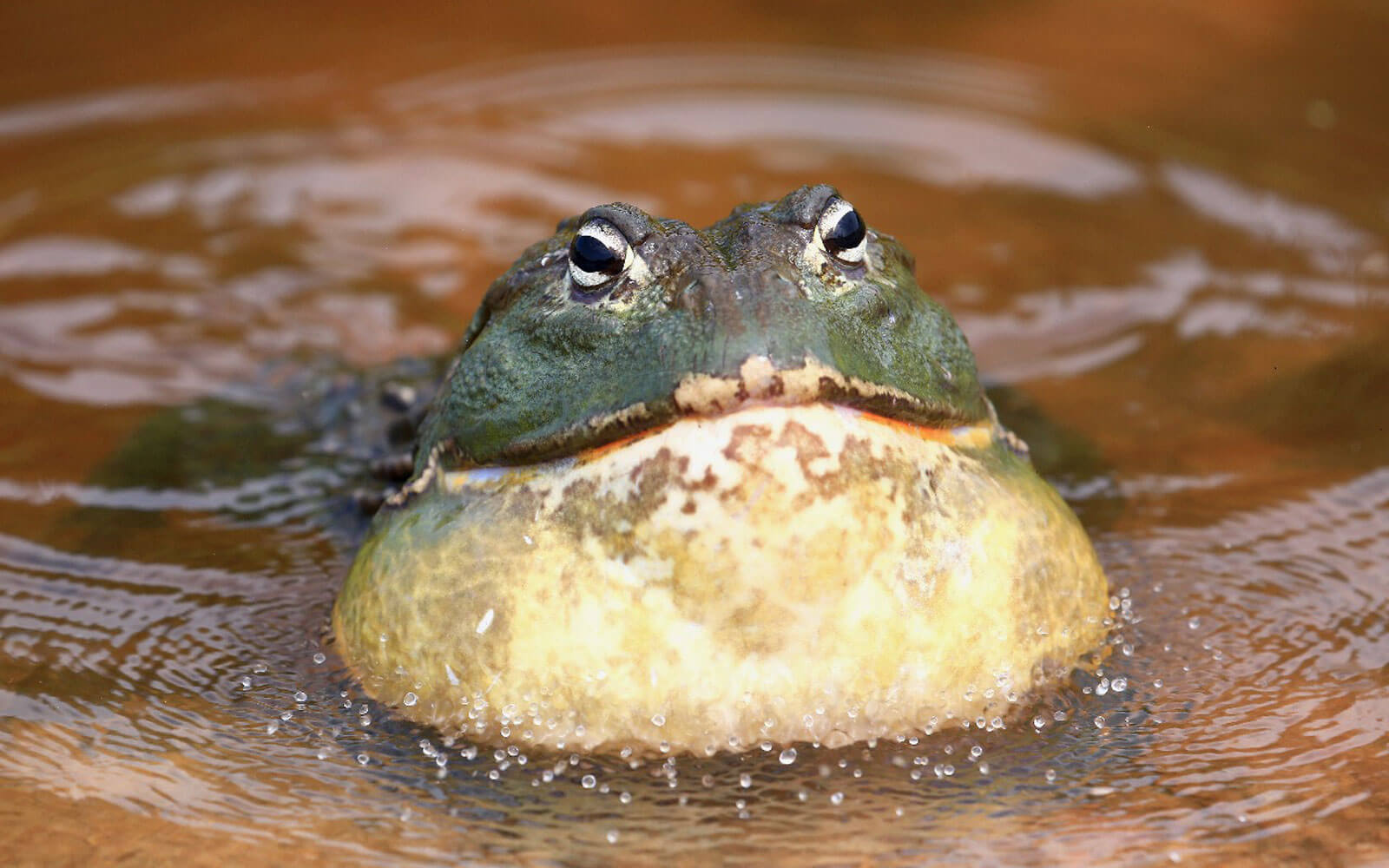
Giant Bullfrog (Pyxicephalus adspersus) note the communication ripples n the water.
Photo: Robin Matthews
Another burrowing species, but this time with mom involved in care duties is the Spotted Shovel-nosed Frog, Hemisus guttatus. These behaviours include the mother staying with the eggs, protecting them during their time in the nest chamber, and ensuring their ultimate arrival in a body of water, at varying stages of development, via a variety of different techniques, ranging from nest placement and slide construction to tadpole transportation. The female frog carries her tadpoles to a water source, sometimes gluing her hind legs together to create a surface for the tadpoles to cling to. First, female digs a nest chamber in the ground, sometimes up to three feet from the water. She stays with the eggs until they hatch, protecting them from predators and environmental hazards. After the eggs hatch, the female creates a path to the water. For some species, this involves digging a tunnel that the tadpoles can use to travel to a water source. To carry the tadpoles, she glues her hind legs together to create a sticky, wide surface for the tadpoles to cling to during the journey to water.
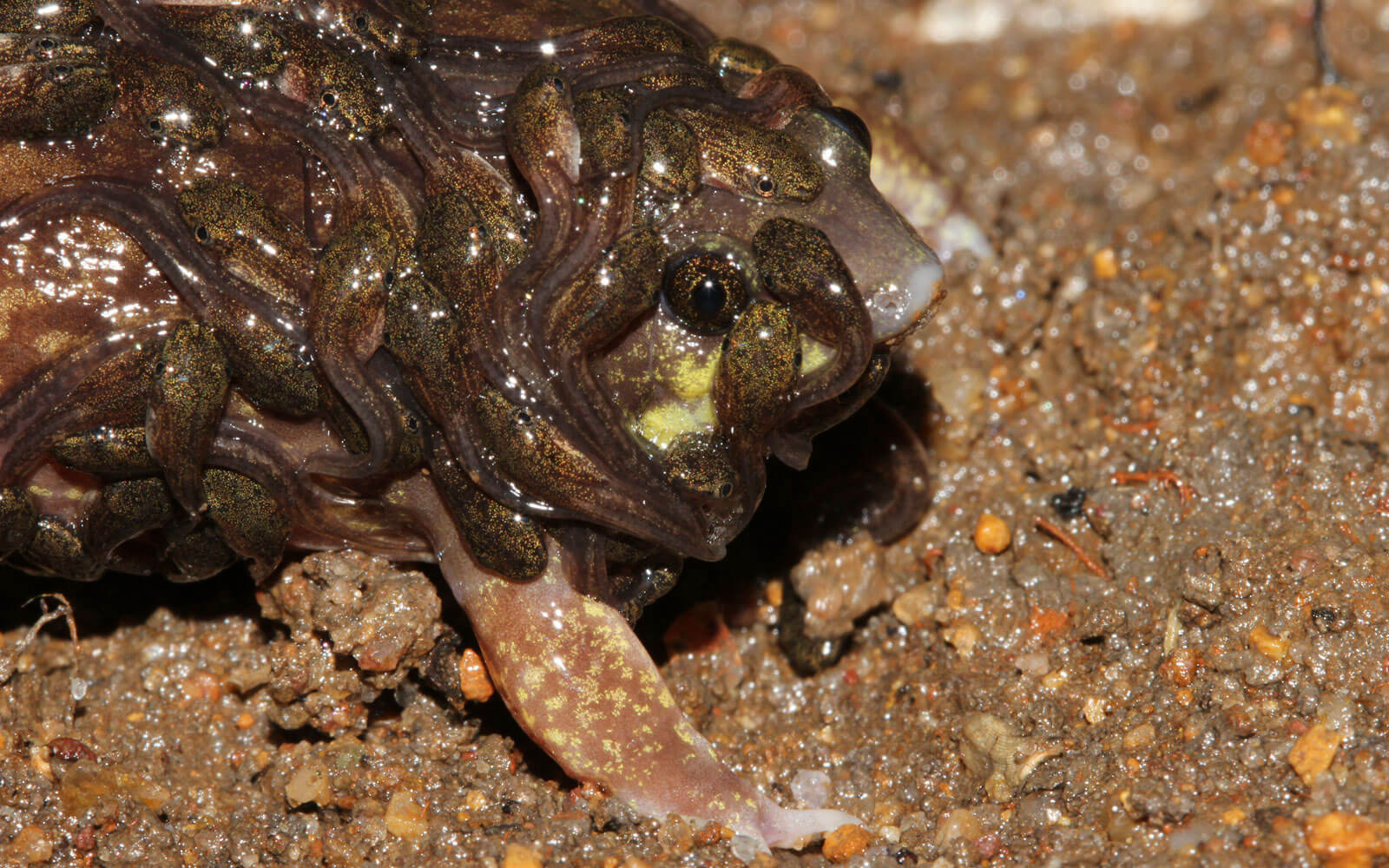
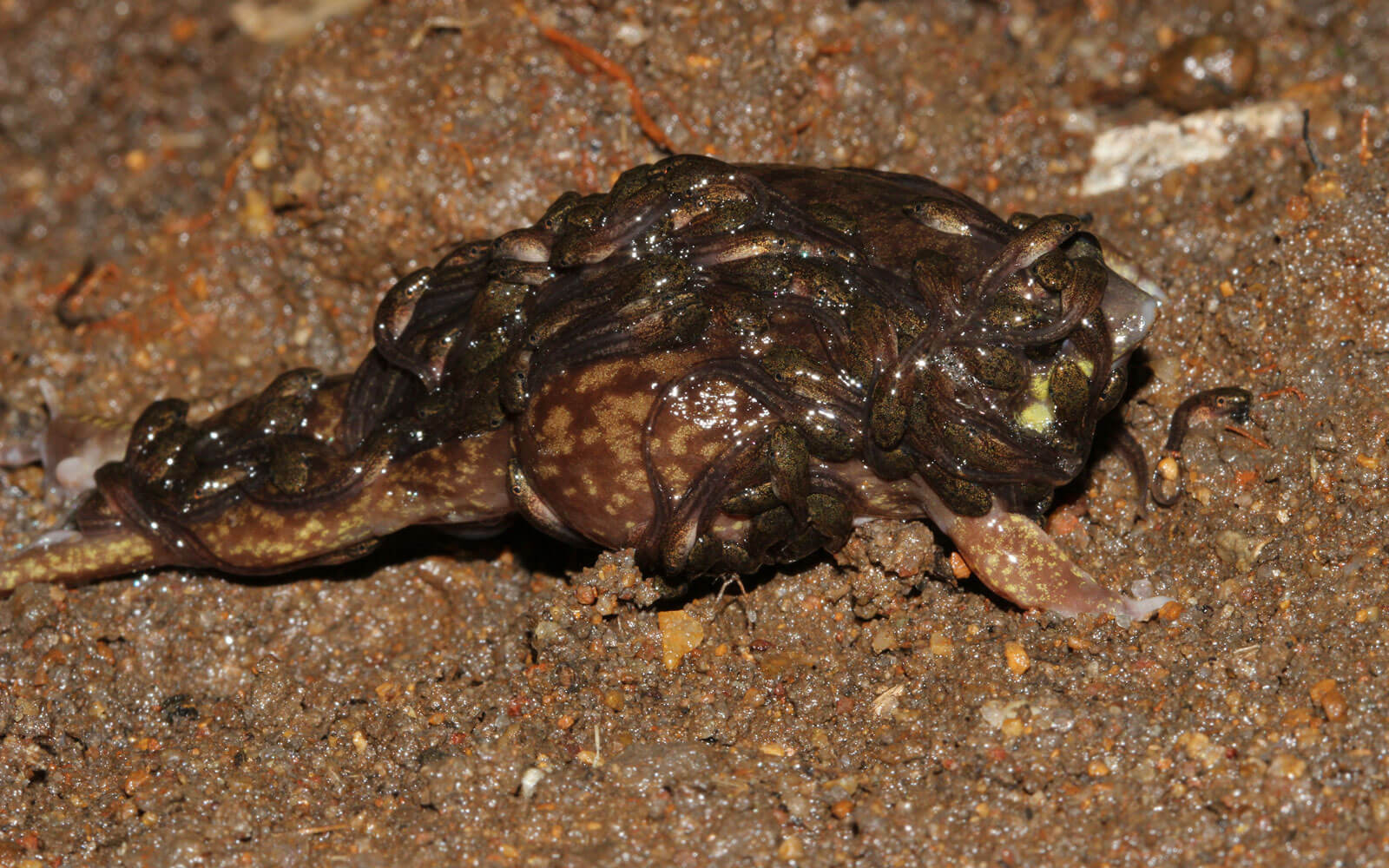
Female Shovel-nosed Frog (Hemisus guttatus) carrying tadpoles.
Photos: Kirsty Kyle
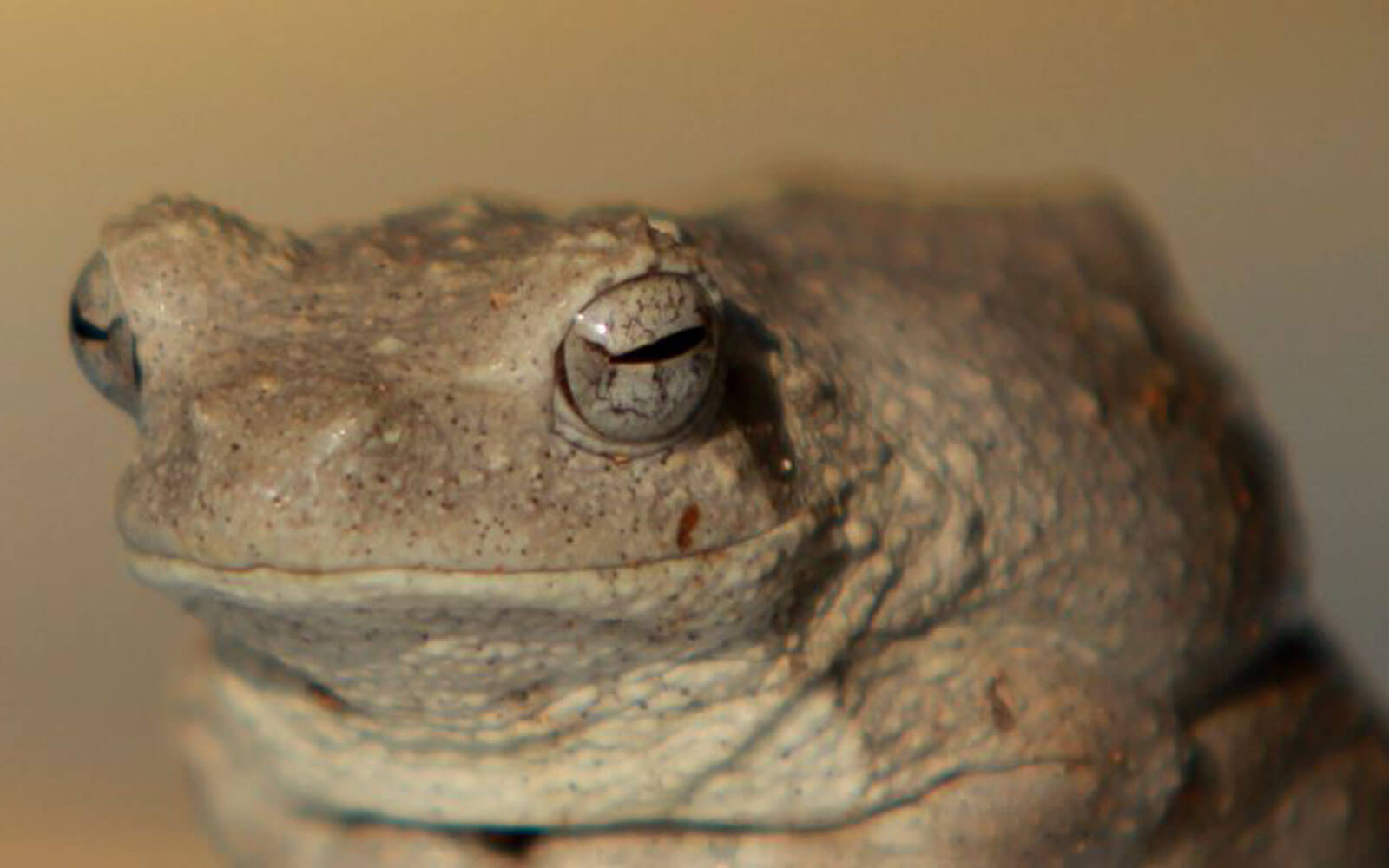
Southern Foam Nest Frog (Chiromantis xerampelina)
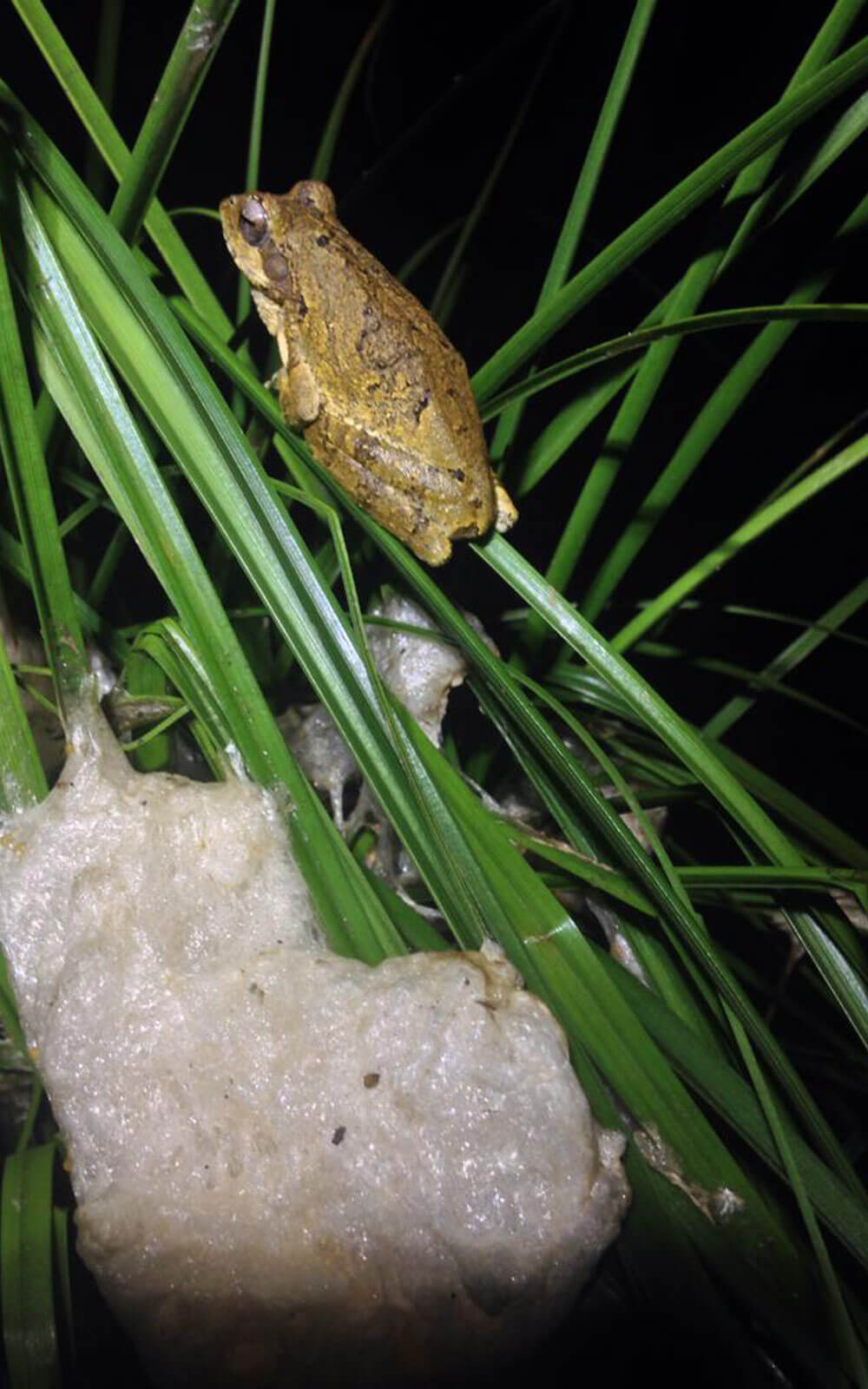
Southern Foam Nest Frog (Chiromantis xerampelina) and nest
During the breeding season, males gather at suitable nesting sites at night where they produce soft, discordant croaks and squeaks. They do not appear to be territorial, and two or more frogs close together, or even on top of each other. The female leaves the water and climbs up to the nesting site where amplexus with one of the males takes place. Nest construction begins when the female releases a fluid from her cloaca, which both the female and males churn into a dense white foam with their legs. Peripheral males take up positions on either side of the amplectant pair and attempt to position their cloacae adjacent to that of the female during bouts of oviposition. Thus, the female’s eggs may be fertilised by more than one male. The nest may take up to seven hours to complete, and nest construction is split into 2–4 sessions. Between sessions, the female leaves the nest site and returns to the water to rehydrate. At this time, the amplexing male may dismount and, on returning to the nest, the female may amplex with a different male (Jennions et al. 1992). Communal nests, involving two or more females and numerous males, are commonly formed. One such nest contained 50 males and 20 females (Passmore and Carruthers 1995). The female usually returns the following night and adds a second layer of foam (not eggs) to the top of the nest. Males seldom attempt amplexus on the second night; if they do, they soon release the female and leave (M.D. Jennions pers. comm.). Jennions et al. (1992) recorded a mean clutch size of c.1200 eggs for single-female nests.
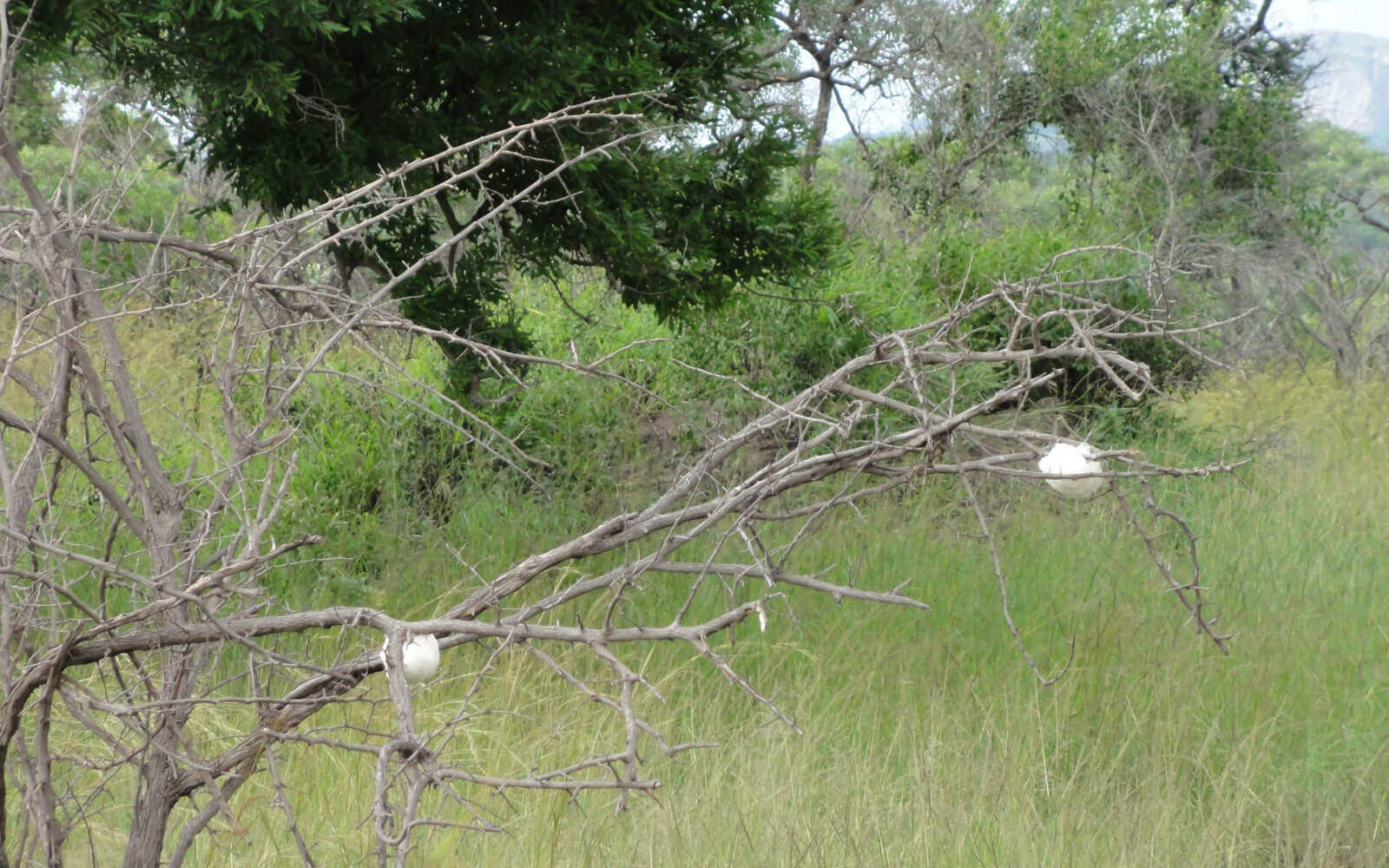
Nests of the Southern Foam Nest Frog (Chiromantis xerampelina)
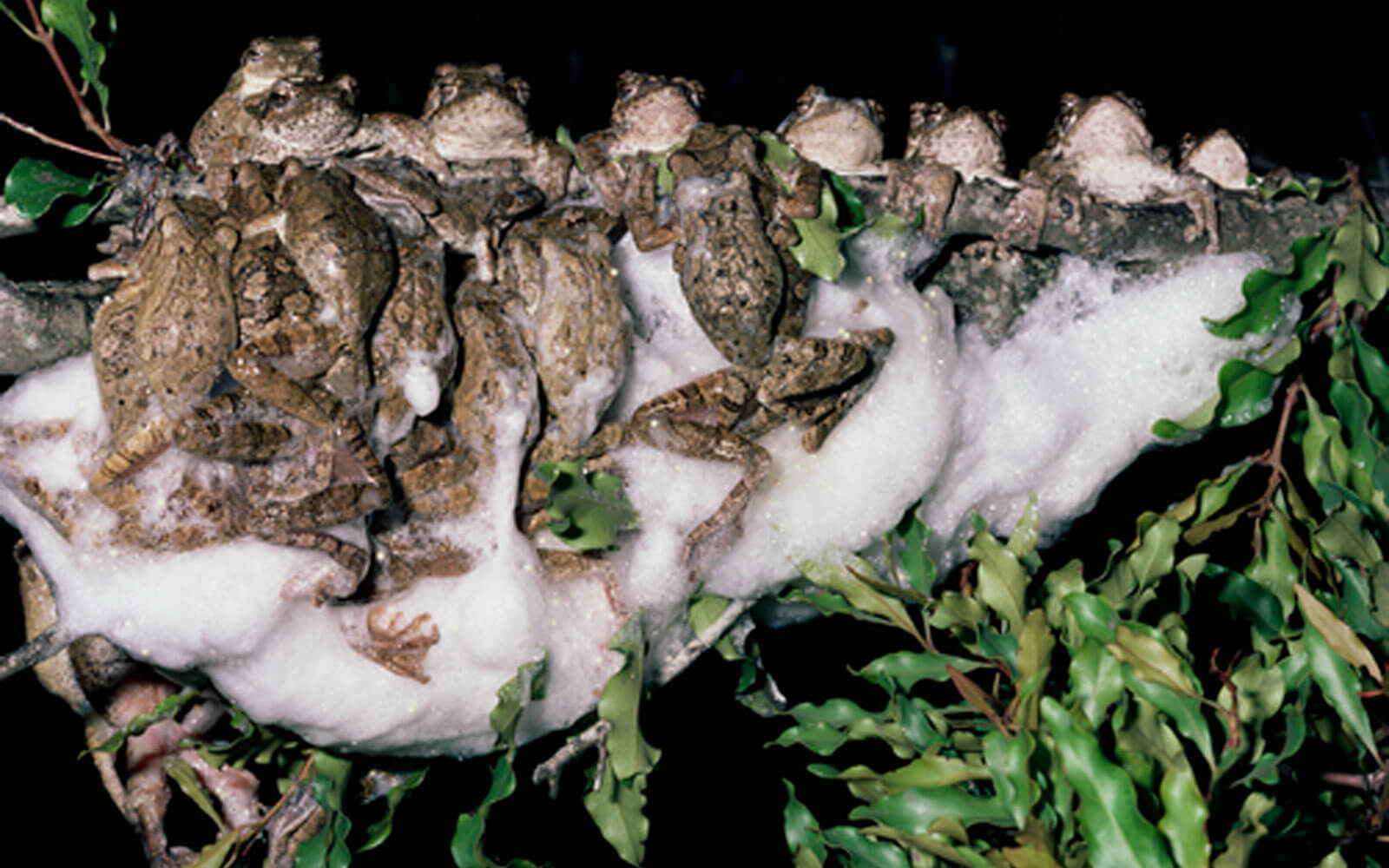
Southern Foam Nest Frog (Chiromantis xerampelina) in nest-building frenzy
Once the eggs hatch within the nest, the tadpoles rely on bubbles in the foam for oxygen (Seymour and Loveridge 1994). After 4–6 days, the wriggling tadpoles begin to move downward within the nest, sometimes in a wet squirming mass of several tadpoles or in ones and twos, until they reach the bottom (Wager 1986). It is thought that these movements and the accumulation of tadpoles at the bottom of the nest softens the crust, thereby enabling the tadpoles to drop into the water below where they complete their development. Egg development within a foam nest may serve to avoid or reduce predation in the early stages of tadpole development. However, in some cases, the water below the nest recedes, and the tadpoles drop onto the ground and perish.
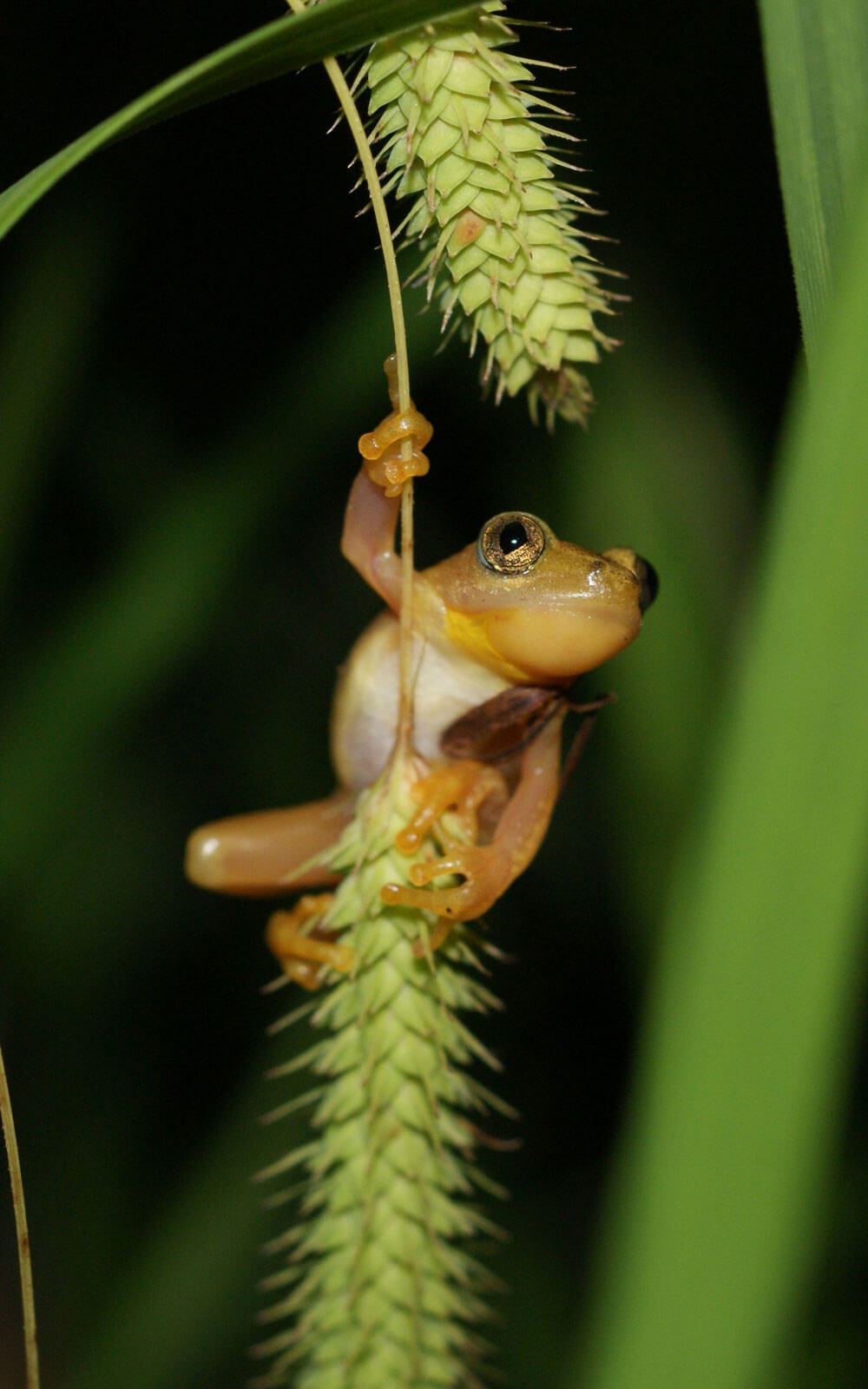
Natal Leaf-folding (Afrixalus spinifrons intermedius)
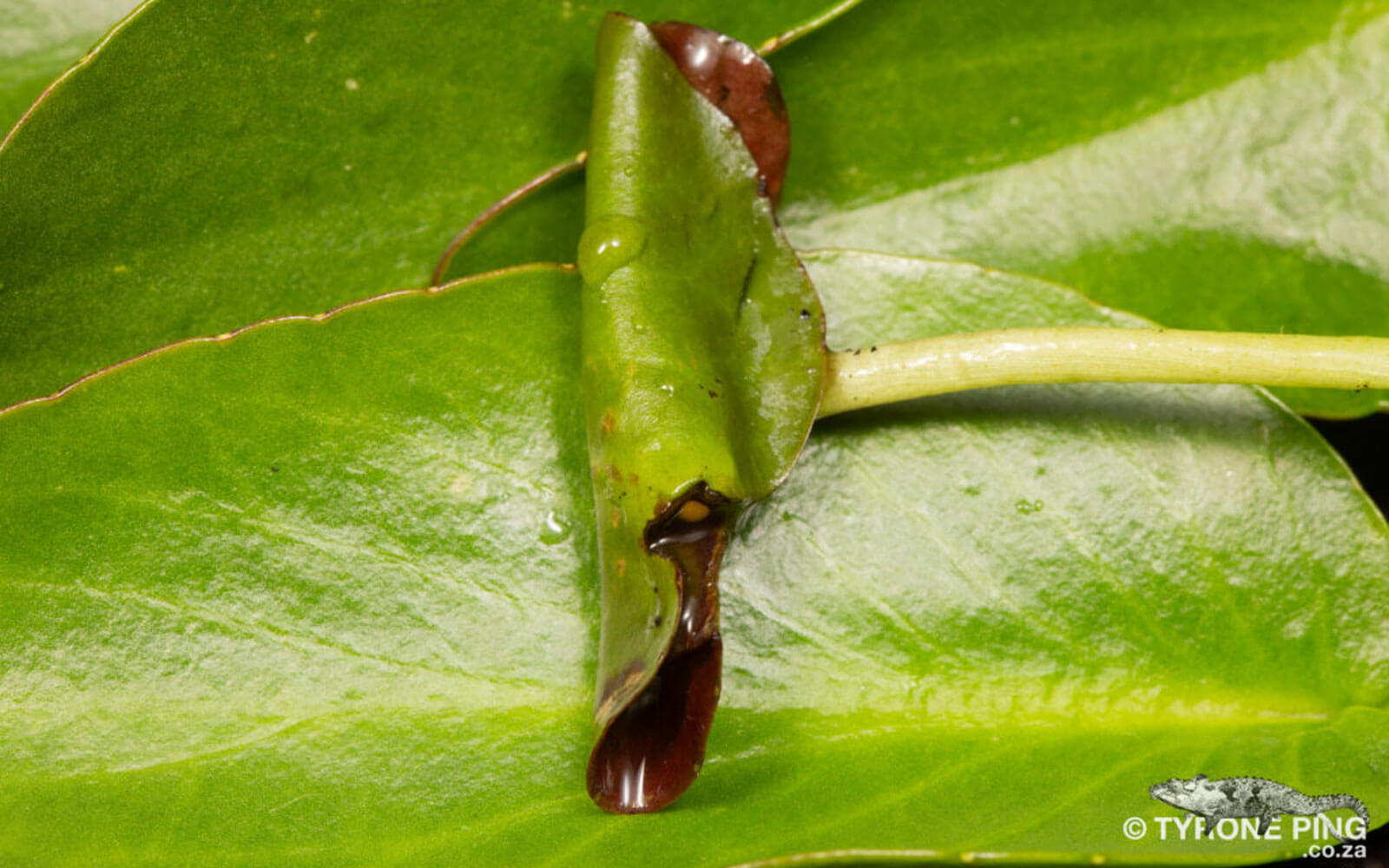
Knysna Leaf-folding Frog (Afrixalus knysnae)
Photo: Tyrone Ping
Southern Africa is home to about 12 species of Leaf-folding Frog of the genus Afrixalus. These, usually tiny frogs, build nests by folding a leaf overhanging water and securing it with a secreted adhesive to protect their eggs from drying out and predators. The female lays eggs inside the rolled leaf, and the male may help seal the nest. The process can involve one or more males and females, sometimes leading to communal nests, with construction taking several hours and potentially occurring over multiple sessions. A mating pair finds a broad leaf overhanging still water or uses multiple narrower leaves/grass stems if needed. The male and female remain in amplexus while the female lays a clutch of eggs, which are covered in an adhesive jelly to stick them to the leaf and each other. The couple uses their back legs to fold the leaf edges together, often forming a cone or tube shape around the eggs The male then departs, leaving the female to hold the structure in place while the adhesive sets. In some species, the male secretes a glue to seal the edges as they are rolled. The female may stay to hold the nest as the adhesive sets, and in some cases, she may return to add more layers of foam or a second layer of jelly.
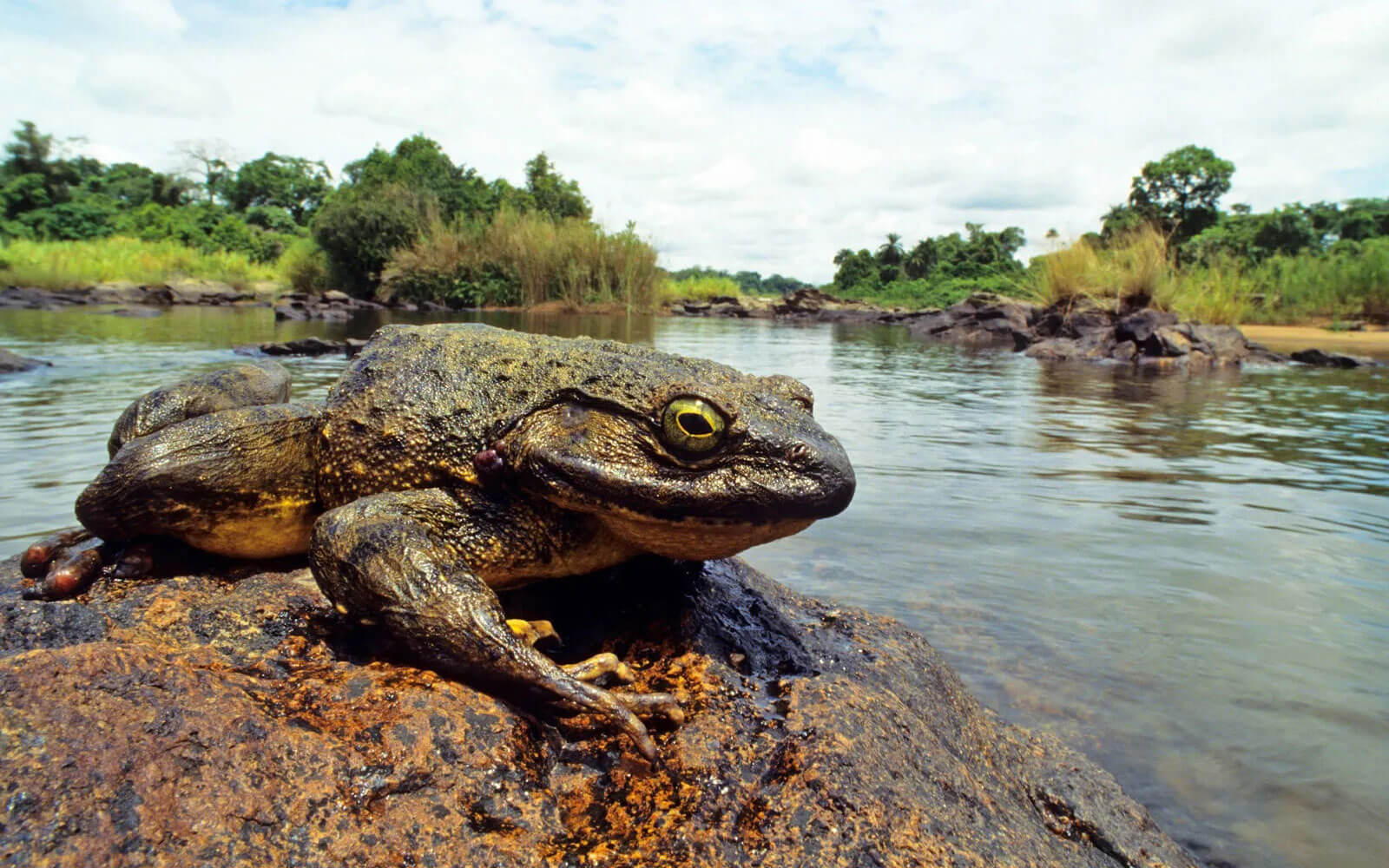
Goliath Frog (Conraua goliath) the world’s largest frog
Slightly further afield, but still in Africa, the largest frog in the world, the Goliath Frog, (Conraua goliath), of Cameroon is a king at nest construction. This large river-dwelling species will actually moving large stones and rocks weighing more than half its weight to create dammed ponds on sandy riverbanks that serve as nesting sites. This high-effort nest-building behaviour could also be why the frogs grow so big (up to 3.3 kgs!). The species makes use of three kinds of nest sites – those located in pre-existing depressions on rocks within the riverbed, others that are shallow pools that the frogs seemed to have enlarged by digging and clearing out leaf litter and other sediments, and a third, where shallow nests appear to be cleaned-out pools on sandy or gravel ground, surrounded by large stones and rocks that had visibly been moved recently, suggesting that the frogs had pushed the rocks to the pond’s edge. “Digging out a nest that exceeds 1 m in diameter and 10 cm in depth, by moving coarse gravel and stones of several kilograms, is a serious physical task, and suggest a potential explanation for why Goliath frogs are among the largest frogs in the world,” said the German and Cameroonian researchers involved in the study investigating these nests. It is thought that the rock pools slow down water flow and protect eggs and tadpoles from being washed away by strong currents and from predators, as well as regulate temperature to create a stable environment for offspring. The study found that at least one adult frog guards the nest overnight to protect it.
Not only do these fascinating and diverse behaviours promote survival of eggs and tadpoles (larvae) to the next stages of development, but it has been hypothesised that parenting in frogs has allowed the invasion of terrestrial habitats by the ancestors of terrestrial vertebrates.
Once again, a great example of how we are more similar to frogs than we may have thought!

About the author
Jeanne Tarrant, aka the “Frog Lady”, has worked in amphibian conservation and research for 18 years. Her passion for amphibians was ignited when she enrolled at North-West University in 2006 and went on to complete an MSc (2008, cum laude) and PhD (2012) through the African Amphibian Conservation Research Group. Thereafter, she conceptualised the Endangered Wildlife Trust’s Threatened Amphibian Programme (TAP) and ran successful projects across South Africa focused on the country’s threatened frog species for 12 years. In 2024 she embarked on a new amphibian-focused venture in the form of Anura Africa.
At Anura Africa, we aim to implement landscape-level amphibian conservation supported by scientific evidence and research. Anura Africa is committed to advancing amphibian conservation by identifying needs and knowledge gaps in South Africa and across the continent, bolstering research capacity through citizen science and partnerships with academic institutions, and implementing conservation actions informed by evidence. We strive to conserve and develop sustainable landscape-level habitat protection by implementing best practice natural resource management interventions aimed at ensuring the conservation of critical amphibian habitat. Our approach is guided by global amphibian conservation priorities, with a focus on enhancing ecosystem resilience and fostering species adaptation. Integral to our mission is supporting mindset shifts towards African amphibian conservation by improving awareness of the importance of amphibians, facilitating skills transfer, and strengthening local capacity. In her role as chair for the southern Africa regional working group for the IUCN’s Amphibian Specialist Group, Jeanne is well-placed to support these objectives.
In 2020, Jeanne was the recipient of the prestigious Whitley Award, or “Green Oscar” for her work in conservation, a career highlight with Sir David Attenborough narrating this short video. This award is given to grassroots conservationists from the global south – i.e., Africa, Asia and South America. Jeanne was one of 112 applicants, short-listed down to 6 winners, and the only recipient with a project focused on amphibians. Edward Whitley, founder of the Whitley Fund for Nature, said that Jeanne is an inspiring leader who tirelessly advocates for amphibians – an often-overlooked group. “We hope that this award will allow her to spread her important message far and wide and bring about real change for amphibians and their habitat through science, policy, and community education.” In 2024, Rolex recognised Jeanne’s work (one of 1500 applicants) through an exceptional small grant linked to the Rolex Awards for Enterprise, one of the pillars of the Rolex Perpetual Planet initiative, catalysing the launch of Anura Africa.
Anura Africa’s vision is to use research and conservation management to promote the resilience of ecosystems in multi-use landscapes. We advocate for amphibians as indicators of microhabitat health within larger conservation areas. By focusing on these indicators, Anura Africa aims to ensure the health of entire ecosystems, benefiting a wide range of species and ecological functions.
Instagram: anura_africa
Facebook: Anura Africa
LinkedIn: Anura Africa NPC