
Taking care of ‘junior'
Text Steve Woodhall Photographs Steve Woodhall or as credited
Parental care in butterflies and moths
This brief looked like being a difficult one. “Nesting and rearing” behaviour is not a ‘thing’ with butterflies and moths. They’re insects, and insects’ egg laying behaviour is ‘lay and forget’, right?
It’s true that they don’t build nests for their eggs, and by the time the caterpillars hatch from the eggs the female is long gone and probably dead. But that doesn’t mean the female does nothing to protect her offspring. The way the eggs are laid often has a big influence on the caterpillars’ survival. And as for the caterpillars, sometimes instinct kicks in. Some species ‘outsource’ parental care to other species…
Laying eggs in just the right way
Anyone who has watched a butterfly laying her eggs will know that some species are extremely choosy as to where they lay them. Some species choose their larval host plants by smell. Their scent organs are in their ‘feelers’ or antennae. A female looking for an egg laying site will fly slowly, touching plants with her antennae. Others have such good colour vision that they can see what is the ‘right’ plant from its shade of green!
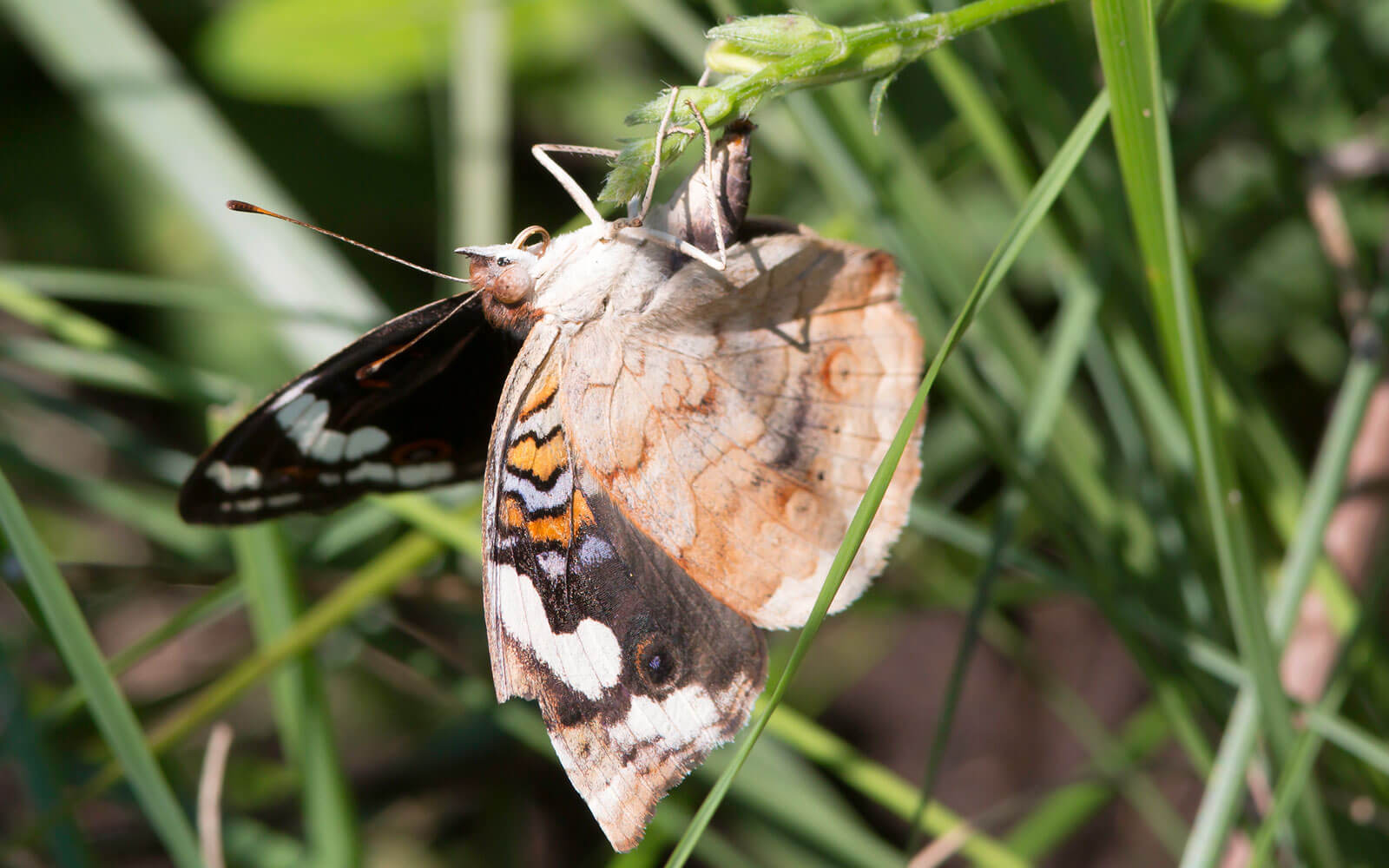
A familiar local butterfly, the Dark Blue Pansy or Blue Spot Pansy, Junonia oenone oenone, being very choosy about where to lay a single egg.
Junonia oenone oenone has several local host plants, but its favourite seems to be African Coromandel Asystasia intrusa (was gangetica). I have a big patch of this in my garden and often see females fluttering slowly around it, touching (or palpating) its shoots and leaves with her antennae. They always choose a young shoot to lay on, sometimes inserting the tip of her abdomen between the leaflets before letting go.
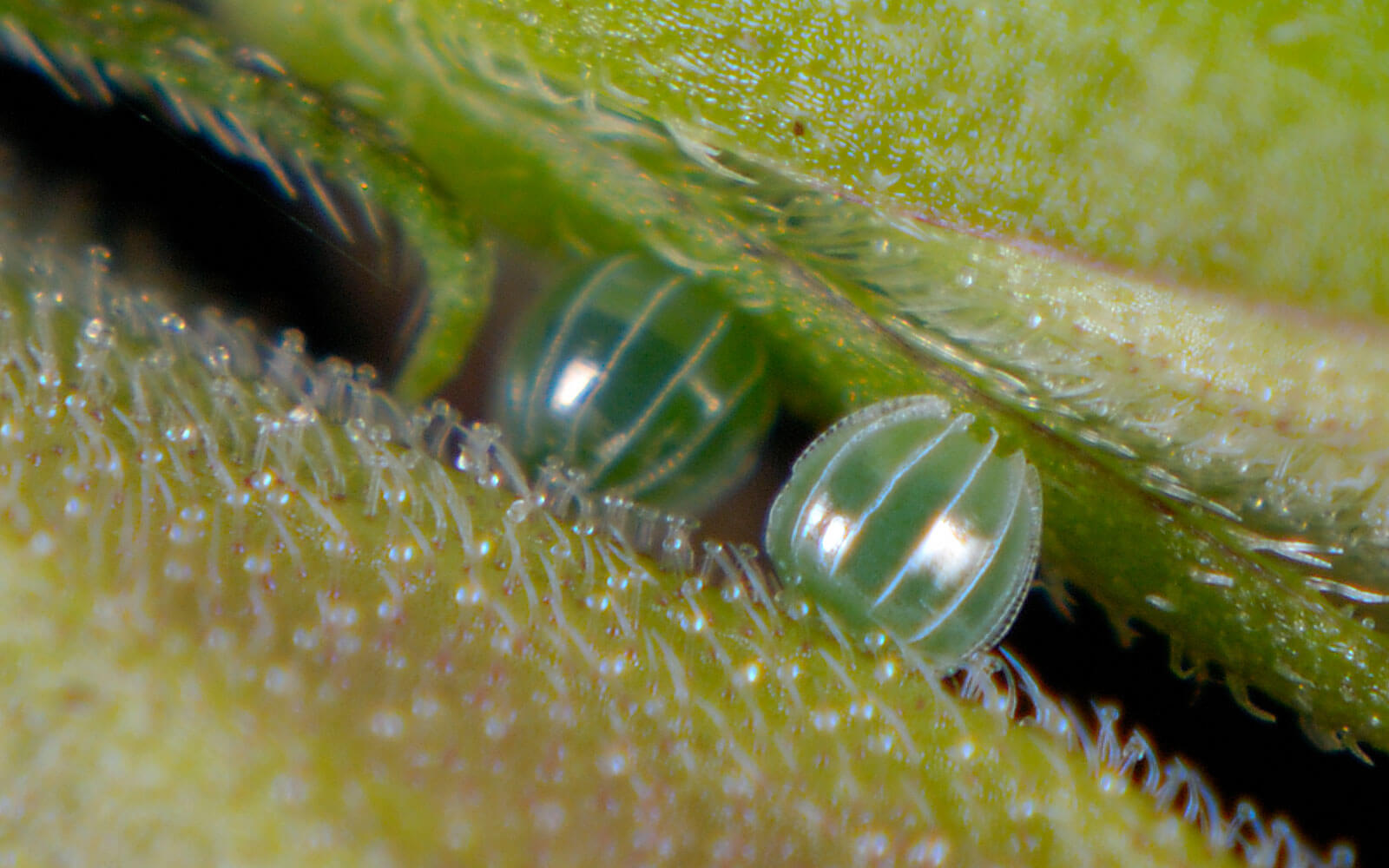
A pair of Junonia oenone oenone eggs buried deep inside a shoot of African Coromandel
These eggs are hidden deep inside the young leaves of the plant, where predators like parasitoid wasps will struggle to find them. The newly eclosed larvae will have soft, nutritious growing shoots to feed off – and give them a head start in life. So the female butterfly, by being selective about where she lays her eggs, has nurtured her offspring despite not building a nest or feeding them herself.
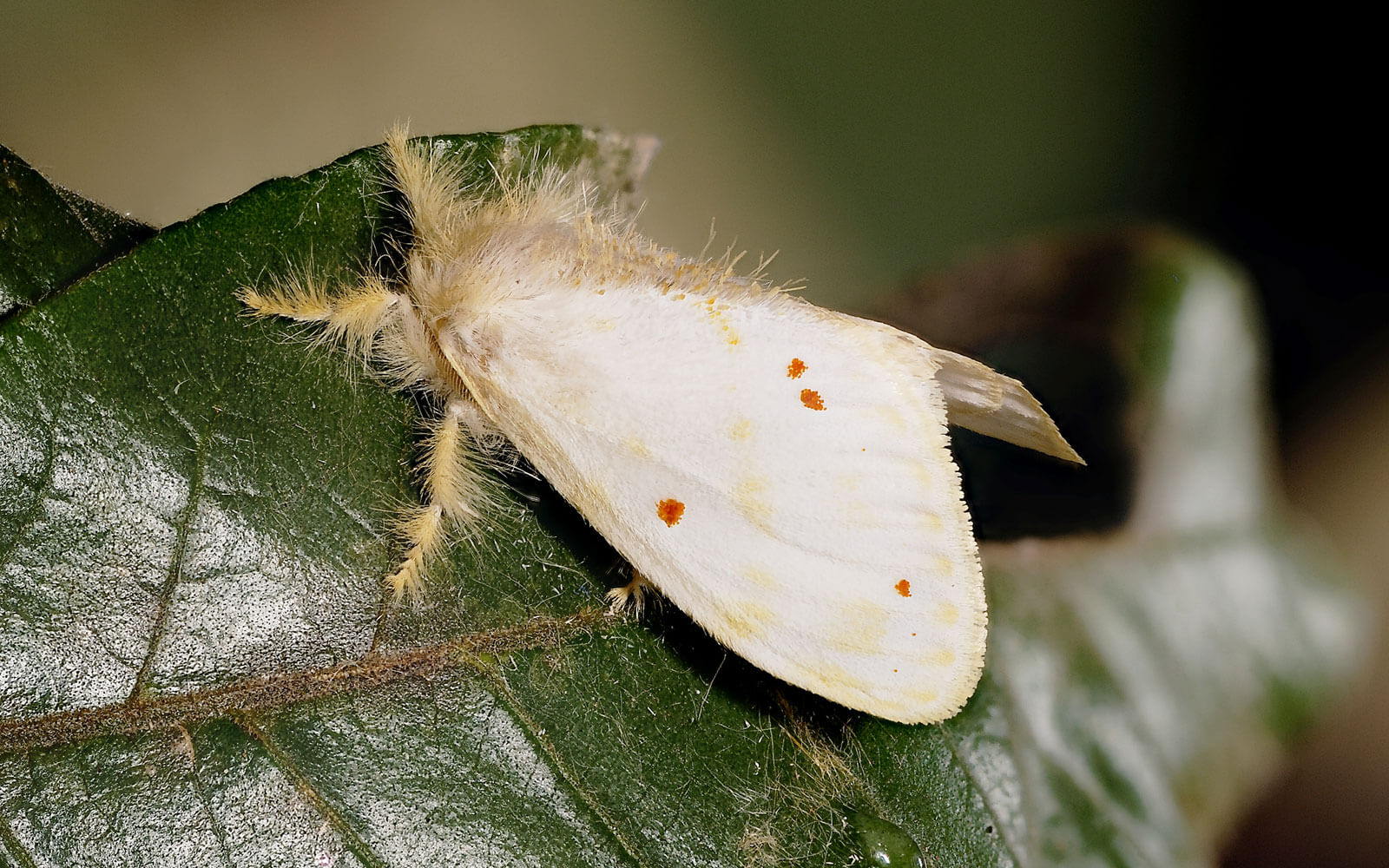
Red dotted Euproctis female has many urticating hairs (setae) covering her body, and the end of her abdomen.
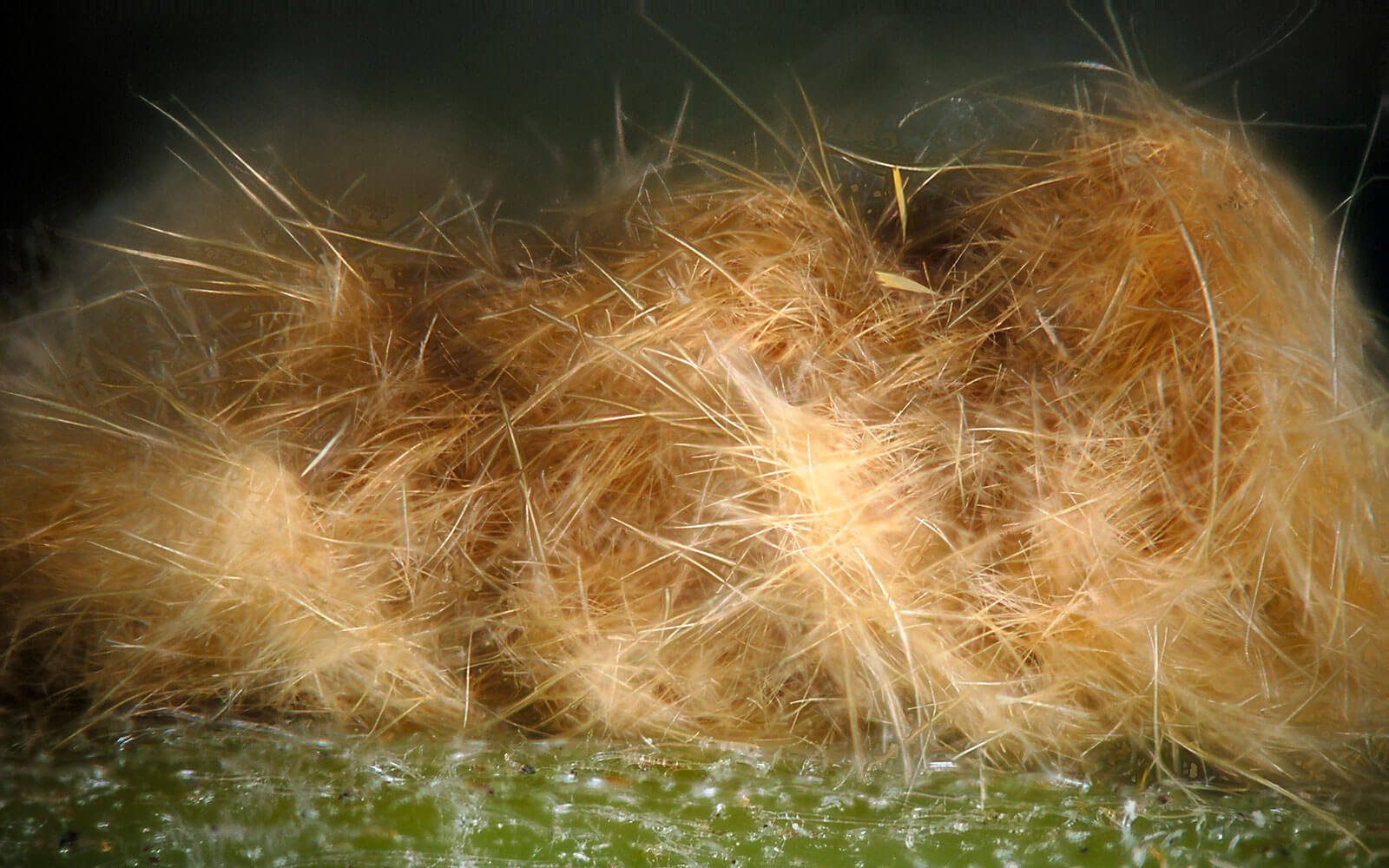
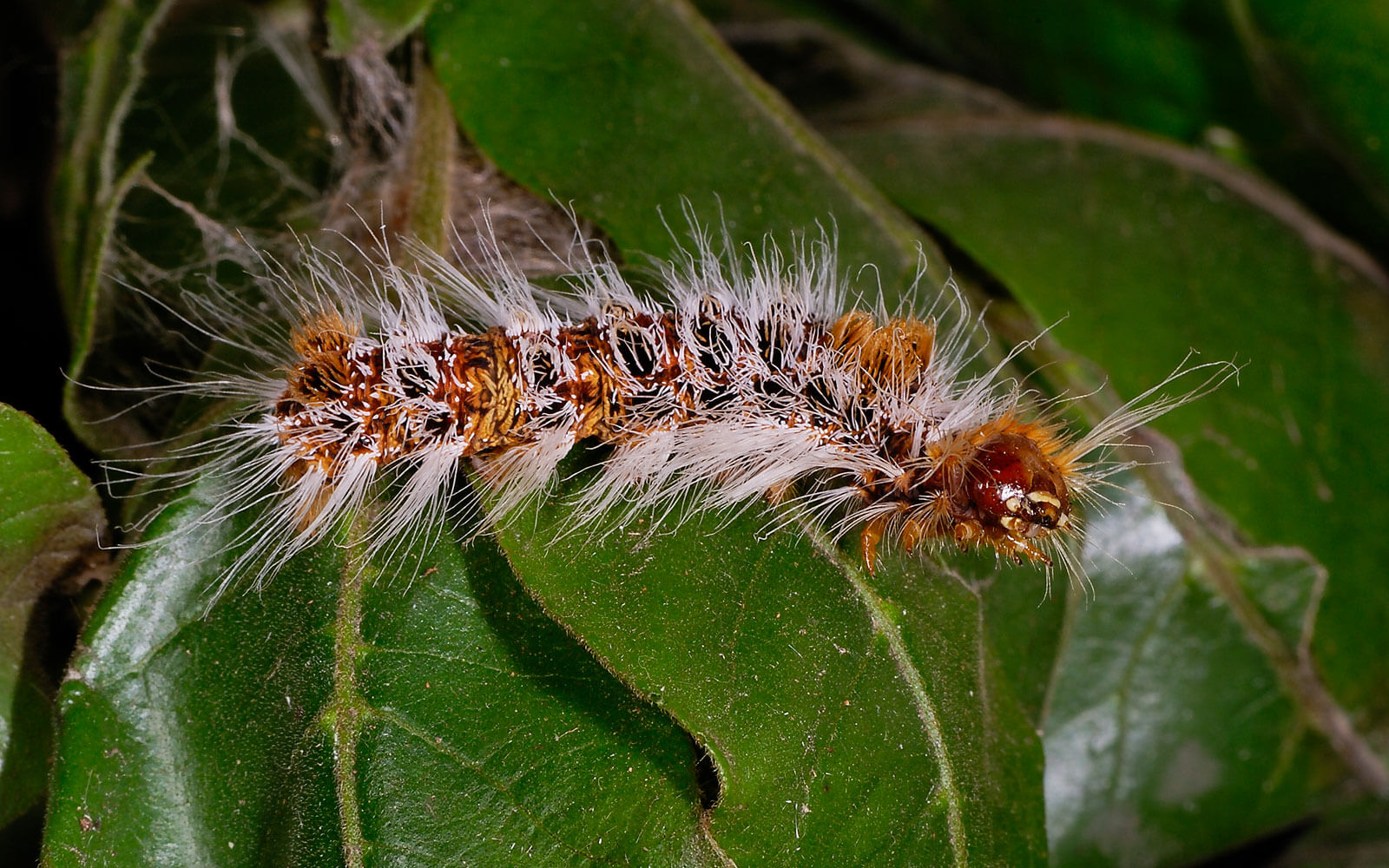
Red dotted Euproctis caterpillars are also covered in itchy hairs
Butterflies aren’t the only lepidopterans to take advance care of their young. When a female Red dotted Euproctis moth lays her eggs, she uses the urticating hairs to cover the eggs with a protective layer that deters predators that might eat them. When the caterpillars are active on the trees their hairs deter predators by floating on the air and irritating them. This moth is well known to cause problems to asthmatic humans. She doesn’t do it to irritate people – all she’s doing is protecting her babies in advance! And the caterpillars are more than capable of looking after themselves.
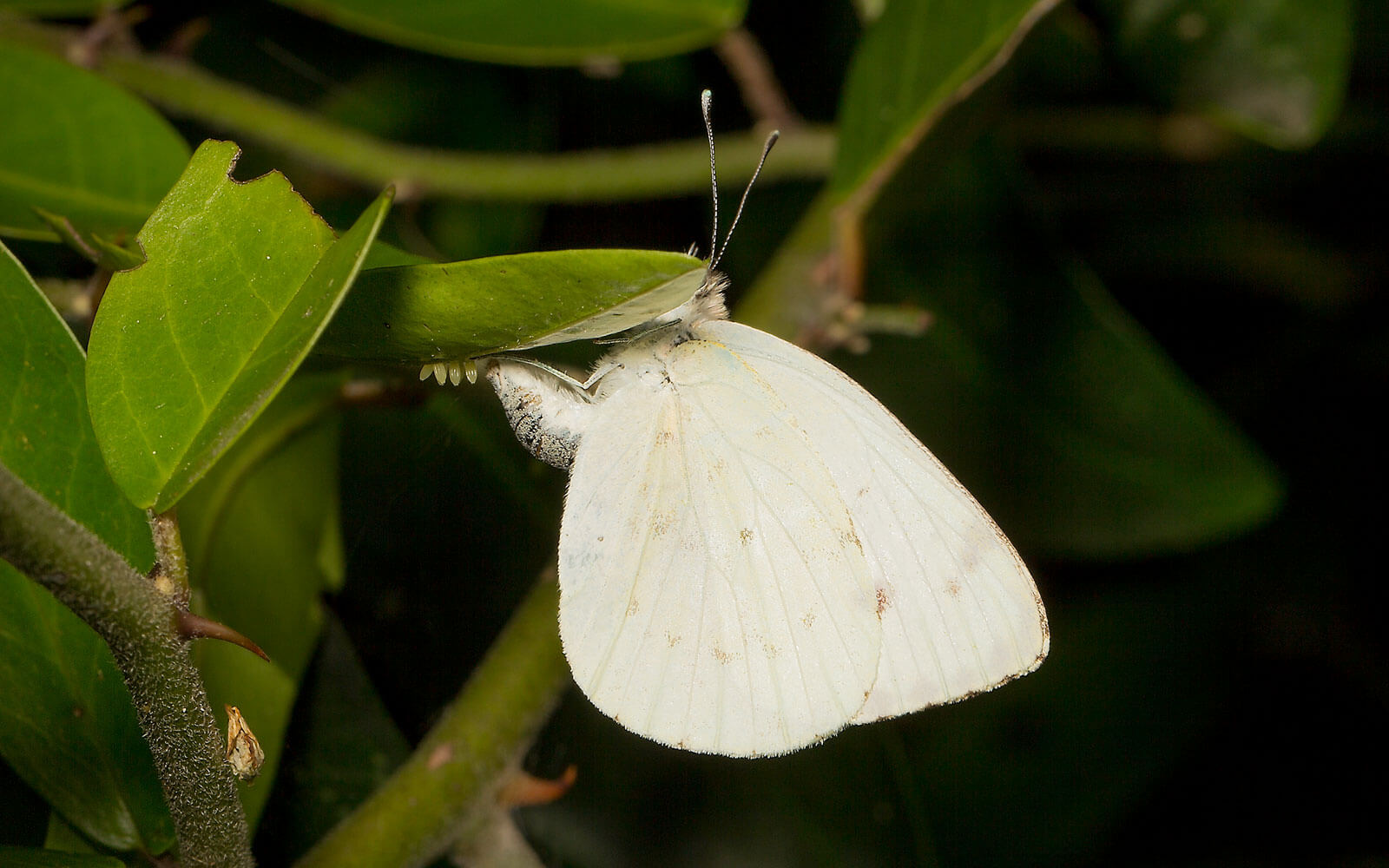
Female African Ant-heap White Dixeia charina laying a batch of eggs on her host plant
Many butterflies have excellent colour vision, as we explained in a previous edition of Leopard’s Echo (Visual Superpowers). This female African Ant-heap White Dixeia charina probably detected her larval host plant Woolly Caper-bush Capparis tomentosa through its strong odour of sulphur-containing plant oils. Recent evidence hints that butterflies in this family (the Pieridae) use colour vision to detect which leaves have the right properties to provide the caterpillars with optimum nutrition.
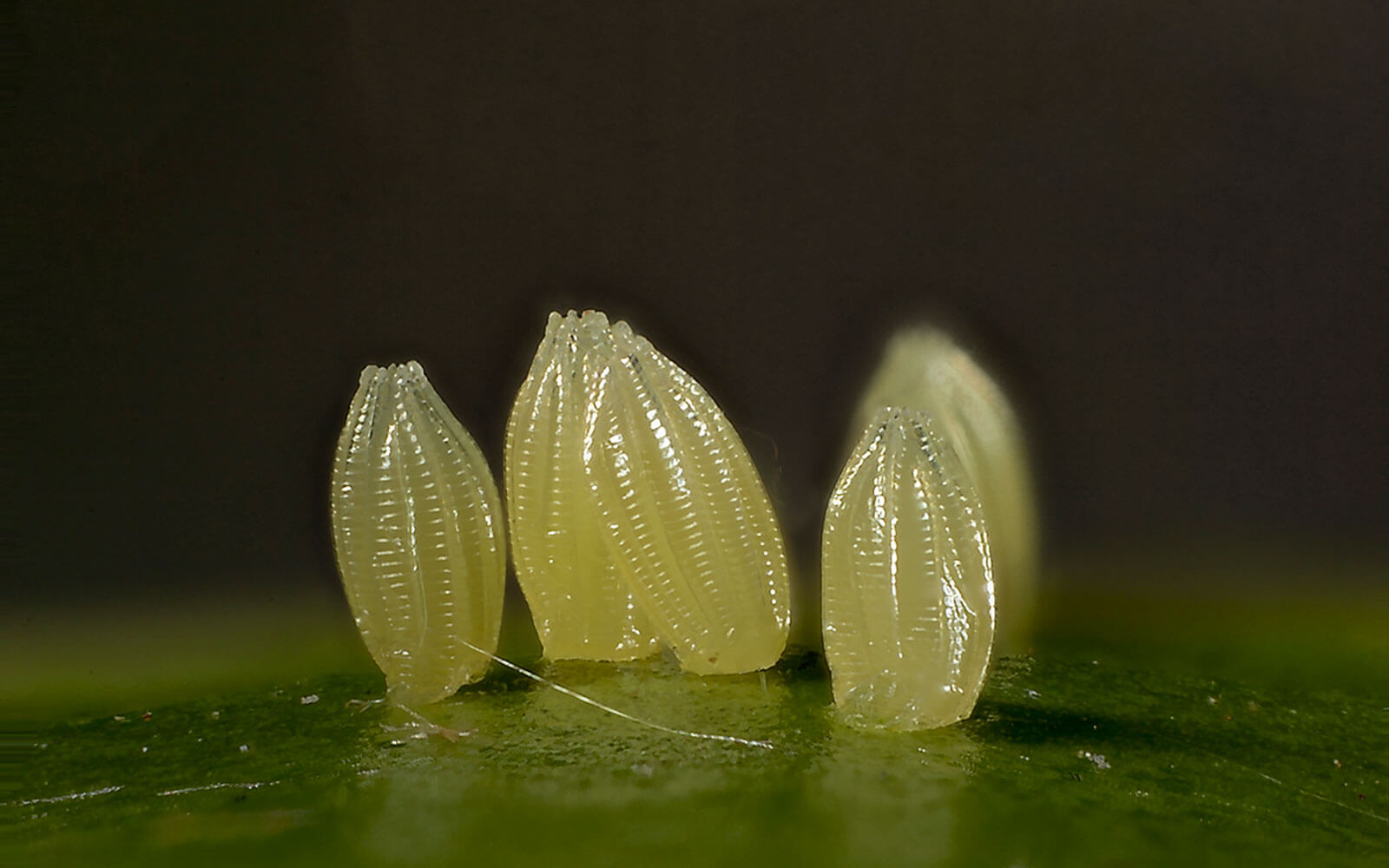
African Ant-heap White Dixeia charina eggs laid in a batch on a leaf of the host plant
This female has laid a batch of several eggs on a selected leaf of the host plant. The caterpillars are not particularly gregarious. The placing of a number of eggs on the same leaf suggests that she was ‘hedging her bets’ by choosing a site she saw as being particularly nutritious. Another example of pre-parental care of offspring.
Outsourcing
Although many butterflies and moths take care to lay eggs strategically to increase their chances of reproductive success, with most, it’s still ‘lay and forget’. There are some butterflies that outsource parental care to other insects, though. There are several routes for doing this. They usually involve ants. We call it ‘ant association’.
We don’t have many ant-associated butterfly species in the Kloof area. The most extreme examples are the ‘Giant Cupids’ in the Lycaenid genus Lepidochrysops, two of which are on our butterfly list.
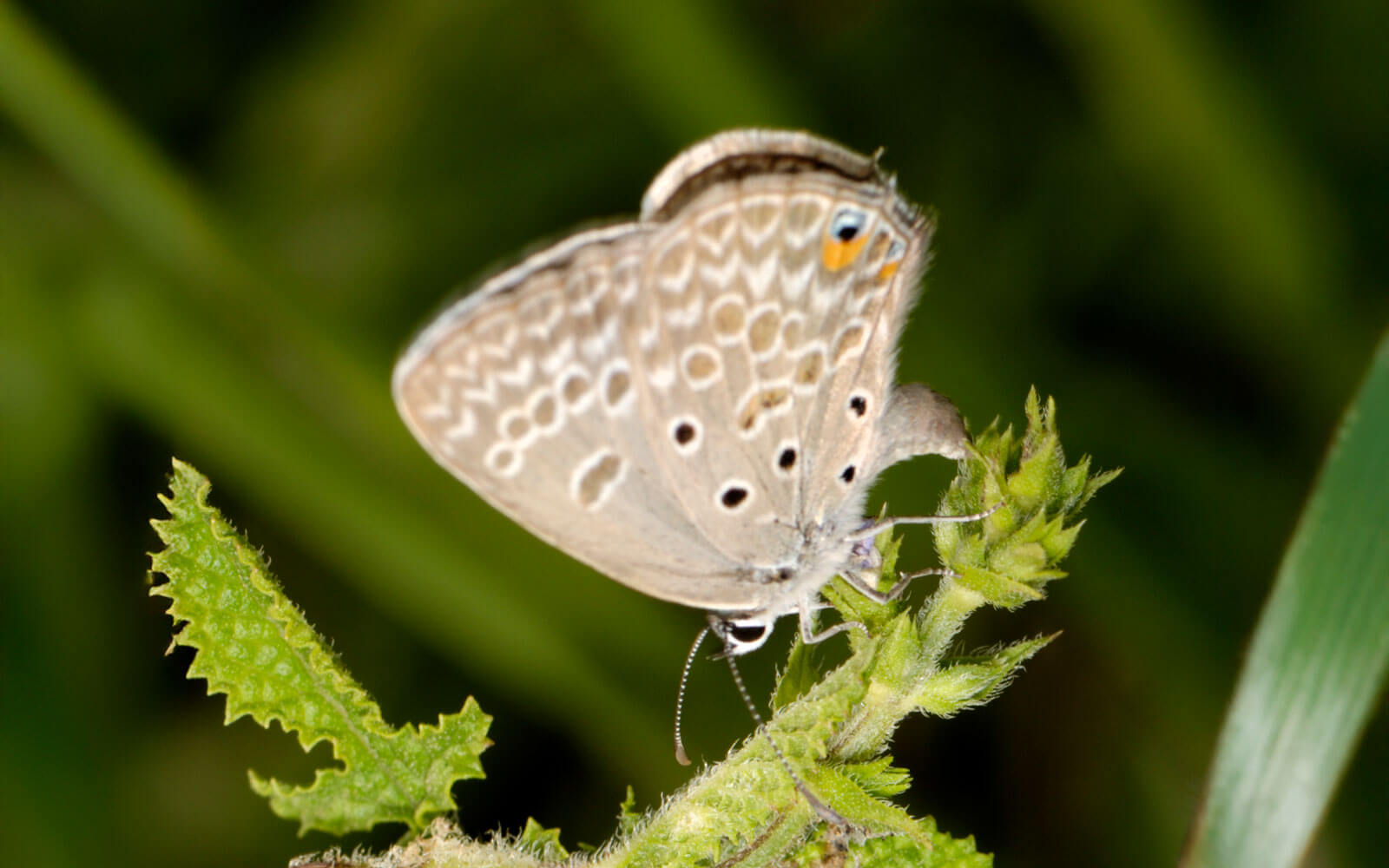
A female Patrician Giant Cupid, Lepidochrysops patricia, laying an egg on one of the larval host plants, a Salvia species.
Patrician Giant Cupids use several plants in the Lamiaceae (like Salvia) and Verbenaceae (Bird’s brandy, Lantana rugosa) as larval food. It has also moved onto the invasive Cherry Pie Lantana camara. The females lay eggs on the growing shoots and flower buds, and the young larvae eat the shoots and the immature seeds inside the flowers’ ovaries.
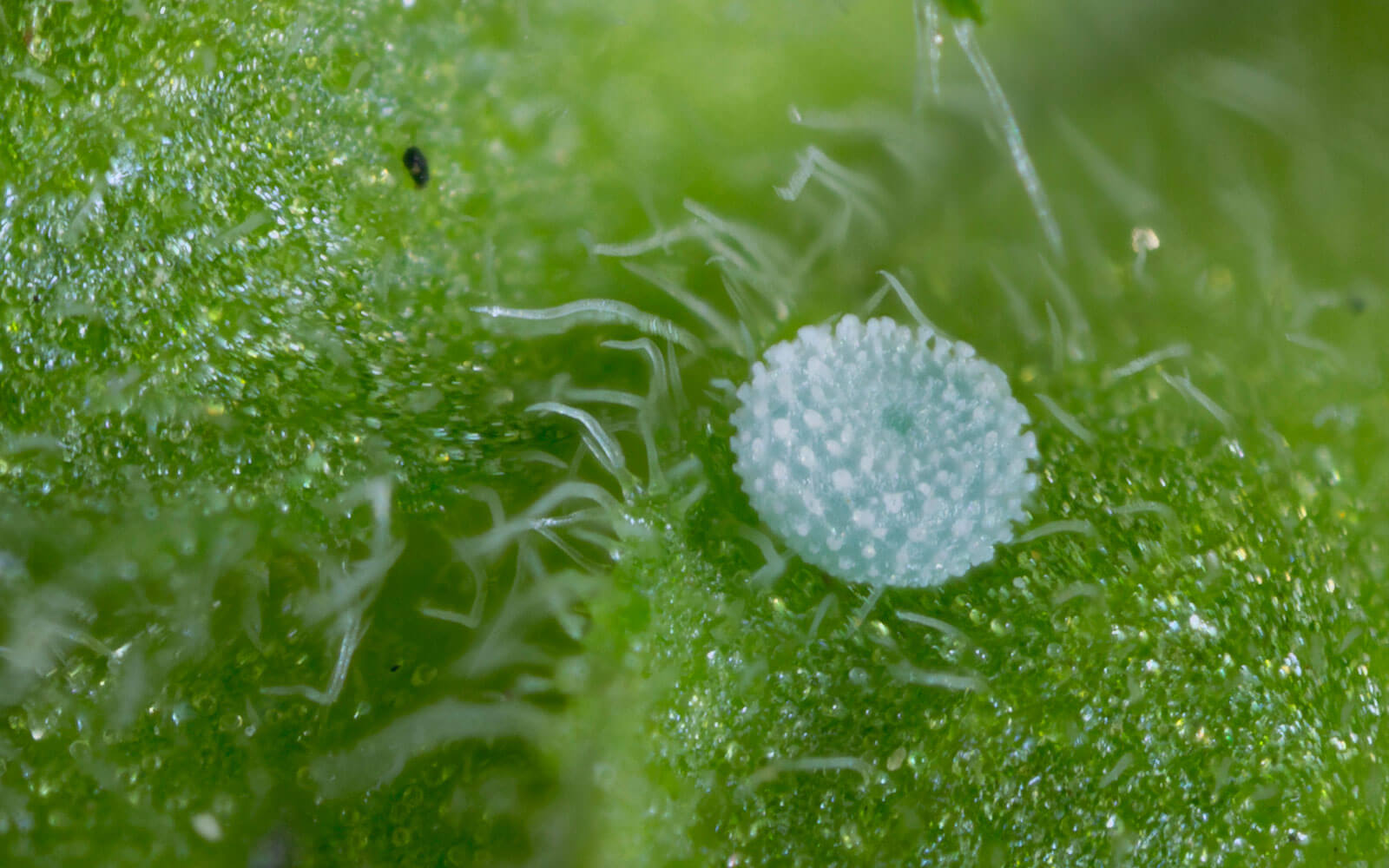
Giant Cupid eggs like this Patrician Giant Cupid look like tiny pills covered in microscopic warts. They are only about 0.6mm across by 0.3mm high.
Unfortunately, there are no photographs of the next events currently available, but for those interested the life history is described on page 25 (plate 5) of ‘Life Histories of the South African Lycaenid Butterflies’ by Gowan C. Clark and C. G. C. Dickson, SBN 360 00139 4, Parnell, 1971, Cape Town.
When the caterpillar reaches its 3rd instar it is carried by Spotted Sugar Ants, Camponotus maculatus, into their nest where it feeds on the ants’ brood. It then pupates inside the nest. Later, the adult butterfly emerges, crawls out of the nest, and up a leaf or twig to expand its wings and fly off, mate, and start the process again.
By doing this the females are ensuring the very best ‘babysitters’ for their caterpillars! They are protected from predators and provided with food.
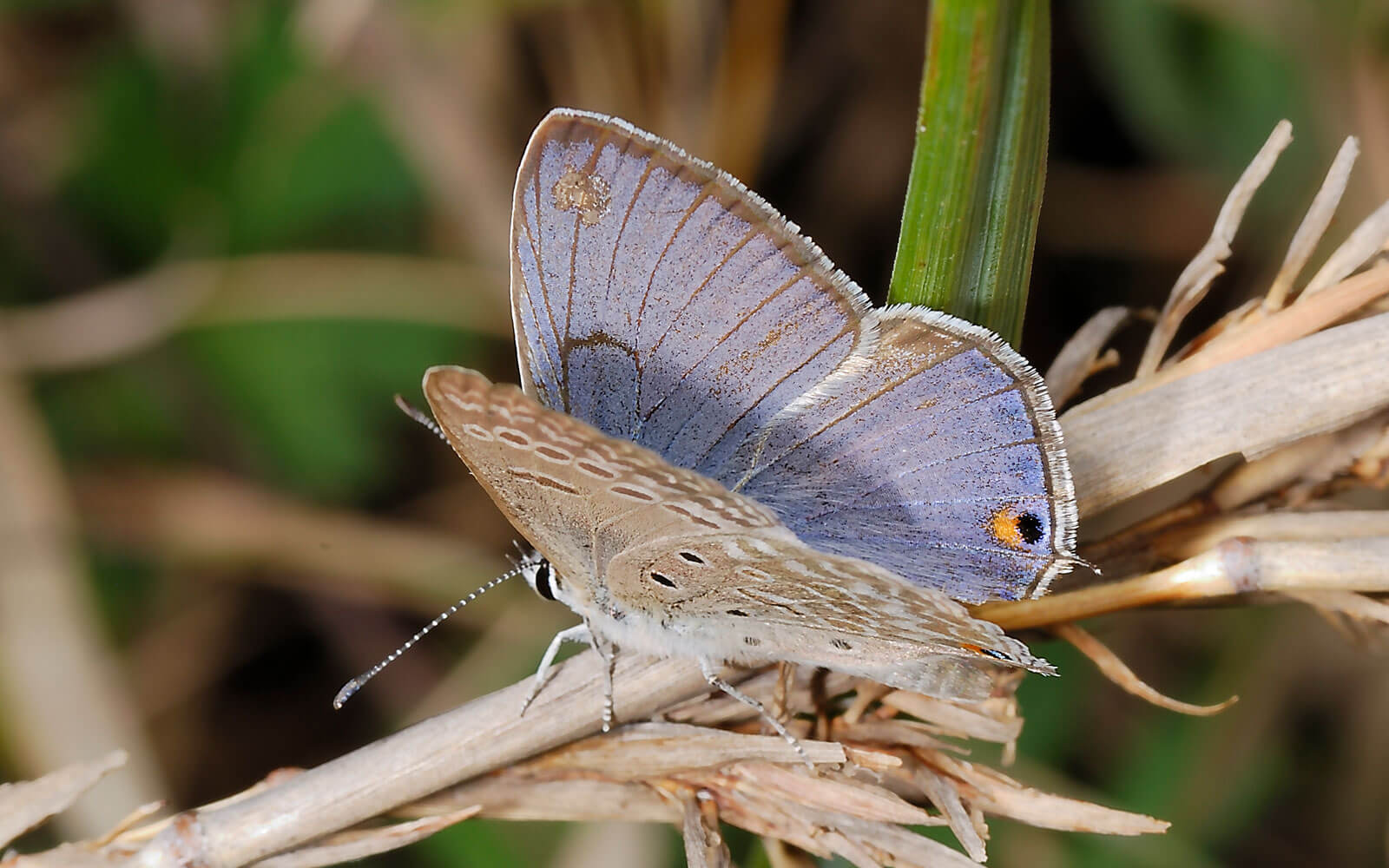
A male Patrician Giant Cupid; one of the largest of our ‘blue’ butterflies and a stunning sight when seen flying across the veld.
We have 50 species of Lepidochrysops in Africa, ranging from common and widespread like the Patrician Giant Cupid to rare ones. An example of one of those is the officially (IUCN Red List) Endangered White-spotted Ketsi Giant Cupid.
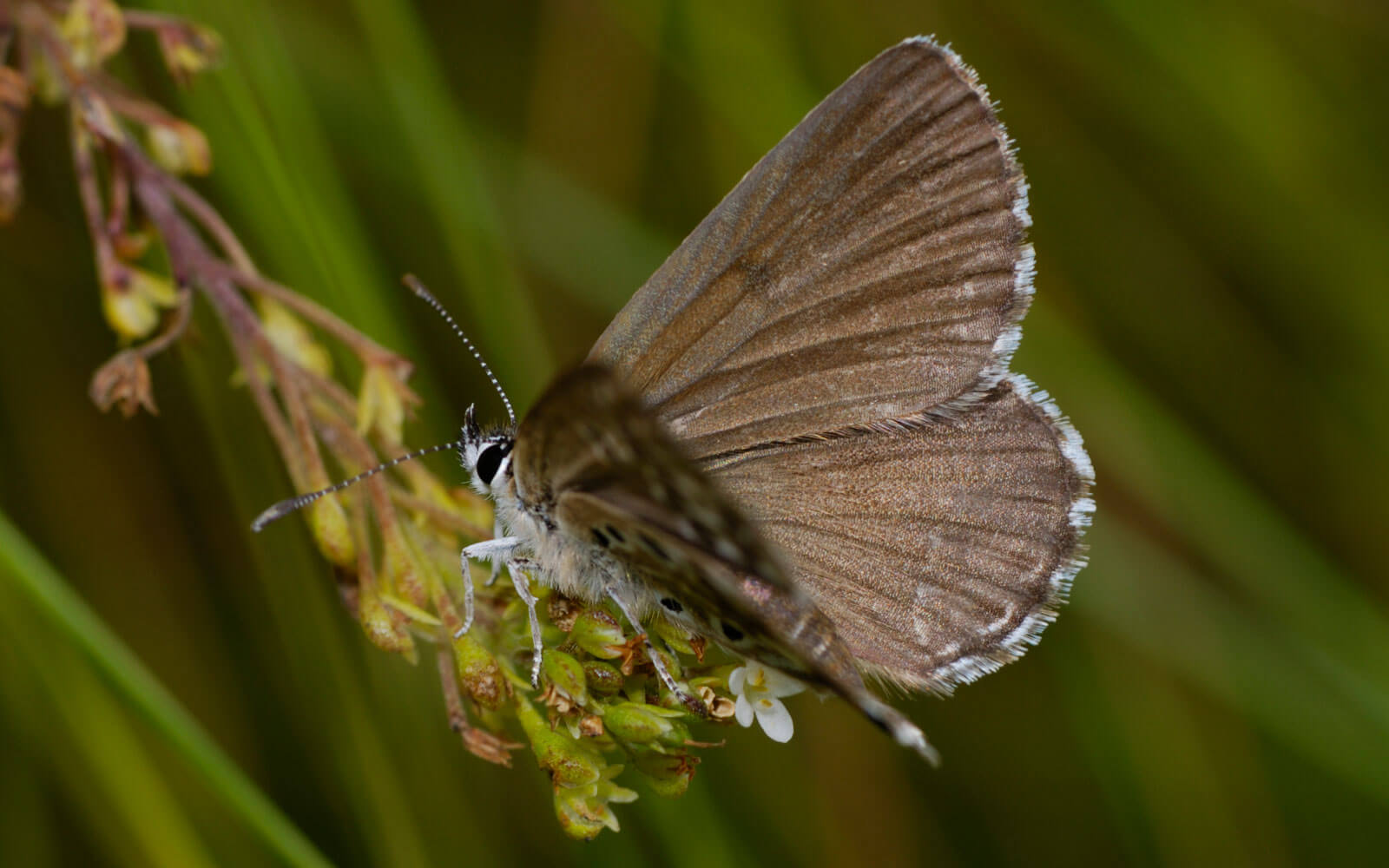
White-spotted Ketsi Giant Cupid Lepidochrysops ketsi leucomacula
An example of a rare Giant Cupid is the officially (IUCN Red Listed) Endangered White-spotted Ketsi Giant Cupid. This is found just down the coast at Margate where it is threatened by overgrazing cattle inside a nature reserve set up to protect it.
Not all ant-associated Lycaenids take it to such an extreme. Some females select egg-laying sites where they can smell the presence of a certain ant species, then leave it to the ants and the caterpillars.
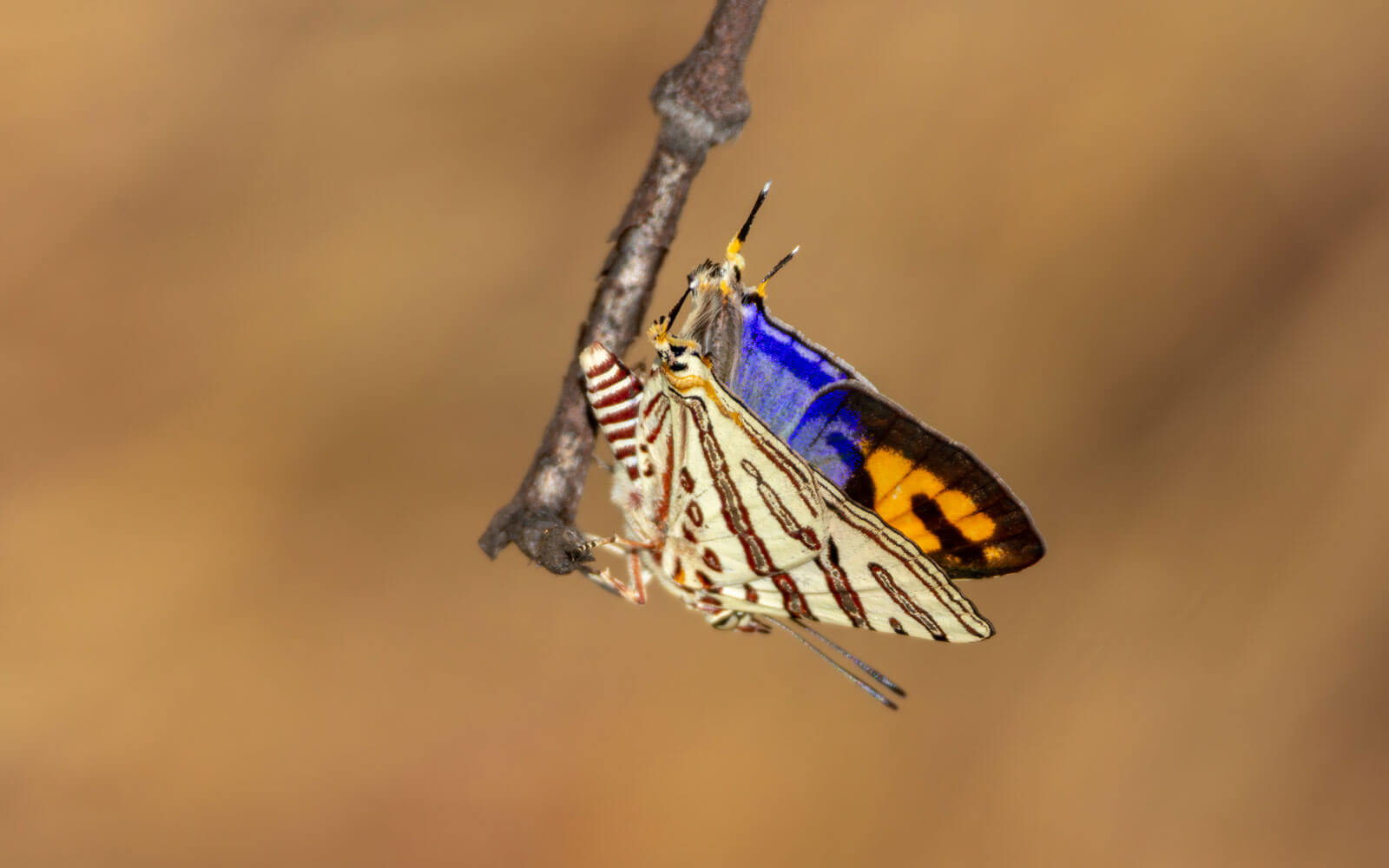
A male Natal Silverline, Cigaritis natalensis perching on his territorial lookout
The Natal Silverline is a widespread species in tropical and subtropical Africa and is often seen in Kloof. Hilltops like the one at Nkonka Trust are a good place to see them. The females have a wide range of host plants to lay eggs on. Examples are Turkey-berry Canthium inerme, Smooth Tinderwood Volkameria glabra, and Large Sourplum Ximenia caffra.
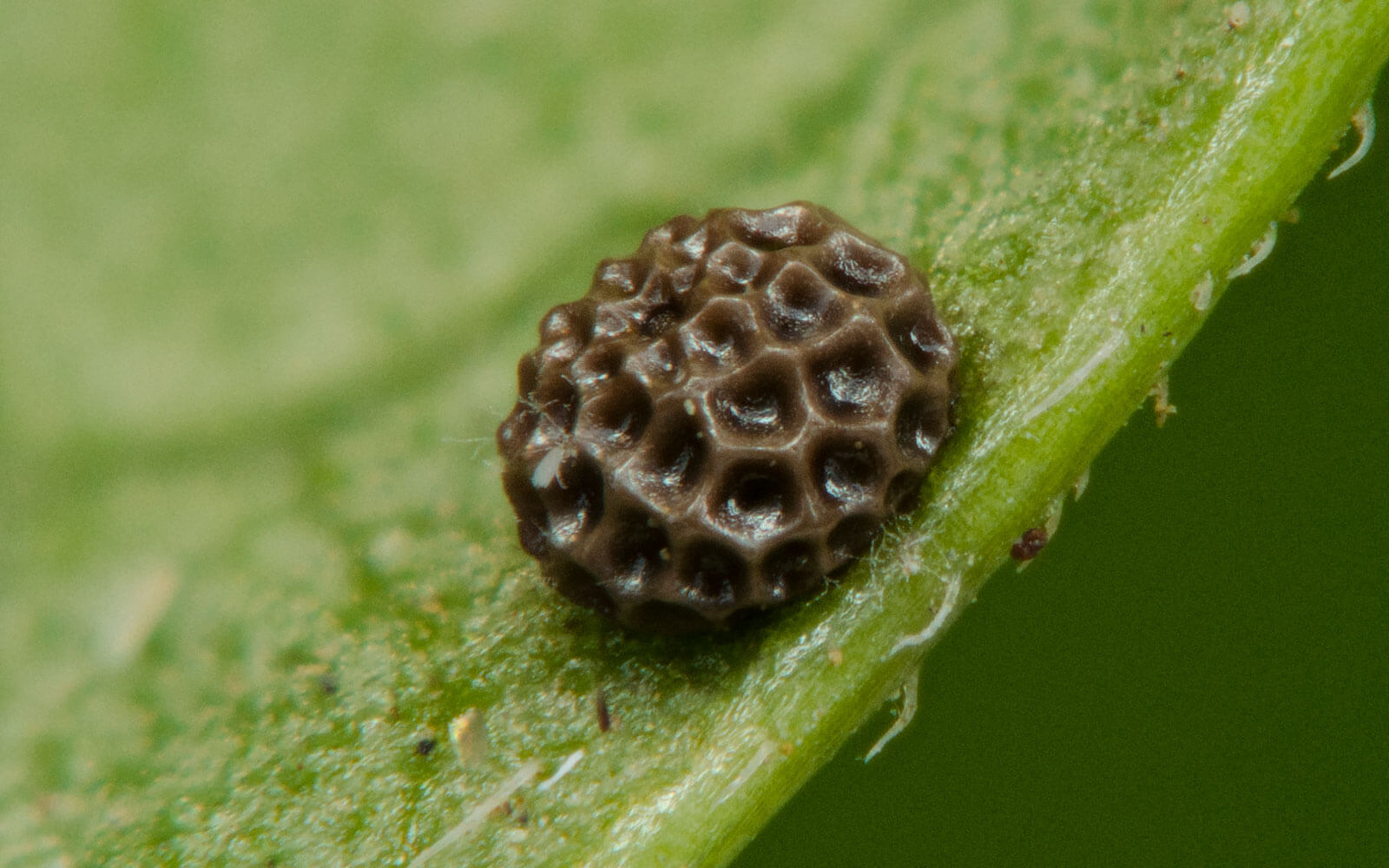
An egg of Natal Silverline, Cigaritis natalensis, laid on Smooth Tinderwood.
Photo: Kevin Cockburn
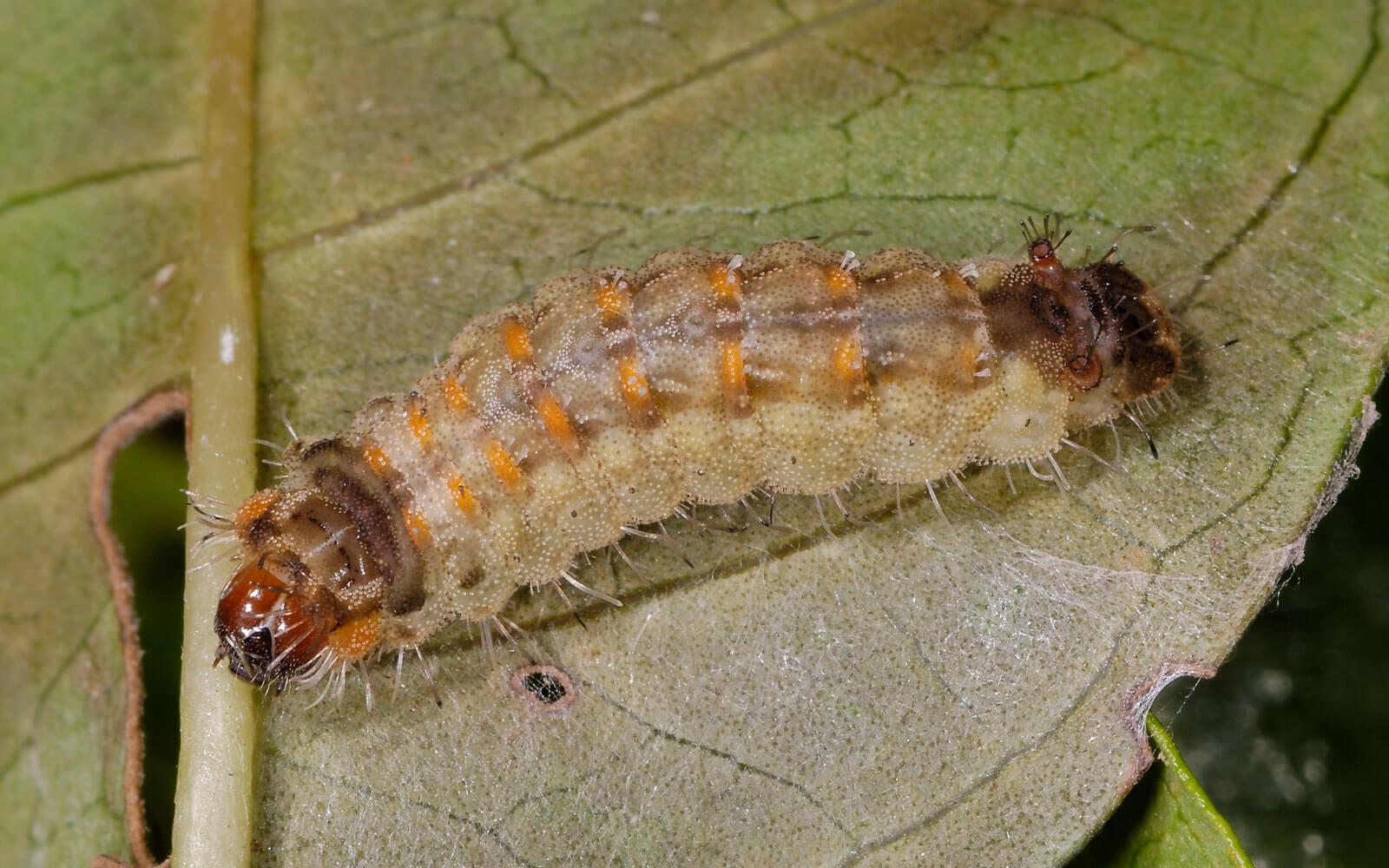
A fully grown caterpillar of the Natal Silverline
Natal Silverline caterpillars are associated with ‘Cocktail’ ants in the genus Crematogaster. The caterpillar’s body is covered in tiny glands that emit chemicals it uses to control the ants’ behaviour. At its rear end are two structures called ‘tentacle organs’ that also play a role in ant control. The caterpillars shelter inside ‘bivouacs’ that the ants construct from chewed-up plant fibres (known as ‘carton’) on the stems of the host plants.
This particular caterpillar was raised in captivity away from any ants, directly from the egg shown above. It probably wouldn’t have survived in the wild without ants to protect it. This is another example of ‘outsourced childcare’ since the presence of the ants deters small wasps and flies that would lay their eggs on the caterpillars and eventually kill them.
Closely related to the Silverlines and included here to illustrate some of the points I’ve made, are the Opals, genus Chrysoritis.
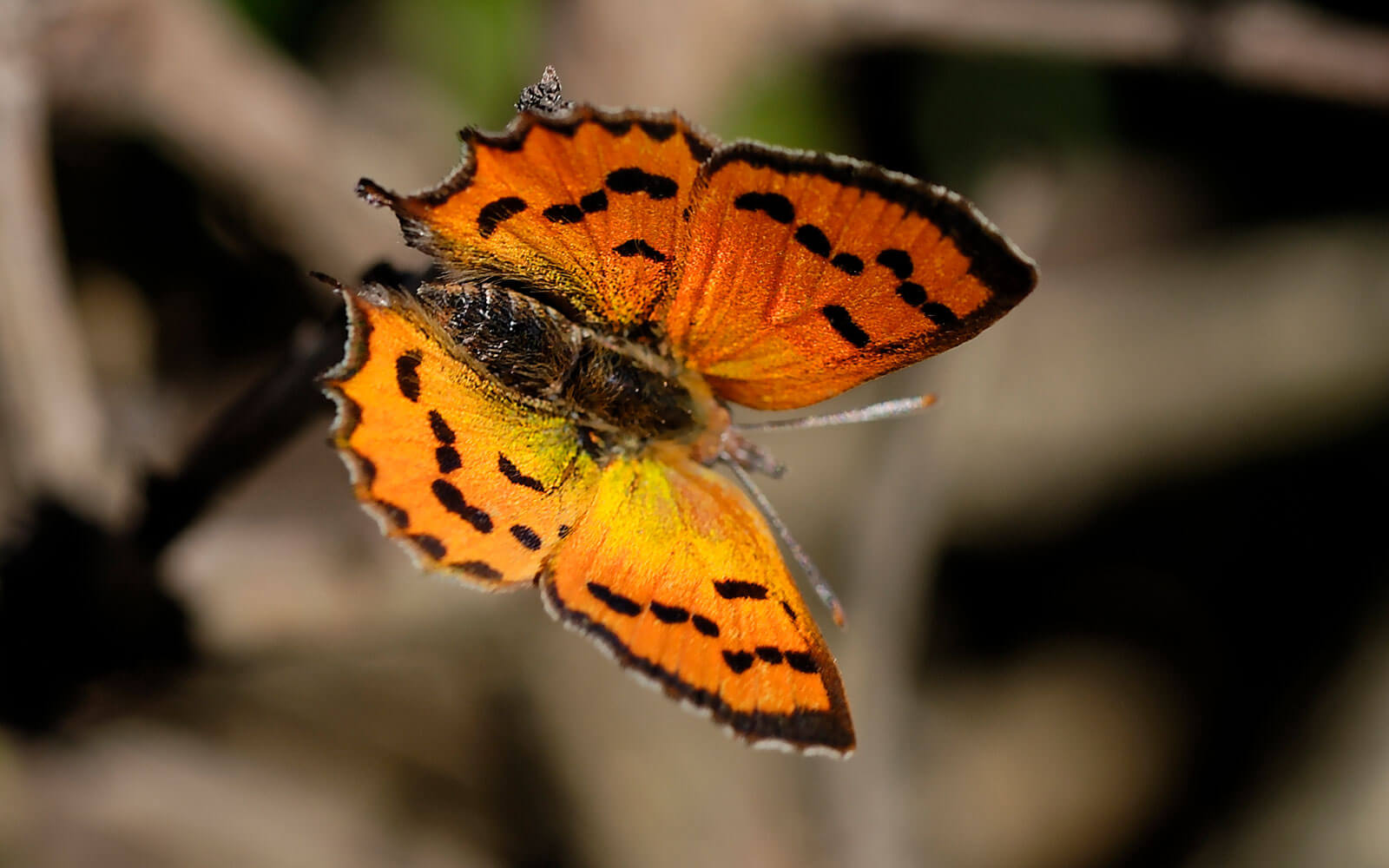
A male Natal Opal, Chrysoritis chrysaor natalensis
The Natal Opal is a gorgeous little butterfly with an iridescent golden-copper upperside. There is only one recent record from eThekwini, near Summerveld. Its caterpillars feed on Tick-berry, Osteospermum moniliferum, which is a common plant – but the butterfly is locally rare. There are scattered colonies along the coast from Port Edward to the Tugela and inland to oNgoye Forest.
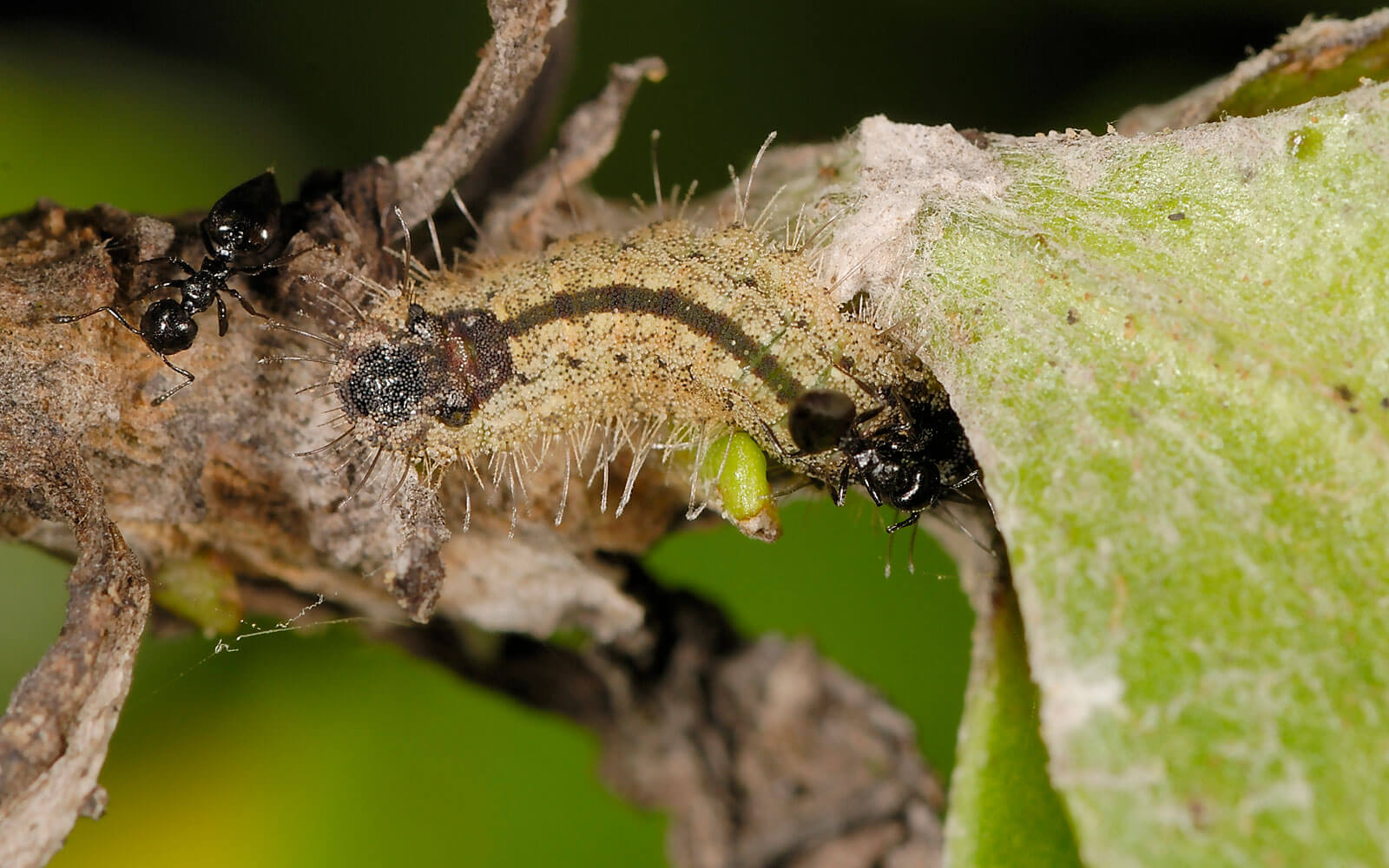
A Natal Opal caterpillar with attendant Cocktail Ants
Note how similar this caterpillar is to the Natal Silverline. All of this group – the subfamily Aphnaeinae – have similar looking larvae and lifestyles. This photo was taken in the wild at Umtamvuna Nature Reserve, and on the same bush we found a carton shelter containing a chrysalis.
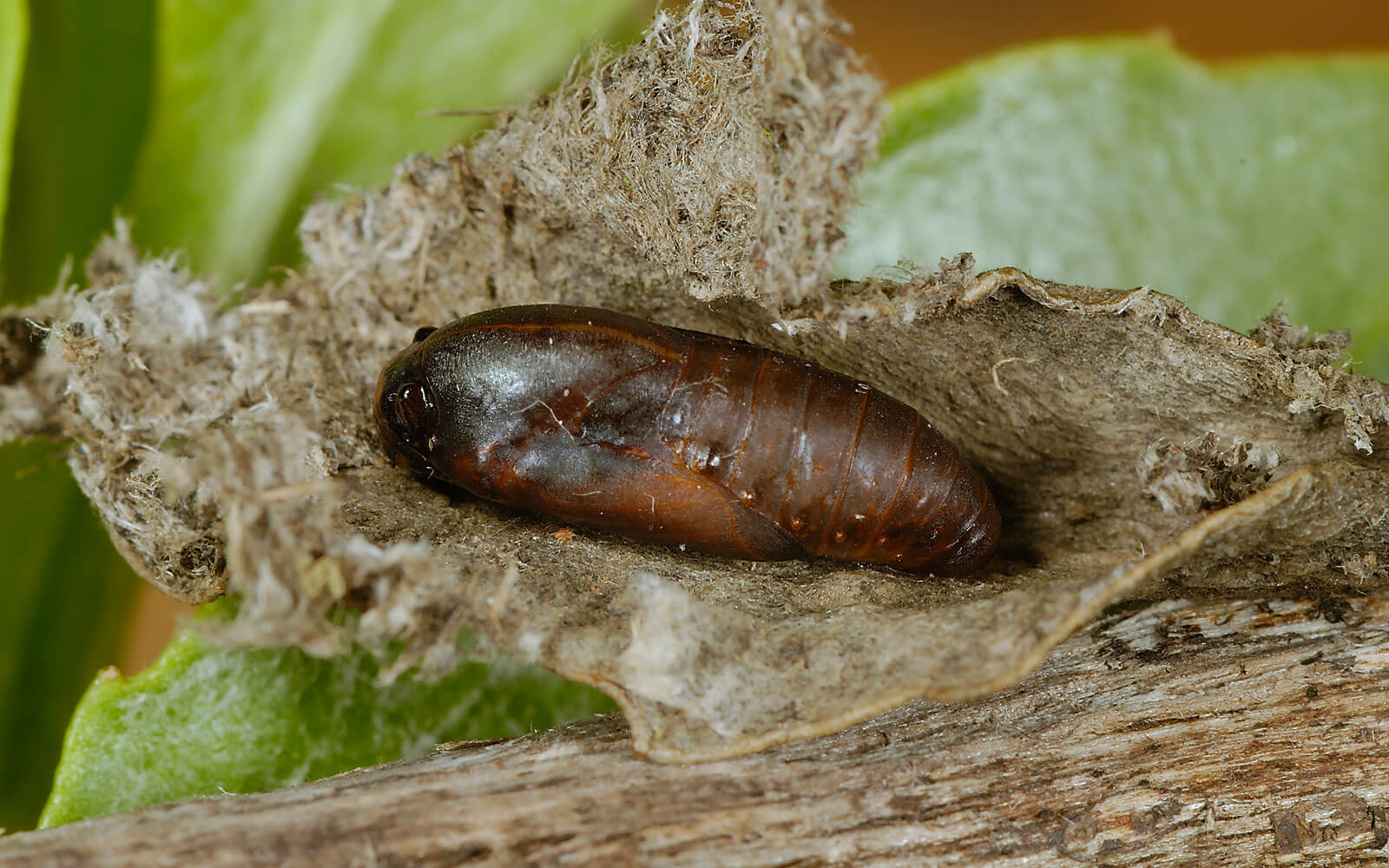
This chrysalis (or pupa) more closely resembles that of a moth that buries its pupae. Being concealed inside the ants’ bivouac, they have no need for the elaborate camouflage mechanisms used by Lycaenid butterflies that pupate out in the open. The nature of ‘carton’ can be seen in this photo; it’s plant fibres chewed up look rather like cardboard, from which the ‘cartons’ we use for fast food are made. The word “carton” comes from the Medieval Latin word “carta,” meaning paper.
There are other butterflies that outsource childcare – one was mentioned in the last issue of Leopard’s Echo, the Basuto Skolly whose caterpillars live parasitically inside ants’ nests.
A female butterfly can’t hang around long enough for her children to be ‘born’ (well, hatched). However, she can do things that effectively protect them as caterpillars and chrysalides, purely by instinct. This is yet another example of the intricacy of the small world of insects.

Steve Woodhall is a butterfly enthusiast and photographer who began watching and collecting butterflies at an early age. He was President of the Lepidopterists’ Society of Africa for eight years, and has contributed to and authored several books, including Field Guide to Butterflies of South Africa and Gardening for Butterflies and the recent children’s book My First Book of Southern African Caterpillars. His app, Woodhall’s Butterflies of South Africa, is described as the definitive butterfly ID guide for South Africa.
Steve has been a valuable and informative informal guide on many butterfly outings and recently qualified as a formal FGASA Field Guide. He is now available to officially guide tours via his ButterflyGear business entity www.butterflygear.co.za. Steve can be contacted on +27 82 825 8450 or steve@butterflygear.co.za.