
Crowned Eagle calls echoes across the city
Text Dr Shane McPherson Photographs As credited
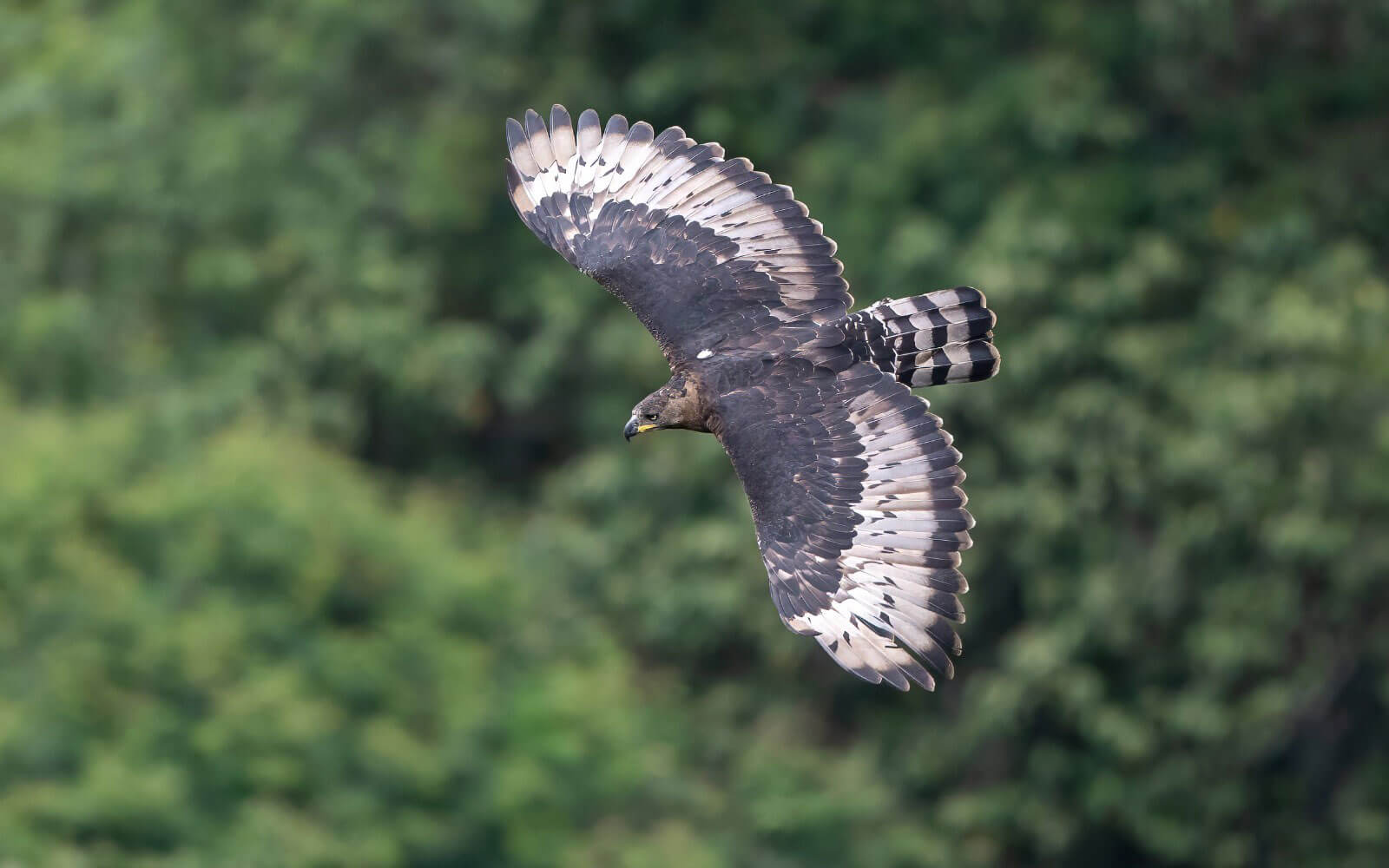
The female of Tanglewood Private Nature Reserve, Kloof.
Photo: Ralph Buij, Wageningen University.
Another seven years on, the story is richer still. The interest generated from the scientific articles also caught the eye of wildlife storytellers, resulting in some exciting support work for photographers and filmmakers. Meanwhile new technological leaps emerged in the market, and we were able to deploy some of the most advanced ‘biologging’ devices. The devices collect fascinating behaviour for scientific studies, as well as enable us the early detection of mortality – focusing on illegal persecution. Ultimately, we aim to reduce the issues of pet-attacks and chicken hunting, the main threats to the healthy co-existence of citizens and crowned eagles into Durban’s future.
A continuing success story
Back in early 2000’s the occasional newspaper article of “pet-snatching” eagles in the suburbs, would hit the news from time to time. It was the impetus for starting a research project: focusing on how this apex predator can live within the city suburbs, and how conservation and wildlife-conflicts can be resolved. Many raptor experts wondered whether there were just a few eagle pairs, that they survived by stealthily taking chickens and pets. Moreso, that this conflict was the cause of high juvenile mortality and thereby explaining the ‘atypical’ annual breeding cycle (normally biennial) of the well-known pair at Krantzkloof Nature Reserve.
No one imagined the scale of the population we would uncover. In just the Outer West suburbs alone now reside 17 pairs of resident Crowned Eagles. And across KZN we try to regularly monitor 90 breeding pairs. (Note that the latest population estimate for all of South Africa is just 200 pairs). The fact that so many large eagles live among us is incredible. This is an IUCN Red Listed endangered species, now Vulnerable with substantial population declines across sub-Saharan Africa.
In some aspects of biology, these eagles have features which enhance their urban adaptability, and this especially highlights the importance of DMOSS. Crowned Eagles can thrive in a territory of just 7-12 km2, whereas similar Martial and Verreaux eagles require 5x as much space per territory. But even within a small territory, some pairs have as little as 20% of that area as D’MOSS forest. This 20% seems to be the minimum limit for Crowned Eagles. Where river systems are connected e.g. the Palmiet, the Umbilo, and Molweni, territories are regularly spaced just 2km between nests. Essentially, D’MOSS created an urban refuge where wildlife can flourish, and the Crowned Eagles took full advantage.
The main prey of Crowned Eagles are medium sized mammals, and several species are abundant urban adaptors: especially dassies, monkeys, genets and mongooses. Unusually, here hadeda ibis nests are also an abundant and highly exploited prey. With the use of camera traps, we have identified 914 prey (2012-2014), and another 850 prey (2023-2024) and counting. Where 96% of all the crowned eagle prey fed at the nest is wildlife. This means the remarkably low proportion of 3% chickens and 1% cats is better understood in this context.
Meanwhile dogs appear to not be part of the adult’s menu, no dogs were seen as prey by nest cameras, instead we have verified 22 dogs injured or killed in 14 years, almost always by young eagles in their 1st to 3rd year. These juvenile eagles are inexperienced hunters facing a steep learning curve; some experiment with easy targets before mastering wild prey. The new GPS-tracking program will help us understand this transition in detail — and design better strategies to prevent conflicts before they begin.
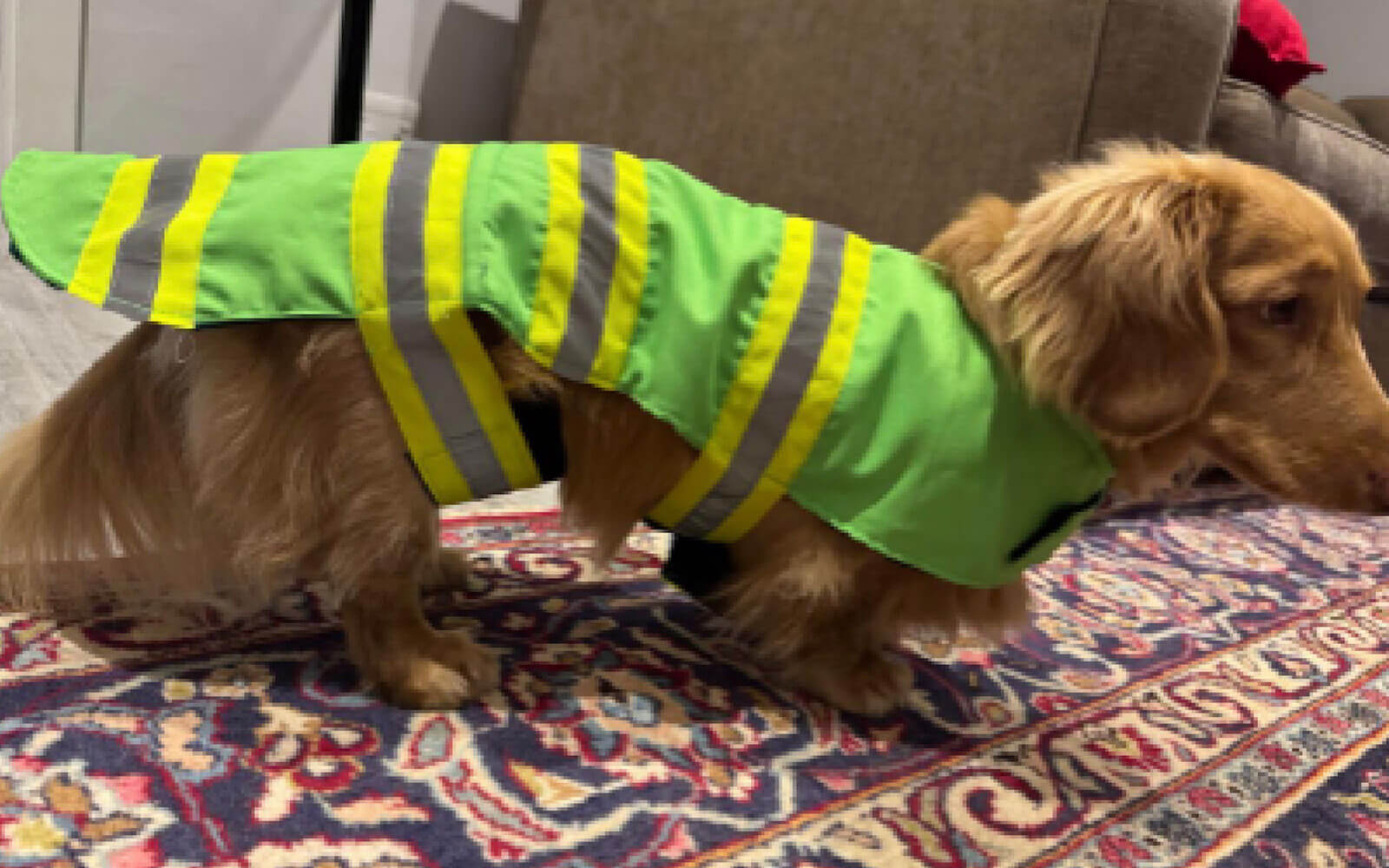
Reflective dog jackets have become increasingly popular – and we welcome more input from people using these to gain some evidence and insight into their use.
A fistful of talons
Some scientific articles resulting from my PhD thesis; about eagles’ nest selection and prey data piqued the interest from some storytellers. The BBC Natural History Unit (2) produced an episode of Animal Impossible investigating the misguided (faked?) video of an eagle carrying off a child. In prehistory, it’s theorised that Crowned Eagles were a powerful motivating force for early homonids to take to their 2-feet and step out of the forest into the savanna. It was an incredible pleasure to setup filming hides in &Beyond Phinda and Manyoni, where we captured Crowned Eagles carrying typical portions to their nests. So although they are powerful enough to capture 10kg monkeys, and even wrestle buck up to 20kg! This is impossible for a 3-4kg eagle to carry, and Crowned Eagles make the most of big prey by dissecting more manageable 1kg sections. Transporting pieces to the nest over time.
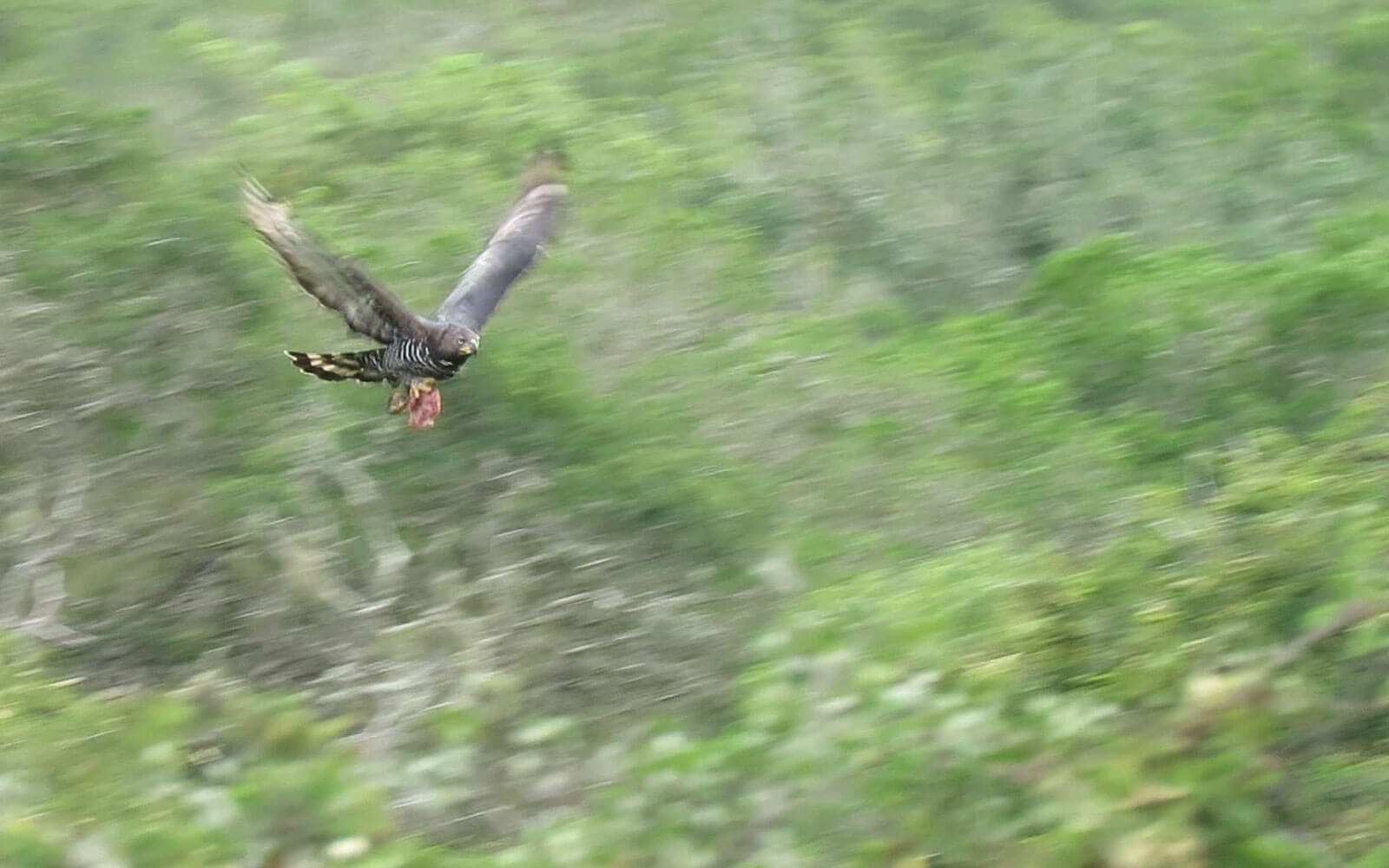
Video screenshot as a male Crowned Eagle struggles to carry a chunk of meat over the Sand Forest at &Beyond Phinda.
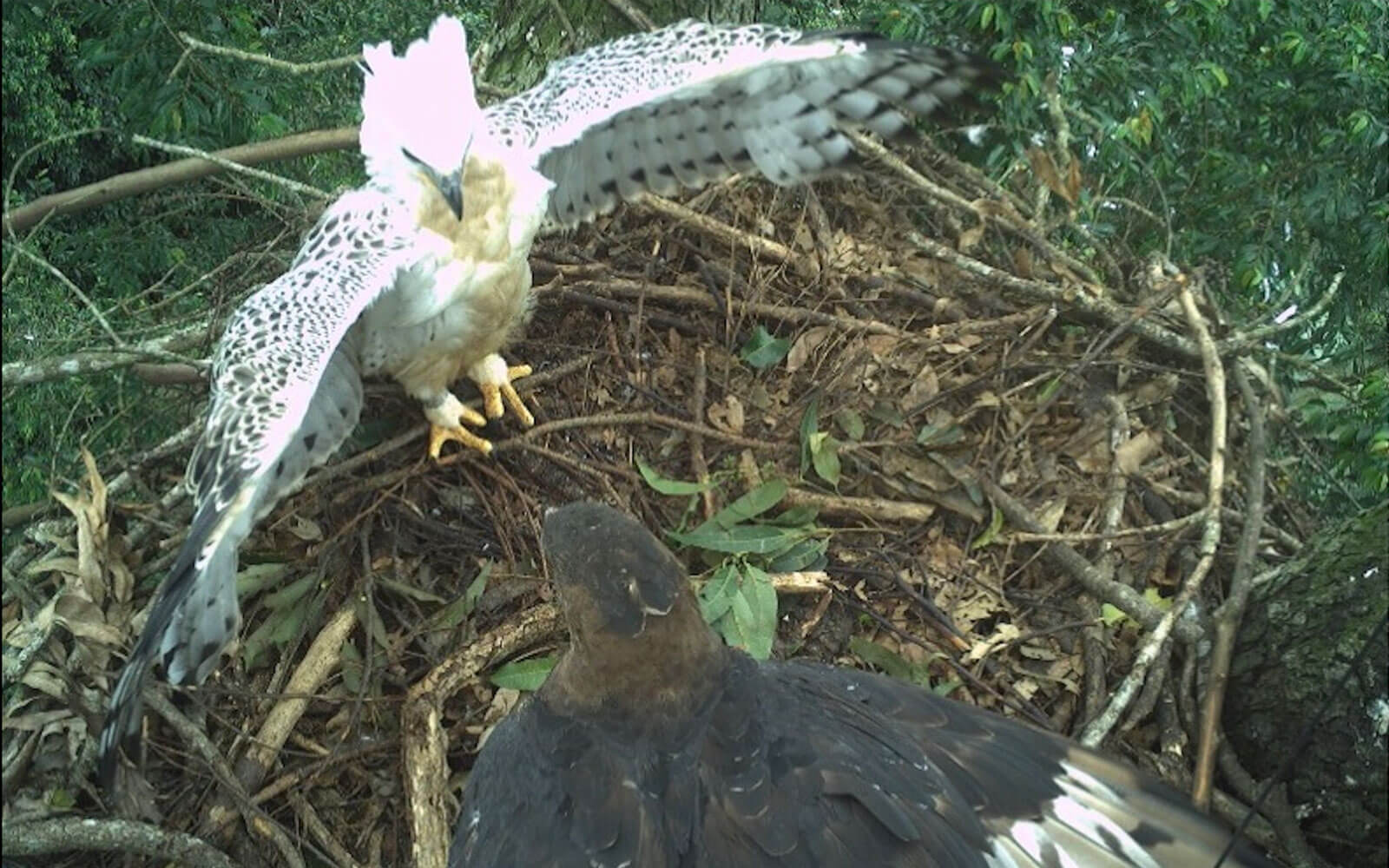
Nest camera example in the upper Molweni
Photo: Shane McPherson
More recently, the 2-part mini-series Raptors: A Fistful of Talons, was broadcast on PBS (USA). This was commissioned by Terra Mater (The Austrian Natural History Unit) and highlights the remarkable adaptations of many of the world’s most extreme raptors. And it was absolutely spectacular to have the Crowned Eagle, and especially the twist about the Durban population, feature in this series. I was tasked with climbing giant Eucalyptus trees to install a specialised, 4K remote controlled “CamBall”. Where we captured world-class, intimate close-up videos of Crowned Eagles.
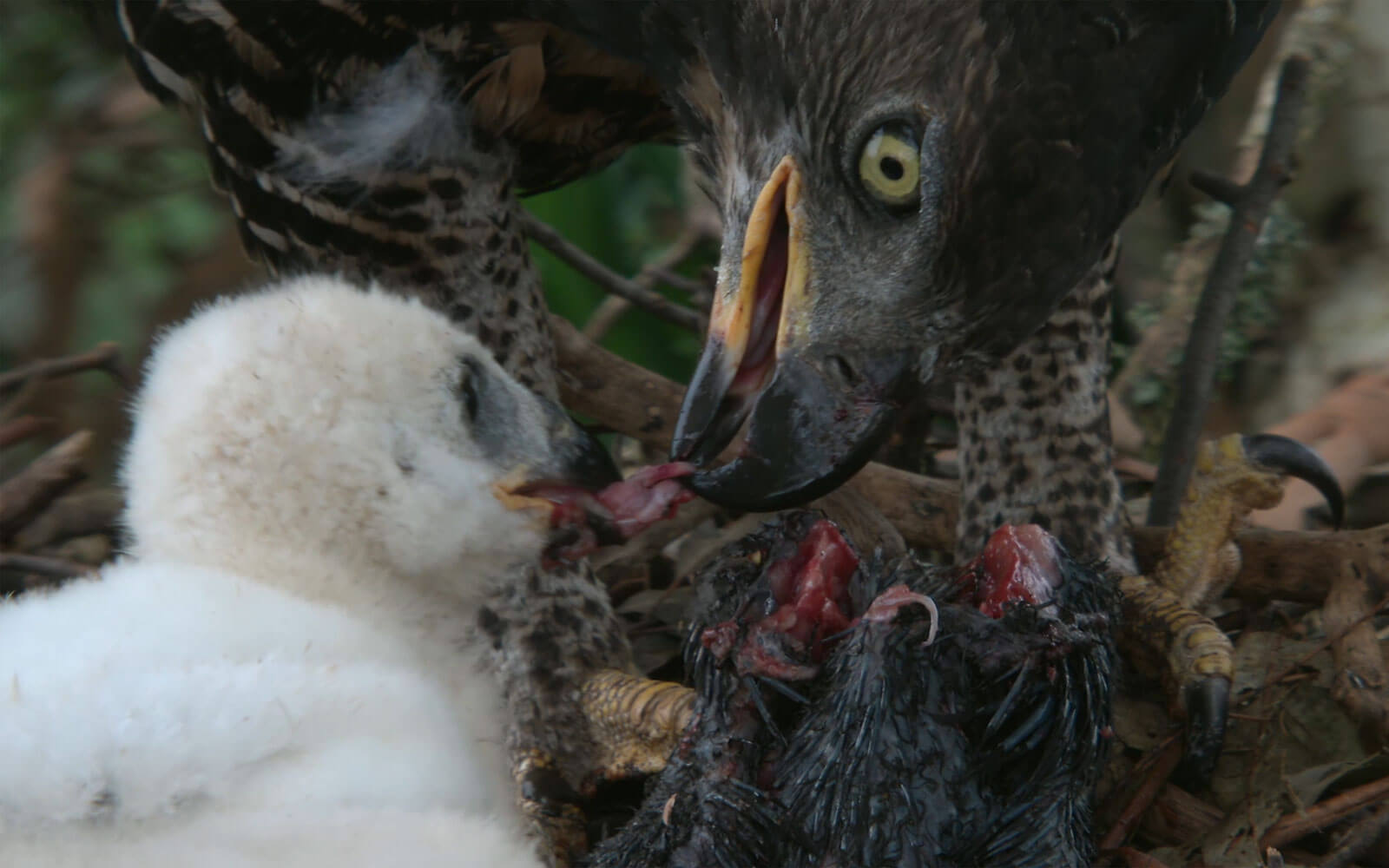
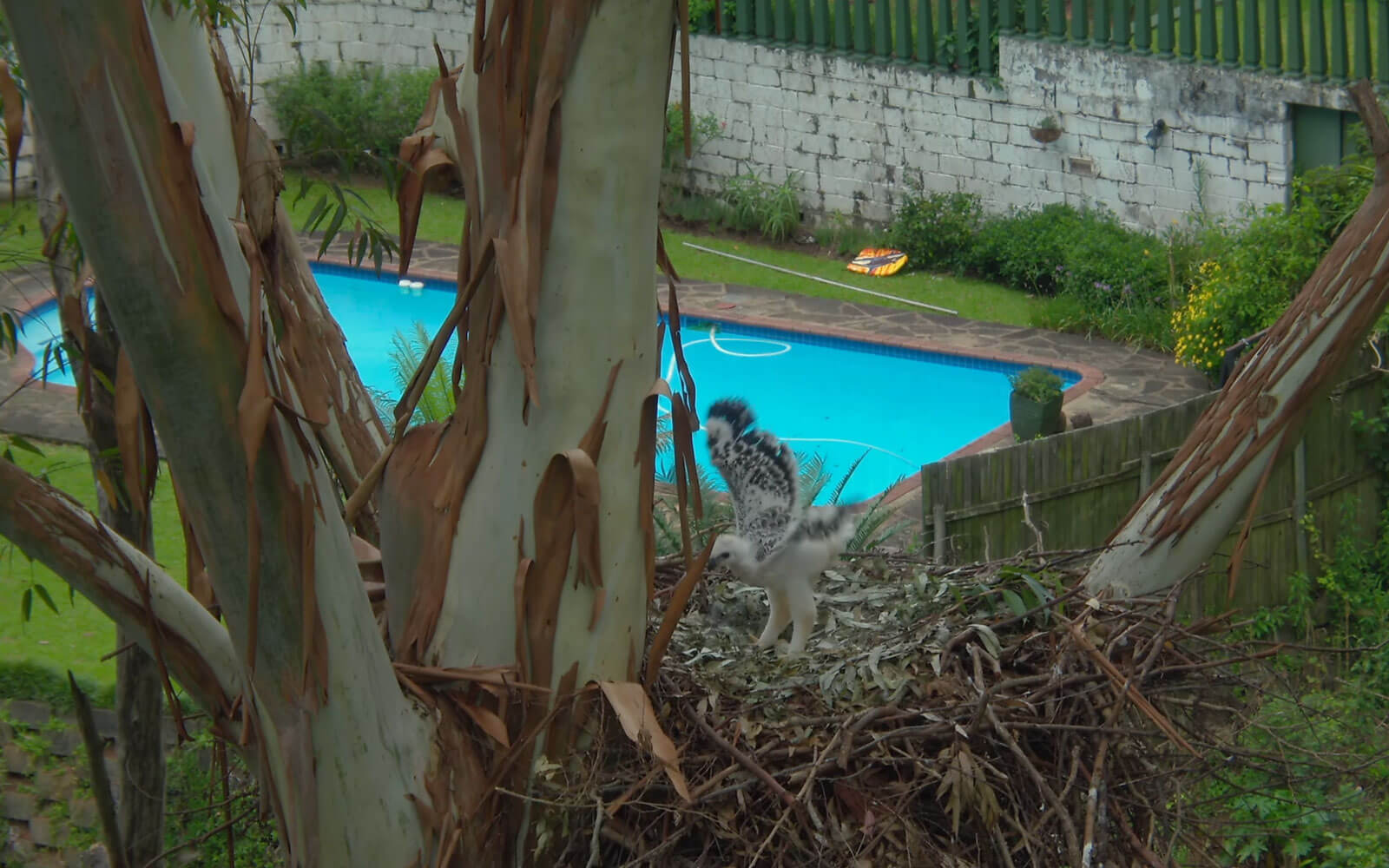
Screenshots of some of the CamBall 6k video filmed for ‘A Fistful of Talons’.
Photo: Terra Mater/Dandy Lion Productions
The Urban Eagles phenom has reached further afield in other languages, as Sonvilla-Graf wildlife journalists shared their experiences to UK (BBC Wildlife magazine), German (Terra Mater magazine) and French (Terre Sauvage) readers! It is great to see growing interest from professional and independent photographers hoping for that perfect Crowned Eagle photo.
High-tech trackers
A tracking device is typically a GPS module with some other communication component to send data – and this tracking device can be attached to a bird in a backpack-style harness. Way back in 2013-2014, we attached GPS trackers to five eagles, devices which were made by Wireless Wildlife, weighed 90 grams, and recorded one GPS point every 2 hours for 400 days each. This was our first investigation into the home range and territory of Crowned Eagles.
You will have noticed the remarkable pace of technological developments? And the world of bird-tracking is right at the forefront. Miniaturisation and the need to stay lightweight, drives this technology (Animal ethics standards require the tracker to be less than 3% of the bird’s mass). There are magnetic sensors, and accelerometery sensors, when combine for example these IMU’s keep a drone in stable flight. These sensors have become incredible lightweight and tiny. Registered in 2016, a Lithuanian company Ornitela really kicked off in 2019 when cutting-edge bird tracking tags were up on the marketplace (at the rather alarming price of EURO 1,400 [ZAR 30,000] each!).
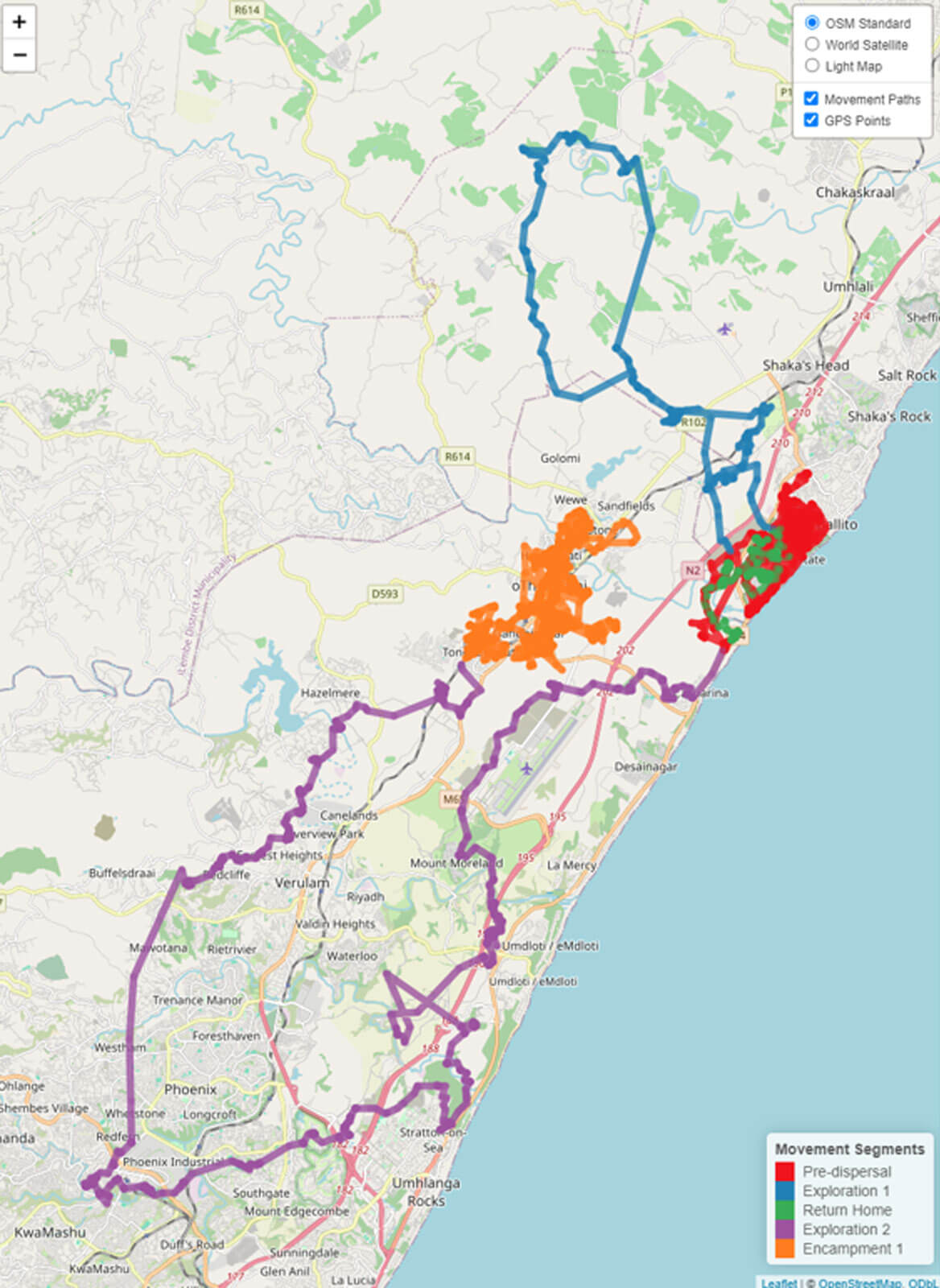
Through a variety of sponsors, and here I will shout-out specifically the local sponsors: Zimbali Estate, Victoria Country Club Estate, and your very own Kloof Conservancy. We have been able to attach 17 Ornitela ‘OT50’ trackers. These devices have a compact GPS module, an IMU to record accelerometery and orientation, a GSM unit to transmit data over 4G network, and they can receive new setting commands to adjust data collection! The data collection rate is phenomenal, and it is all sent to Movebank and Animal Tracker servers with near real-time updates. This is all powered by 3×5 cm of solar panels!
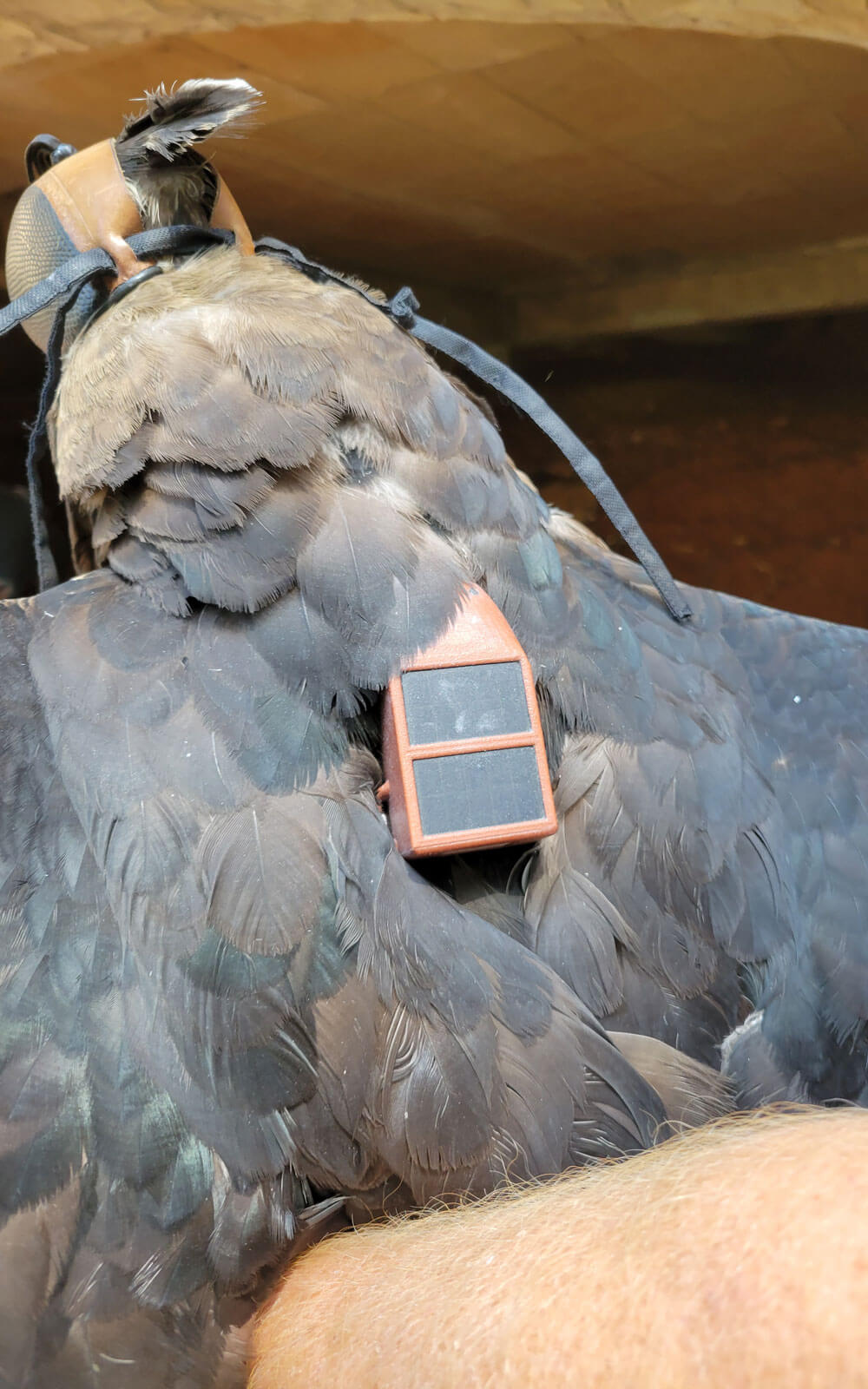
The Ornitela OT50 is 50g, a mere 1.4% of a eagle’s mass. Here the female of Zimbali Estate is fitted with her tracker and her “UFO” ID ring. Her 2023 offspring – ringed “UAV” – was also fitted with a tracker and is apparently thriving in the forests around iThongathi.
Photo: Varalika Jain
It’s not just that we are collecting interesting behavioural data – but by checking this data during my morning coffee – every day – I can see if some signal is out of place, something that indicates the eagle is dead or morbidly wounded.
Shockingly it didn’t take long for this system to prove effective. Our first OT50 was deployed in January 2023, on “VIE” the breeding female living in Springside Nature Reserve… by August “VIE” was dead. I could see from IMU data, she was alive, but the GPS positions were ‘stuck’ inside one garden for three days straight. Alarms were raised and search parties sent! Sadly, it was another 5 days until she was found – hiding deep in ground vegetation – with a bullet wound and a shattered wing. The wound was badly infected and sadly, she didn’t recover from the surgery. Some sleuthing and detective work by local authorities could locate the most likely culprit, but the lack of other evidence led to a dead-end in the attempt to lay a wildlife crime charge.
I had wondered, “damn, if our first tagged eagle is shot dead within eight months, how widespread is this issue!” Fortunately, thus far we deployed six tags in late 2023, nine in 2024, and another six prepped for this current 2025 season. And while we did lose one other adult male, to a collision of outdoor glass (highlighting another issue: unintentional collateral mortality from human structure such as glass, fences etc), none of these other adults have yet come afoul of persecution.
It has often been said that eagle’s mate for life. Without unique individual markers, there was nothing to confirm or counter this. As time and breeding years skip by more will be known, already there have been two instances of breeding adults moving and changing territories (and possibly their partners). Where VIE was shot in Springside… the following year “KEA” moved from Giba Gorge to the exact same nest, fledging her own chick there. Without the tracking devices, finding VIE morbidly wounded, and tracking EVEs movement to occupy her vacancy, one might see the continuous occupation of the Springside nest from year to year and think “everything’s fine!”. Well, let’s hope the Wildlife Crime Investigation was enough of a deterrent that VIE’s shooter refrains from a similar outcome for the new resident KEA!
Landscape of opportunity seen though combined technologies
Installing and maintaining cameras have become a regular, year-round task for the project. It’s becoming a burden of data i.e. 50,000 images per camera per year – and we have nine! It is high time we are inviting citizen-scientist volunteers to skim through segments of this data and contribute to the research while enjoying interesting sequences of nesting behaviour!
The goal is to combine the time-stamped prey delivery, with the preceding GPS track of the adult. To backtrace his movements and map out his territory where he manages to catch prey. This map might reveal different choices for hunting dassies versus monkeys, and maybe, some insights into cat depredation. For example, the female eagle at Kenneith Stainbank has the highest proportion of cat prey – and the locations suggest she is catching cats on the edge and inside the Nature Reserve.
Coexistence in the suburbs – what the citizens really think
One of the most uplifting shifts in recent years has come not from eagle data, but from Durban’s citizens. Mfundo Maseko’s PhD work, interviewing 400 residents across the spectrum of culture and opportunity, shows that public attitudes are far more positive than the more outspoken viral “pet-snatching” headlines. Generally, across all communities most residents expressed neutral or positive feelings toward Crowned Eagles. Crucially, many people directly affected by the loss of their pets or chickens, still valued the eagles’ presence and recognised their role as part of Durban’s remaining wilderness.
Maseko’s findings reinforce what we see on nest visits and community talks: coexistence is not only possible — it is already happening. Durban’s Crowned Eagles persist because citizens, across cultures and neighbourhoods, continue to choose tolerance and stewardship over fear.
Your sightings matter
It is important to compile information and details about pets attacked or killed by Crowned Eagles, as this helps us make informed management decisions about ‘problem eagles’ as well as empowering citizens to have effective deterrents to protect their pets.
There are over 250 Crowned Eagles in this population with unique ID colour rings. We have seen a few breeding adults who were ringed as chicks, for instance Z2 now breeding in Prestbury PMB was born in Nov 2018 in Springside Nature Reserve, Hillcrest. Many of the earlier ID rings were plastic and very few lasted more than 10 years. Now, investing ZAR 600 to have rings produced in Spain, the latest polyester lacquered alloy rings are light, bright, and long-lasting. The colours are sex specific (blue/yellow = male, purple/orange = female), the unique ID is the 3-letter code. We have had fun matching codes so that it adds value to our adult pair tracking study. For example, HAL-VKI, MP3-WAV.
Please report sightings of ringed eagles to kzncrownedeagle@gmail.com. Birds that are dead or injured can be sent to any of the various animal care NGO’s, FreeMe Wildlife, Raptor Rescue, SPCA, CROW. The goal is to examine and detail the causes of injury or death.
For those lucky souls who live close to a nest, breeding records are equally useful. The most obvious details are: branch-breaking and nest building activities from July-September, and then shiny white fledglings making a ruckus near the nest from February to May.
Editor’s note
As mentioned in Shane’s article Crowned Eagles are sometimes perceived as a threat to pets.
Kloof Conservancy is deeply committed to protecting the biodiversity of the Upper Highway area and to be part of a process of educating the public and finding solutions to reduce Human-Wildlife Conflict.
One aspect that we strongly advocate on is the non-feeding of any wildlife except in exceptional circumstances and then only under veterinary guidance. The reason for this is that feeding wildlife instantly change the dynamics and relationships involved between humans and wildlife often with disastrous consequences.
We include a link here to a video produced for Zimbali Estate where they have had serious problems with the habituation of Crowned Eagle juveniles which have resulted in the demise of juveniles over several seasons.
Please do take note of the content of this video – it contains important guidelines to reduce human-wildlife conflict.
With thanks to Zimbali Estate for permission to use the video.
For additional reading see an article by Charles and Julia Botha on What to feed Birds? published in the 2022 Winter-Spring Edition of The Leopard’s Echo.

About the author
Dr Shane C. McPherson is a raptor ecologist and conservation biologist. He is an Honorary Research Fellow and in collaboration with Prof Colleen Downs at the School of Life Science, University of KwZulu-Natal. These days the Crowned Eagle Research is an annual season field trip, while for the rest of the year Shane is a Research Technician at the Konrad Lorenz Research Centre , University of Vienna in Austria. His work specialises in supporting roles in the deployment of technologies for a wide range of raptor projects. He specialises in the maintenance and upkeep of tracking devices for raptors of all sizes from Kestrels to Owls to Eagles, as well as managing the KLF drone fleet, camera traps, bioacoustics, and other research equipment. Crowned Eagle Research was founded in 2012 as a wide-eyed Kiwi flew to South Africa to begin his PhD. This project grew and grew into a powerful example of conservation and outreach, as well as investigating fundamental science of eagle biology.