
The nesting and rearing behaviour of snakes
A few life-long myths might be in danger. Please concentrate.
Text and photographs Pat McKrill
I’m about to give my observations on the ‘nesting and rearing’ behaviour of snakes, but to put things into perspective, I’ll start with a few words on what humans do at the same point in their lives. Please indulge me for a moment
Some parents might agree that apart from getting the appreciation they rightly deserved for nurturing and teaching their children in their early years, there’s no doubt that there’s also a huge debt of gratitude owed to others, those schoolteachers and their fellow educators, who also assumed a great deal of responsibility for the start-up education and life-skills teaching of the same kids. How many of us simply assume that every living creature gets raised and cared for in its youth? Perhaps it’s time we looked around us, to get some idea of the hard-to-believe reality.
The unexplored myths and assumptions.
We’re surrounded by parental behaviour in nature. We don’t only see it on a visit to a Game reserve, it can even be closer to home, when we might see the local animals, birds, bats or feral cats getting trained by their parents, showing us every minute of the day, that it’s not only humans who must teach their children about life. Surely every new arrival on earth needs that. Readers might recall my mention of the book entitled The Hidden Life of Trees, telling us that even trees do it!
People ask me, “are snakes any different – don’t they teach their kids? Wouldn’t they also need to know how to behave and survive once they’ve hatched? How else would they find shelter or food, or know what to eat or how to defend themselves when in danger?” I’ve been told previously, “the young can’t control their venom output, so if you’re bitten by a juvenile Cobra, watch out!” I’m still shaking my head.
And here’s the reality. Fools don’t last long in Nature. Humans note. The flora and fauna on this earth are finding out every day, whether things do or don’t work, and they continue to live, learn and succeed. If they don’t, they’ll join the fools.
Some exceptions to the assumptions.
Excluding those who’ve never bothered to think further than to run screaming in the other direction every time they hear the ‘S’ word, and considering what many humans know about snakes or have gathered about them from their pre- 21st century grandparents or sensationalistic articles on social media, not too many will know that worldwide, with 2 possible exceptions, neither the live-bearing snakes (viviparous), nor the egg-layers (oviparous) indulge in the nesting or rearing of their progeny.
The 2 known species exceptions are both oviparous, one being the Asian King Cobra (Ophiophagus hannah), and the other being the various Python species worldwide, one of which (Python natalensis) can be found in SA, including the Kloof area. Even here, it should be noted that although both will remain with their eggs until after they’ve hatched, the ‘rearing’ part seems incidental, as it does not appear to include any parental feeding or training.
The King Cobra pulls together a nest of assorted vegetation, into which she will lay up to 40 eggs, which she coils around and protects with her body until they hatch.
Python species will lay sometimes in excess of 80 eggs in a protected area, often subterranean, (anthill etc.) and protectively coil around them until they hatch. After hatching, the hatchlings remain with the mother for a few weeks, until leaving the ‘nursery’ and heading out into the world. They have been recorded accompanying the mother over short distances when she exits the nest, probably to forage and/or seek heat on a colder day. Although not being fed by the mother, if any form of message is shared on this early ‘slither around the block with mum’, it might apply to some behavioural rules. We can only assume.
The continuation of the species.
Snakes live solitary lives. They will disperse after hatching and seek out suitable areas where food and shelter are available. Once they reach maturity a few years on, their lives will change. At some stage, there’ll come a call-to-action filtering into the air, designed to get like species snakes in the vicinity to respond and get the ball rolling. It’s the females who put out the call. They will advertise their desire to find a suitable male to assist with the process, utilising physically deposited as well as airborne posted species specific pheromonal signals, to attract like-species males, many of whom will travel considerable distances in order to locate the messenger. These seasonal calls usually coincide with the behavioural patterns of her species food sources, such as nesting birds, rodents, other reptiles, garden molluscs etc. so as to ensure food availability for the hatchlings. Her ‘calls’ will result in an aggregation of like-species males, responding to the call, who will compete for her approval, in various ‘competitions’ – winners judged on physical strength. This ‘adjudication’ process has been covered in a previous article. Once the female has chosen a suitor based on the results, the mating process will ensue. Thereafter, there will be no further contact between the animals. The females, depending on species, will either lay eggs or bear live progeny.
The egg layers will lay their eggs in temperature friendly and hidden locations. In all my years dealing with snakes, I’ve not encountered any batches of unhatched eggs in the various locations. Can’t fool a mother who knows what she’s doing!
The live bearers (who are in the minority in SA) will nurture the developing progeny within a thin membrane in the oviduct. When the hatchlings are ready to emerge, they will exit the membrane by writhing out of it and leave the mother. Mothers have been witnessed consuming the waste or undeveloped membranes after birthing.
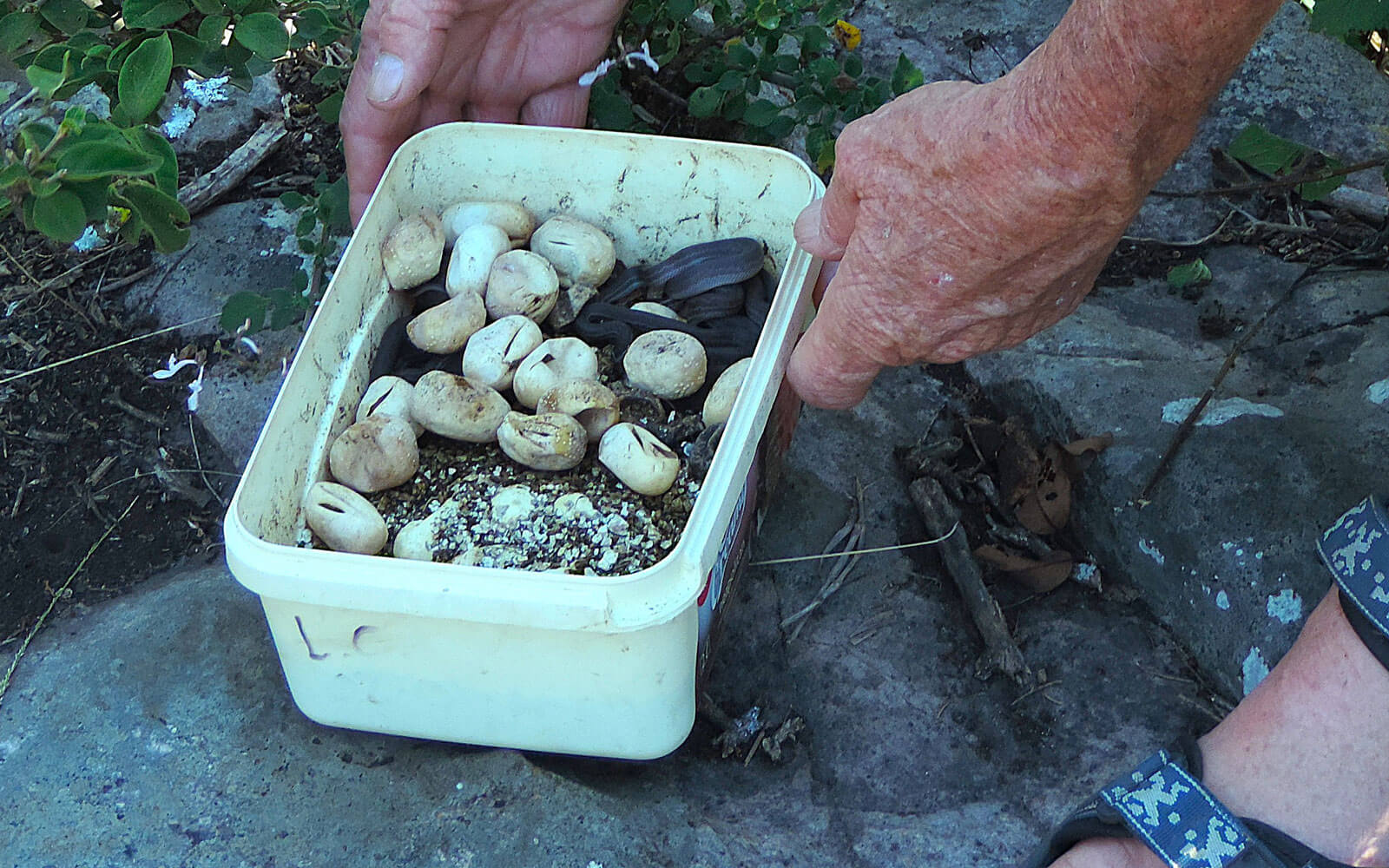
Captive born Brown House snakes exiting the eggs and being released.
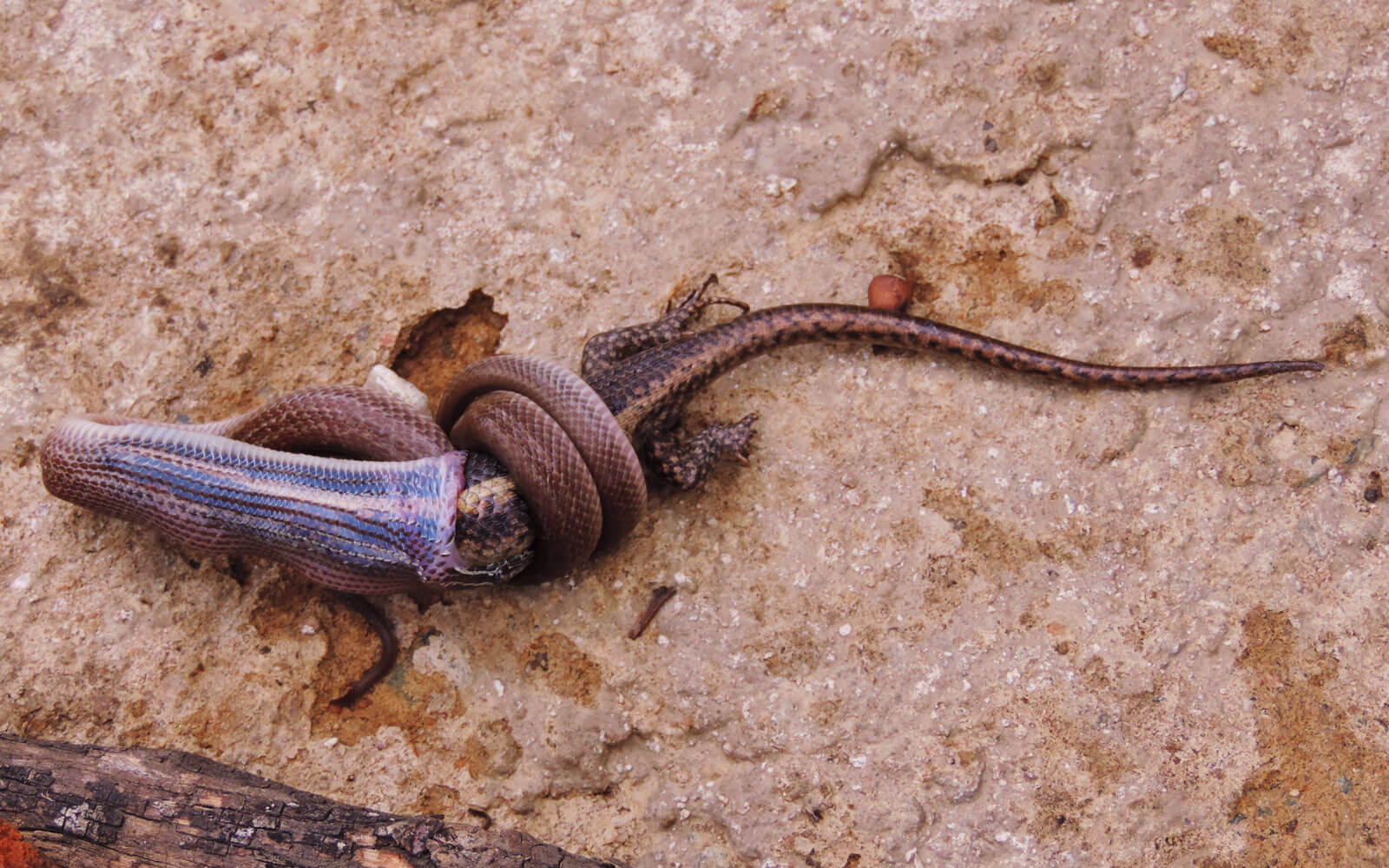
Juvenile Brown House snake first caught meals are usually skinks.
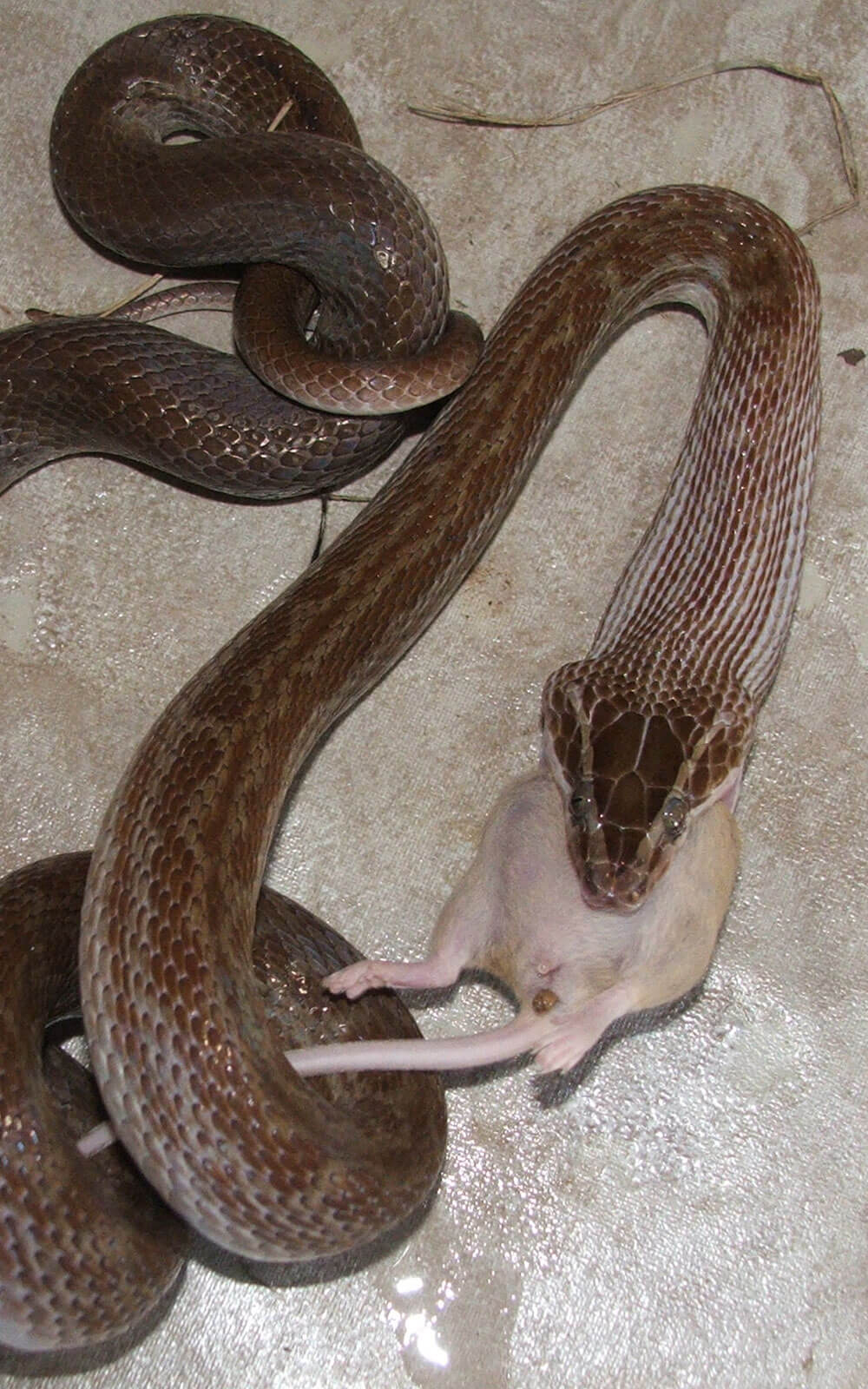
Brown House snakes change to warm blooded prey as they get older.
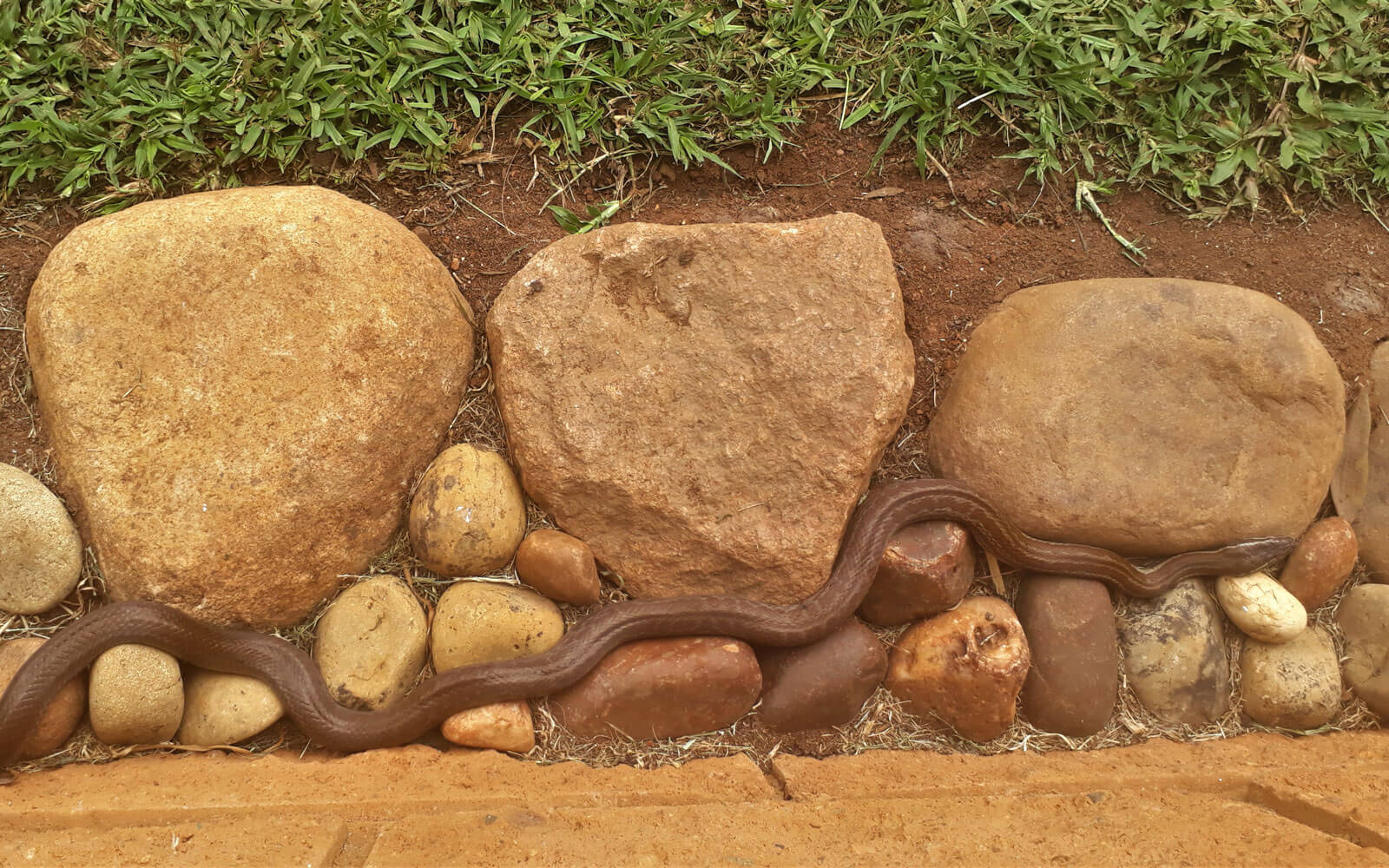
Brown House snakes as well as most other snakes rely upon stealth and camouflage, to remain alive.
The reason we seldom see what lives all around us.
Each hatchling will receive its initial post-hatch ‘food’ requirements from within the egg capsule. From birth, no further deliberate contact takes place between family members into the upbringing and rearing of any children. Once hatched, progeny must individually accomplish all that is required of them in order to survive and ensure continuation of the species. They don’t rely upon others for assistance and don’t unnecessarily advertise their presence. Apart from incidental input along the way, it seems that the bulk of their life-long capabilities are derived from the parental gene pool. All of the aforementioned behaviour gets performed by animals that had never received any parental guidance or training. I am humbled.
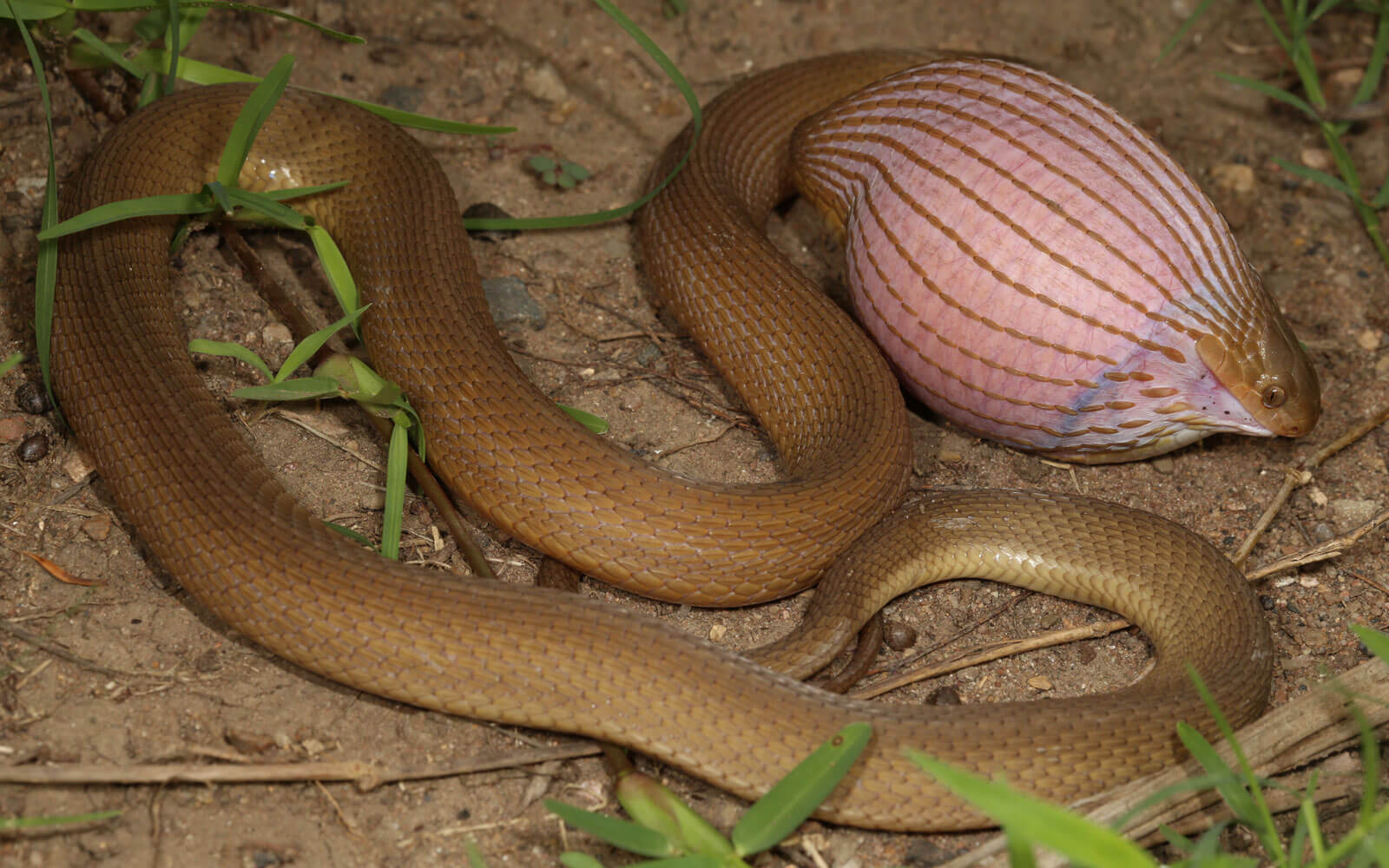
Southern Brown Egg Eater engulfing and sawing through the shell before extracting nutrients.
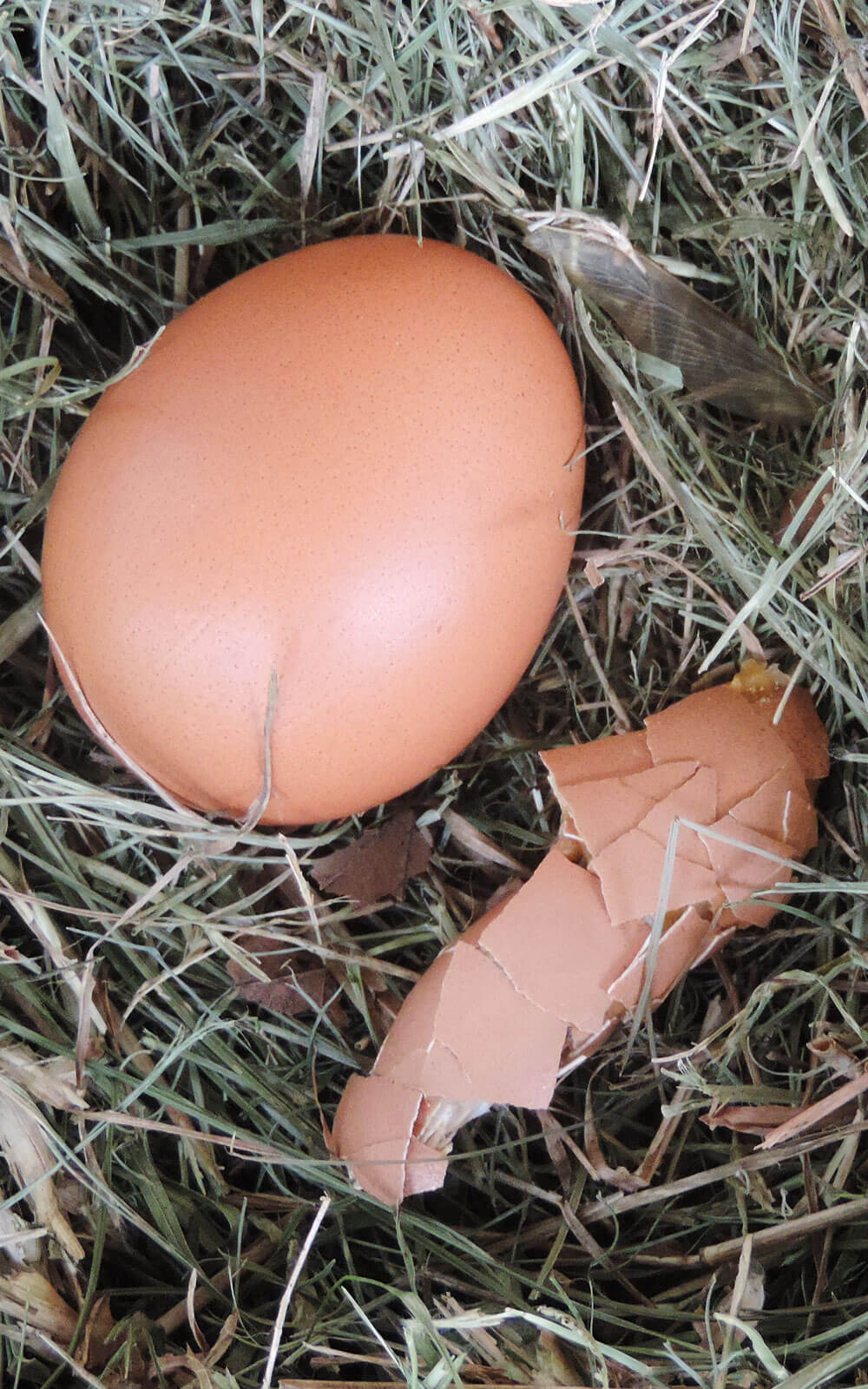
Before and after. Specialist Egg eaters swallow the nutrients and regurgitate the empty shell.
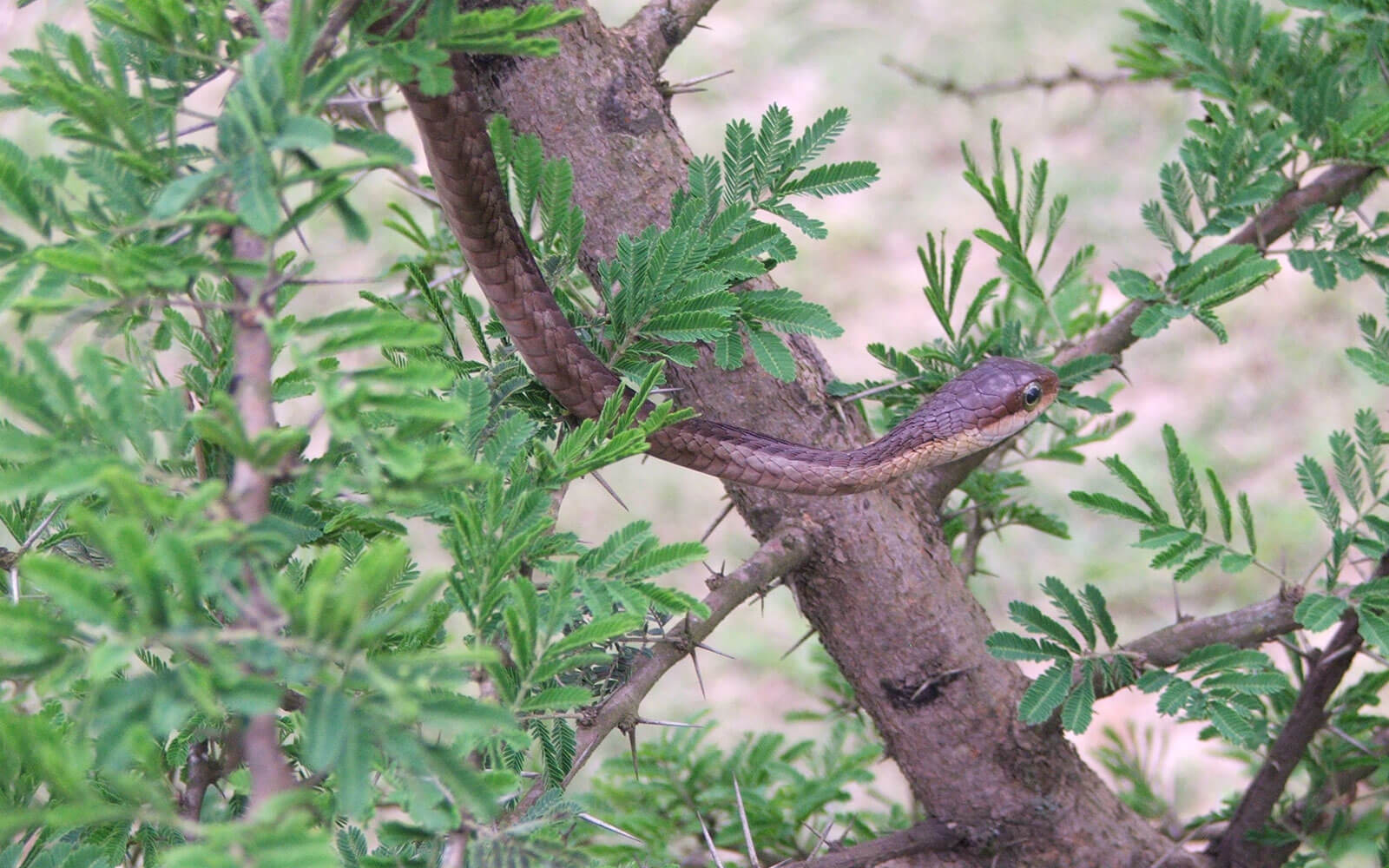
If you live in the trees, act like part of one. Female Boomslang.
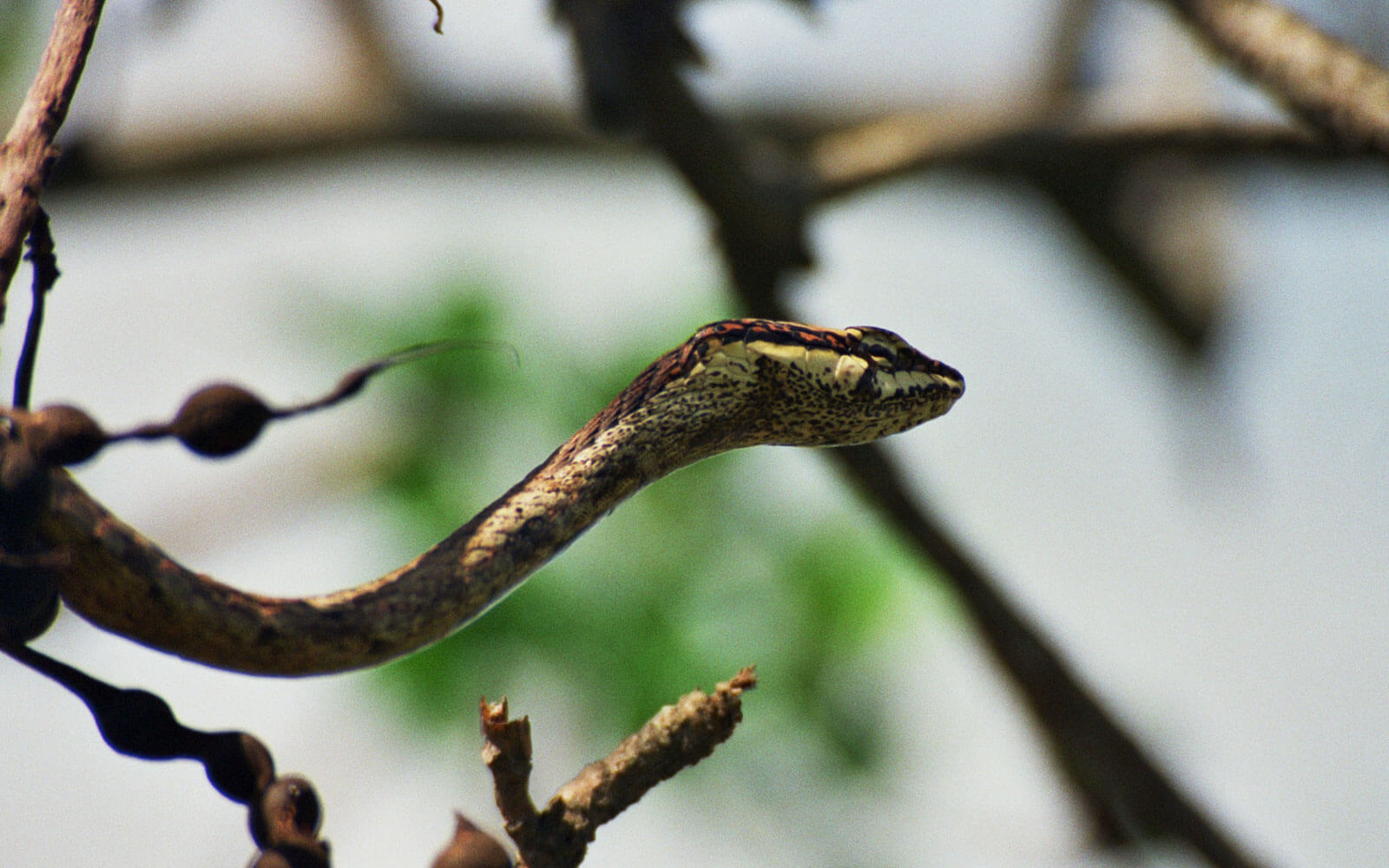
Tree dwellers have to remain alert. Birds can easily spot them. Vine snakes know the rules.
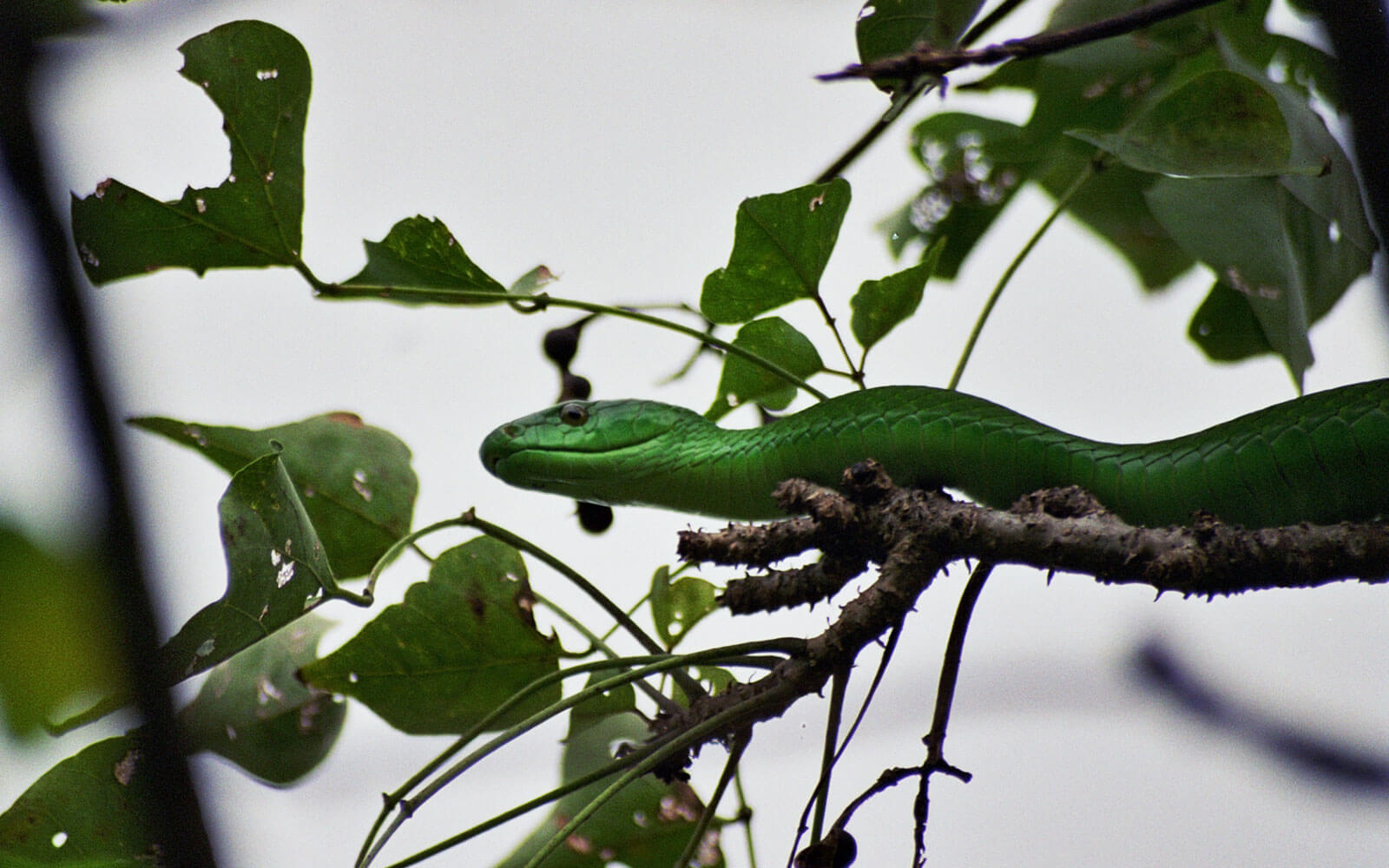
Another tree dweller, the Green Mamba.
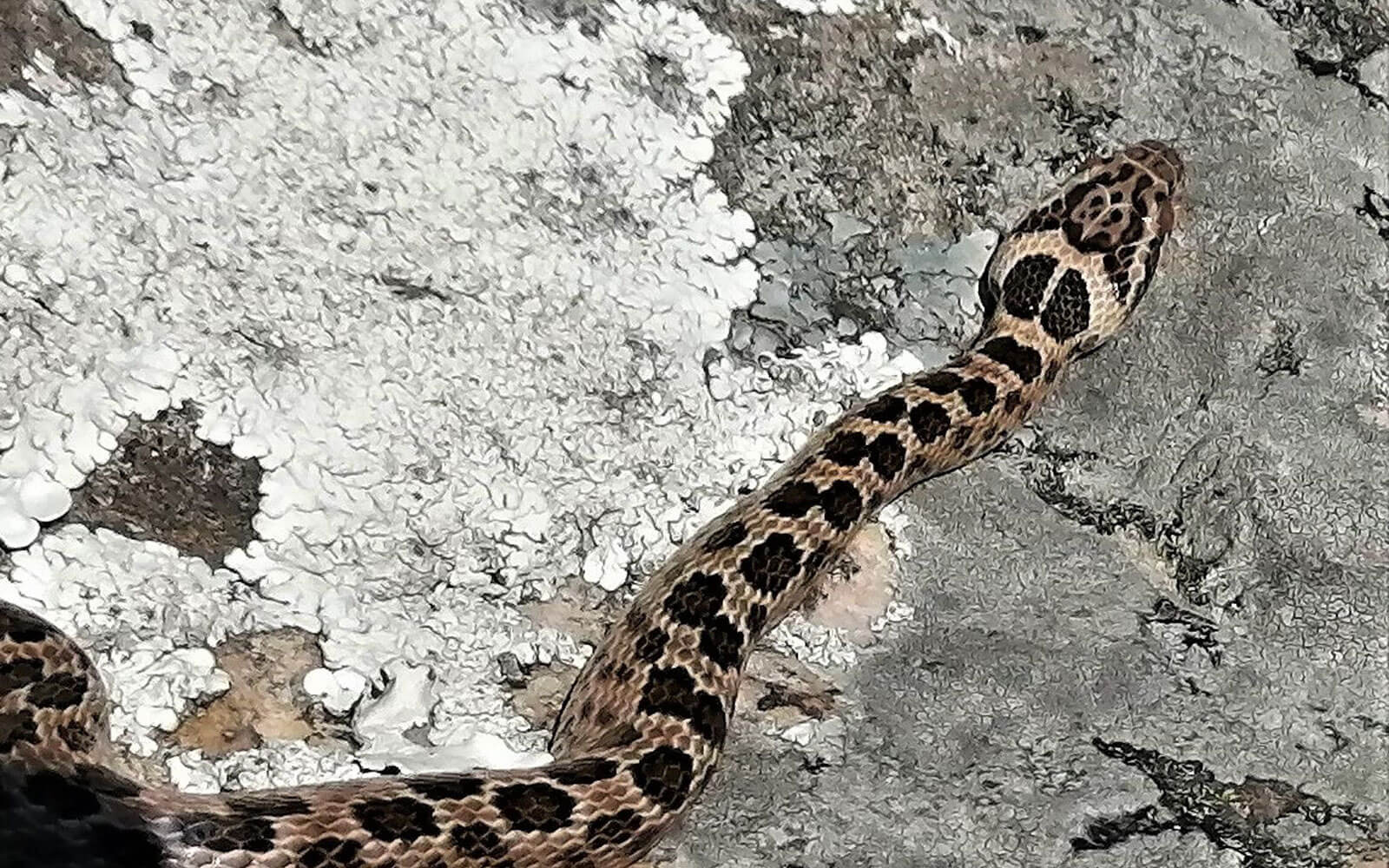
The Spotted Rock snake’s head is designed to allow them to hunt and capture rock lizards amongst the narrow rock crevices.
Authors note
The photographs I have attached are intended to give readers some food for thought.
If I were to consider the fact that this incredible animal had emerged from the womb of the mother, and with no additional assistance in any way whatsoever, had lived its life as a fully functional solitary carnivore in the wild, I could not find the words needed to express my total and absolute amazement. To merely shrug and say, “it’s in the genes”, would not come close. It’s my fervent hope that one day, people all over the world will think about this animal and the significant part it plays in our lives as an environmental guardian, in a very different way, and give it the respect and understanding it deserves.

About the author
Pat was born in the UK, educated and brought up in Rhodesia/Zimbabwe, and came to South Africa in 1983. He developed an early interest in the study of the behavioural aspects of insects and animals, rather than the deeper scientific side, and he’s worked with snakes for most of his life. Pat conducts educational walks and talks throughout SA and into neighbouring countries where snakes are grossly misunderstood and needlessly killed. He writes articles for a number of publications, and has written the book ‘Getting to Know the Neighbours’, which is all about understanding snake behaviour and is aimed at teaching others how to come to terms with them.
Pat can be contacted at: herpet@patmckrill.co.za