
Nests, neighbours, and nursery tricks
How KZN’s birds raise the next generation
Text and photographs Nicolette Forbes
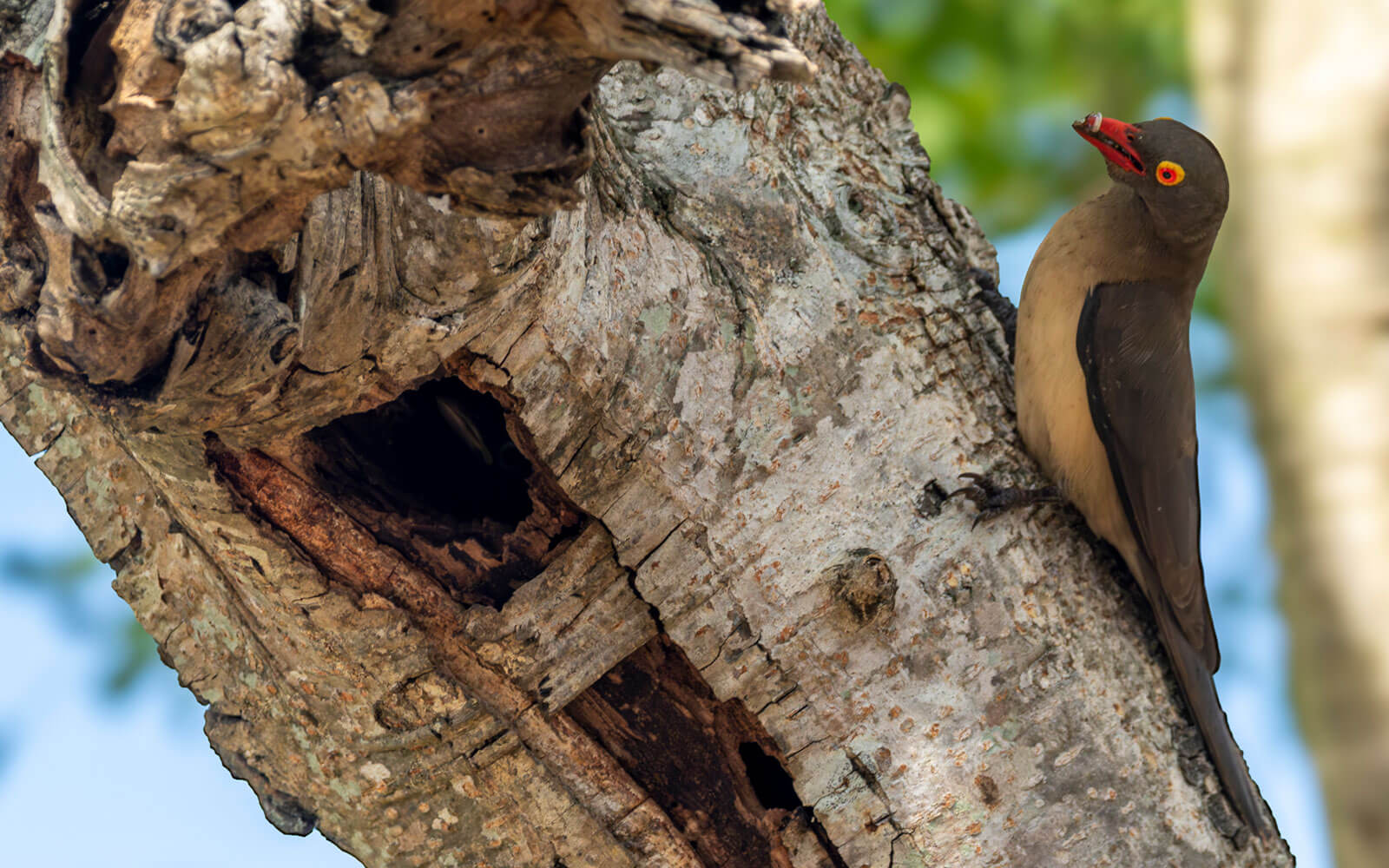
Red-billed Oxpecker at nest
KwaZulu-Natal’s birds don’t just differ in plumage and song—they run the full spectrum of family life. From single dads to communal nurseries, from architectural show-offs to stealth adopters, our province offers a front-row seat to remarkable nesting and chick-rearing strategies. Parenting can be inventive so read on to see some interesting examples and open your eyes to what’s around you.
To understand the different tactics in rearing chicks there needs to be an understanding of the different breeding strategies of birds. One of the most fundamental of these is the state of development at which the chicks of different species hatch.
Altricial vs. Precocial: two very different starts in life
Not all chicks hatch equal. In fact, birds have evolved two broad strategies for launching their young into the world, and understanding the difference explains why nest types, parental effort, and chick behaviour vary so dramatically across KwaZulu-Natal’s species. Birds hatch along a broad developmental spectrum, but two major patterns dominate: altricial and precocial. These are not choices made by individual birds; they are evolutionary strategies that have developed over millions of years, shaped by habitat, predation pressure, food availability, and life-history constraints. Both approaches work — brilliantly — and both are represented in KwaZulu-Natal’s bird communities.
“Whether helpless or hatch-ready, every chick representsan evolutionary masterpiece tailored to its habitat.”
Altricial chicks – born helpless but developed by care
Altricial chicks hatch in a very underdeveloped state: blind, mostly naked, unable to stand, and completely reliant on parental care for warmth and feeding. Their brains and sensory systems continue developing rapidly after hatching, safely contained within the nest. Their eyes may take days to open, their legs are too weak to stand, and they rely entirely on adults for warmth and food. Parents must shuttle insects, small vertebrates, or regurgitated meals to the nest dozens of times a day.
This evolutionary strategy is common in birds that breed in environments where secure nest sites exist — cavities, burrows, trees, suspended nests — allowing parents to invest in intensive post-hatching care without exposing their chicks to excessive predation risk.
Evolutionary hallmark
Growth is slow but results in well-developed fledglings capable of advanced motor skills, complex behaviours, and, in many cases, sophisticated social interactions. This strategy means that parents invest in brain growth and fine motor development while chicks are safely contained in a nest. Species using this strategy often live in structurally complex habitats—like forests or burrow colonies—where nests can be well hidden.
Parenting style
Intensive, prolonged, and food heavy. Sound familiar to the human parents out there? The trade-off is fewer chicks but higher survival per nestling.
Highway examples
- Crowned Eagle nestlings remain on the nest for months as their muscles and neurological systems mature.
- White-fronted Bee-eaters, deep in sandy burrows, hatch virtually featherless and depend on constant provisioning by parents and helpers.
- Southern Masked Weaver chicks remain in enclosed, hanging nests until they can regulate temperature and fly.
Precocial chicks – born ready to go
Precocial chicks hatch well-developed, covered in down, with open eyes and strong legs. They are therefore in a far more advanced state of development, covered in down, with open eyes, strong legs, and the ability to move and feed themselves almost immediately. They leave the nest within hours, capable of walking or swimming and often able to feed themselves immediately. Parents still protect, brood and guide them, but provisioning is greatly reduced.
This evolutionary strategy is favoured in open, exposed habitats—marshes, grasslands, floodplains—where remaining in a fixed nest is risky and mobility reduces predation. Energy is invested heavily before hatching, with well-developed chicks emerging ready to move, forage, and thermoregulate earlier than altricial species.
KZN examples
- African Jacana chicks are the poster children of precociality and hatch as perfectly proportioned miniatures of the adults. They can forage independently almost immediately but rely on dad for warmth and protection, especially during the famous “underwing carry.”
- Egyptian and Spur-winged Goose broods enter the water within hours of hatching, feeding on their own but staying close to vigilant parents.
- Crested and Helmeted Guineafowl chicks leave the nest the same day and form mobile, fast-moving flocks with adults. Running with the adults almost as soon as they dry, learning to scratch and feed alongside the flock. Adults lead chicks to food-rich areas, issue alarm calls, and brood them at night, but do not need to bring food to the nest. This is more about protection than provisioning.
“Altricial species invest after hatching. Precocial species invest before. Both strategies work—and both flourish in KZN.”
Let’s look more closely at some of these species to illustrate how these strategies play out in the field.
Hamerkop – the grand architect
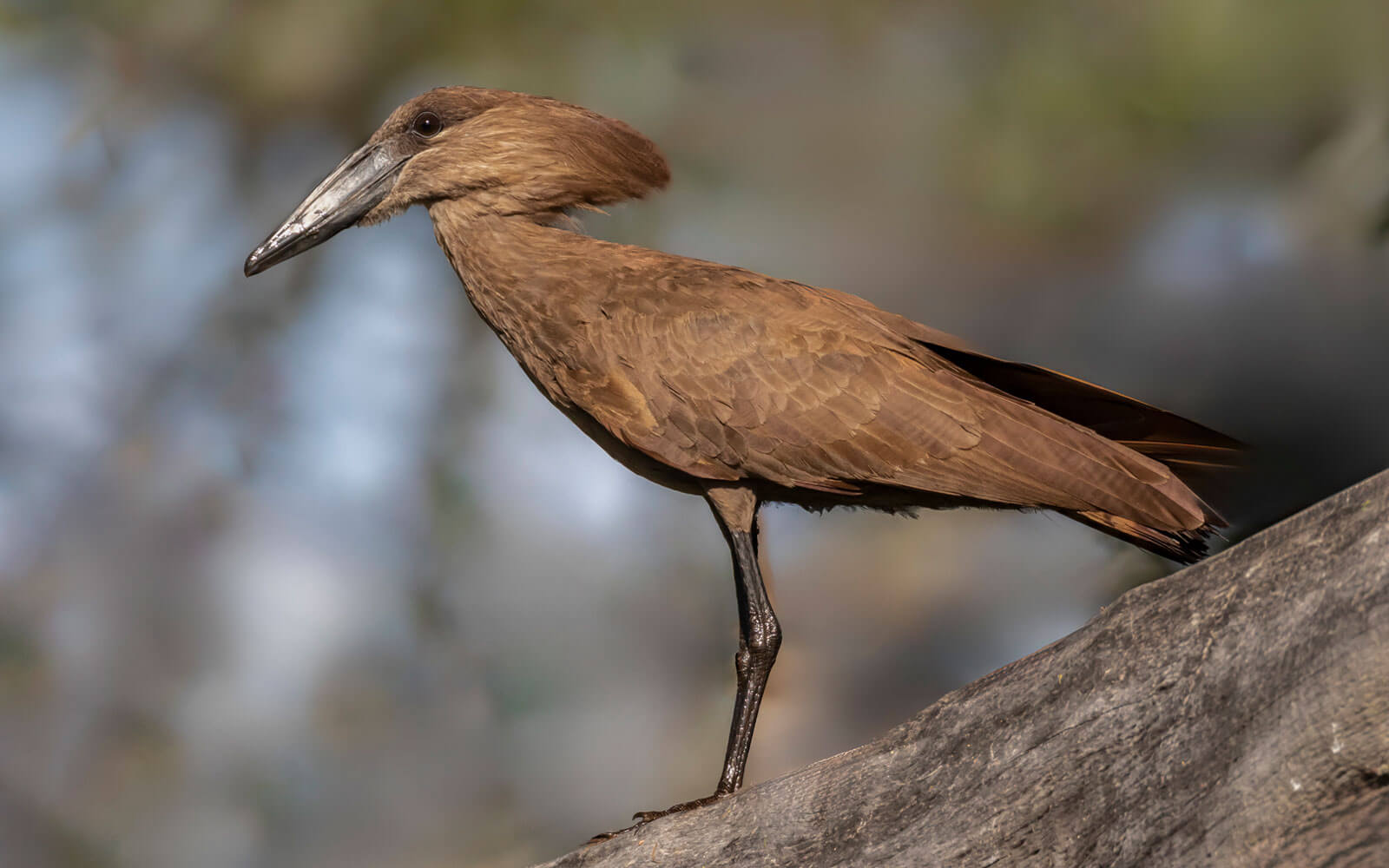
Hamerkop standing guard on the nest tree close to the nest
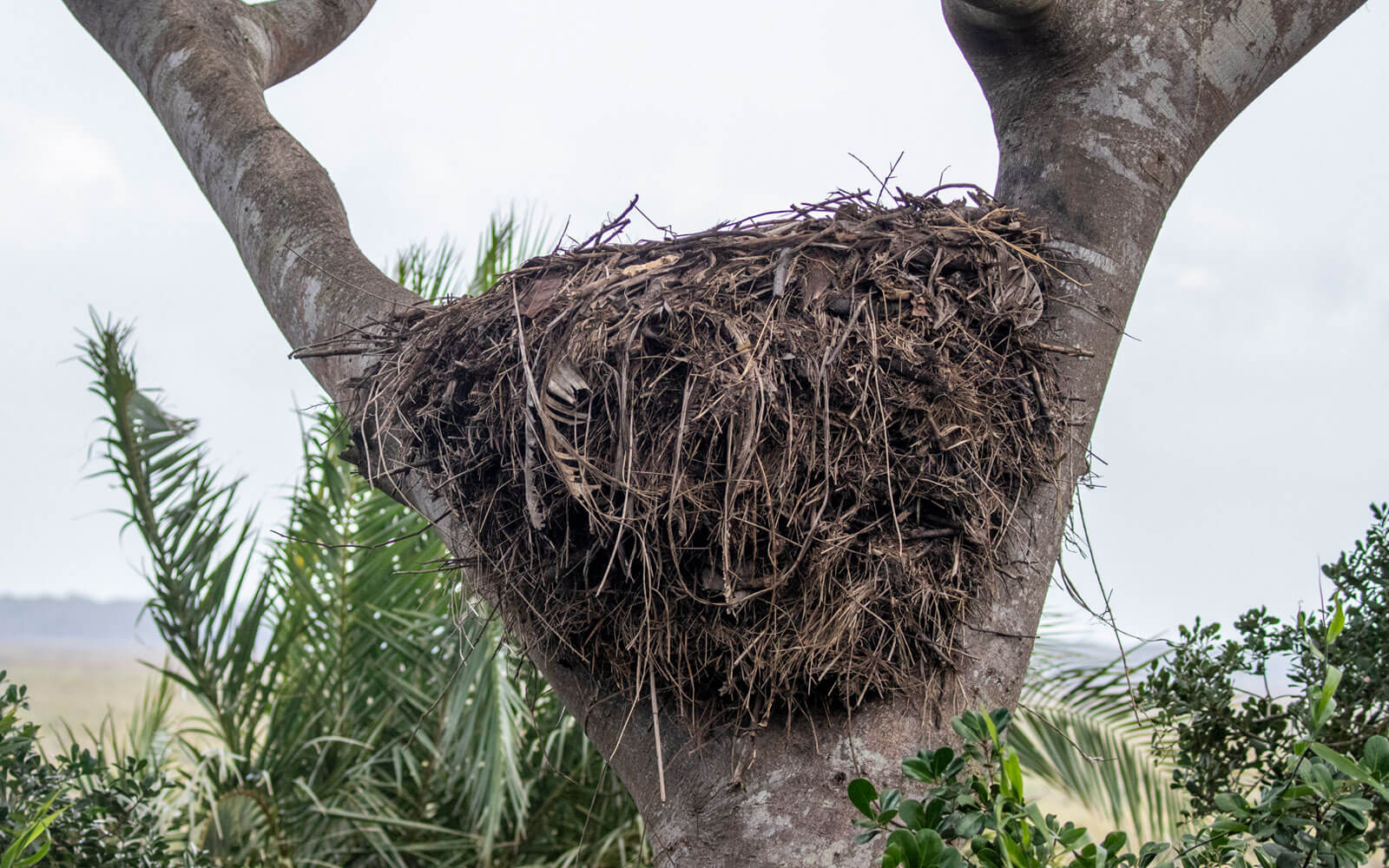
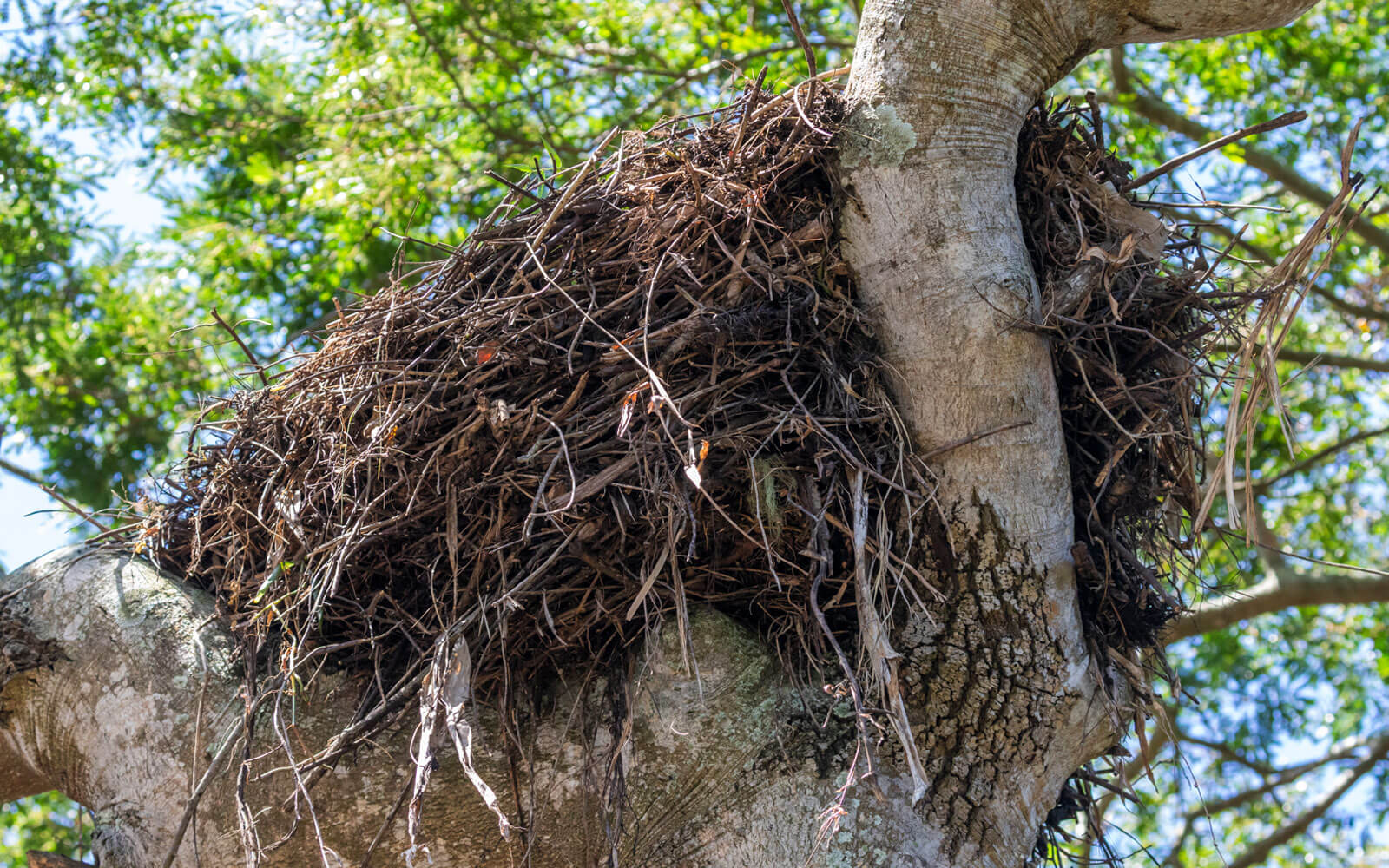
If birds handed out building awards, the Hamerkop would win “Most Extra” every year. This medium-sized, chocolate-brown wader constructs a dome of sticks so massive that a person could (almost) sit on it—often over a metre across and weighing many kilograms. Several materials line the interior: mud, reeds, grass, even the odd bit of human detritus. Entrances are side tunnels; walls are thick and weatherproof.
But why such excess? Predation insurance and pair bonding. The sheer bulk deters many nest raiders, while endless building and refurbishing strengthens the pair’s bond. Multiple “practice” nests may be started before one is finished, and old Hamerkop nests become high-value real estate: barn owls, Egyptian geese, genets and snakes often move in once the owners vacate.
Where to look: Low branches over pans and rivers throughout KZN; estuary edges and farm dams also host these conspicuous domes.
White-fronted Bee-eater – it takes a village
Burrow colonies, cooperative breeding, dependent chicks (altricial)
These birds excavate long burrows into sandy cliffs along major KZN rivers. Inside, altricial chicks hatch featherless and dependent—perfectly suited to a safe, stable burrow chamber. But where bee-eaters truly stand out is in their cooperative breeding. Older siblings, aunts and uncles all help feed the brood. This buffering system dramatically improves survival, especially when insect numbers fluctuate.
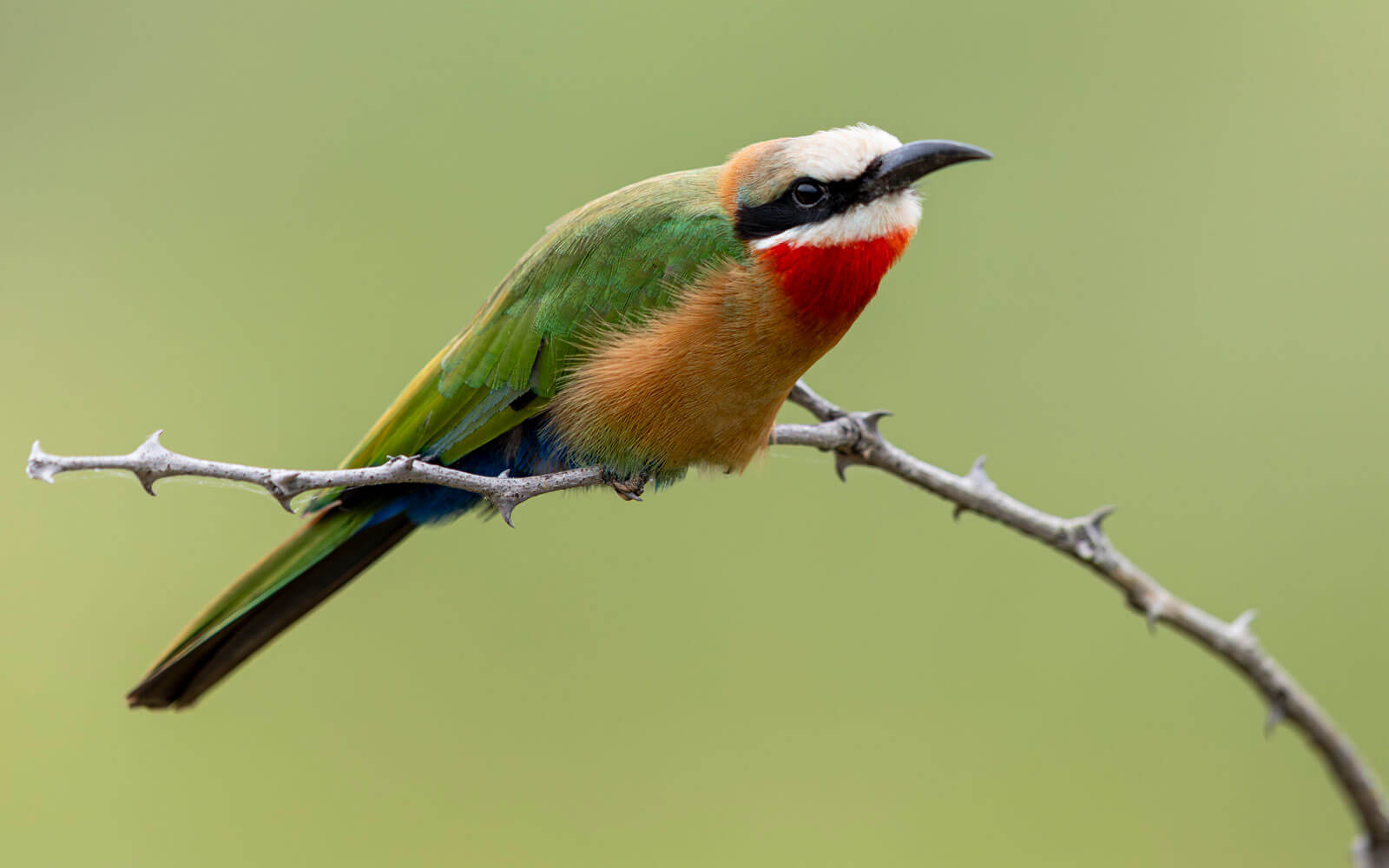
White-fronted Bee-eater
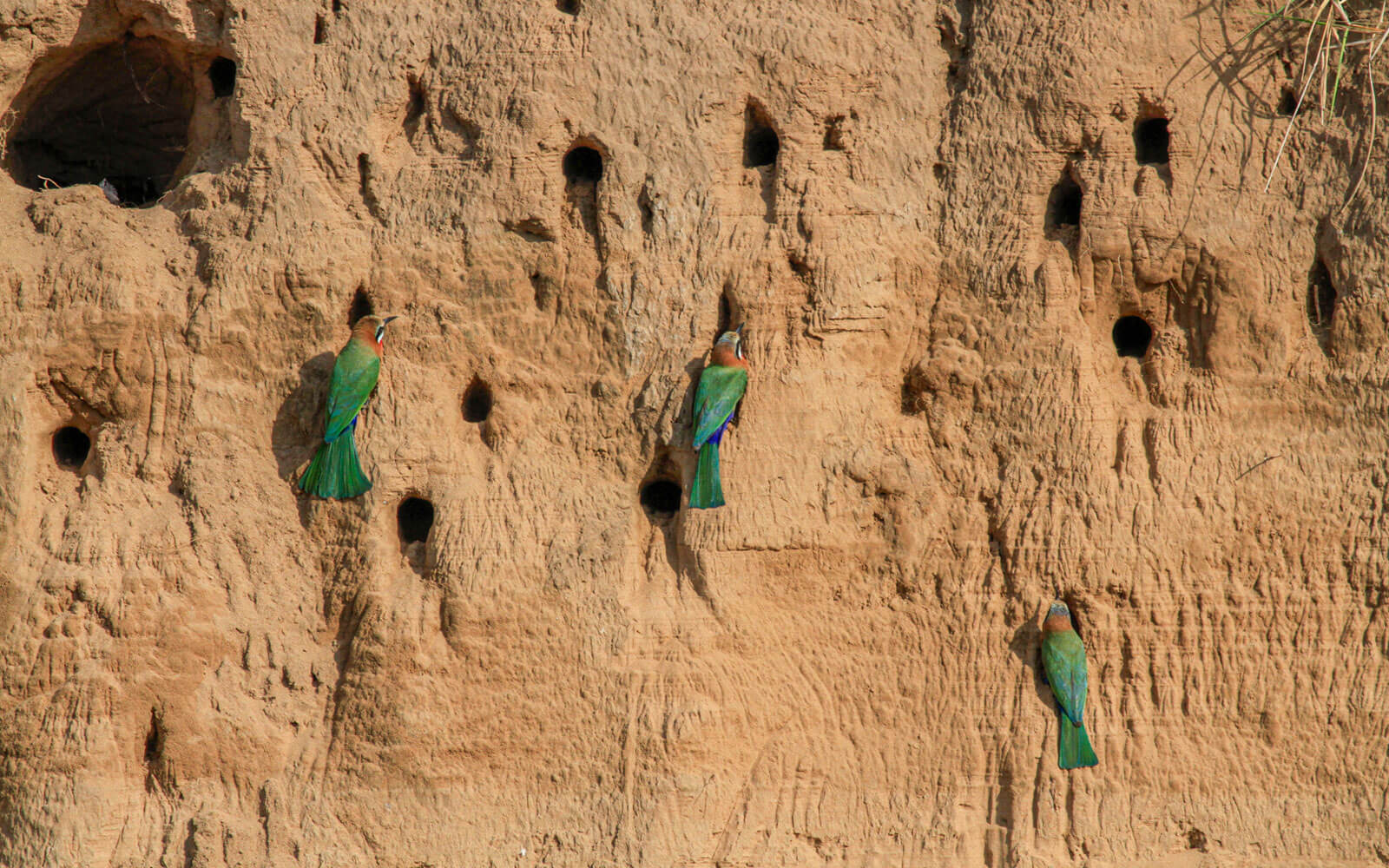
White-fronted Bee-eater parents at the entrances to the nest holes.
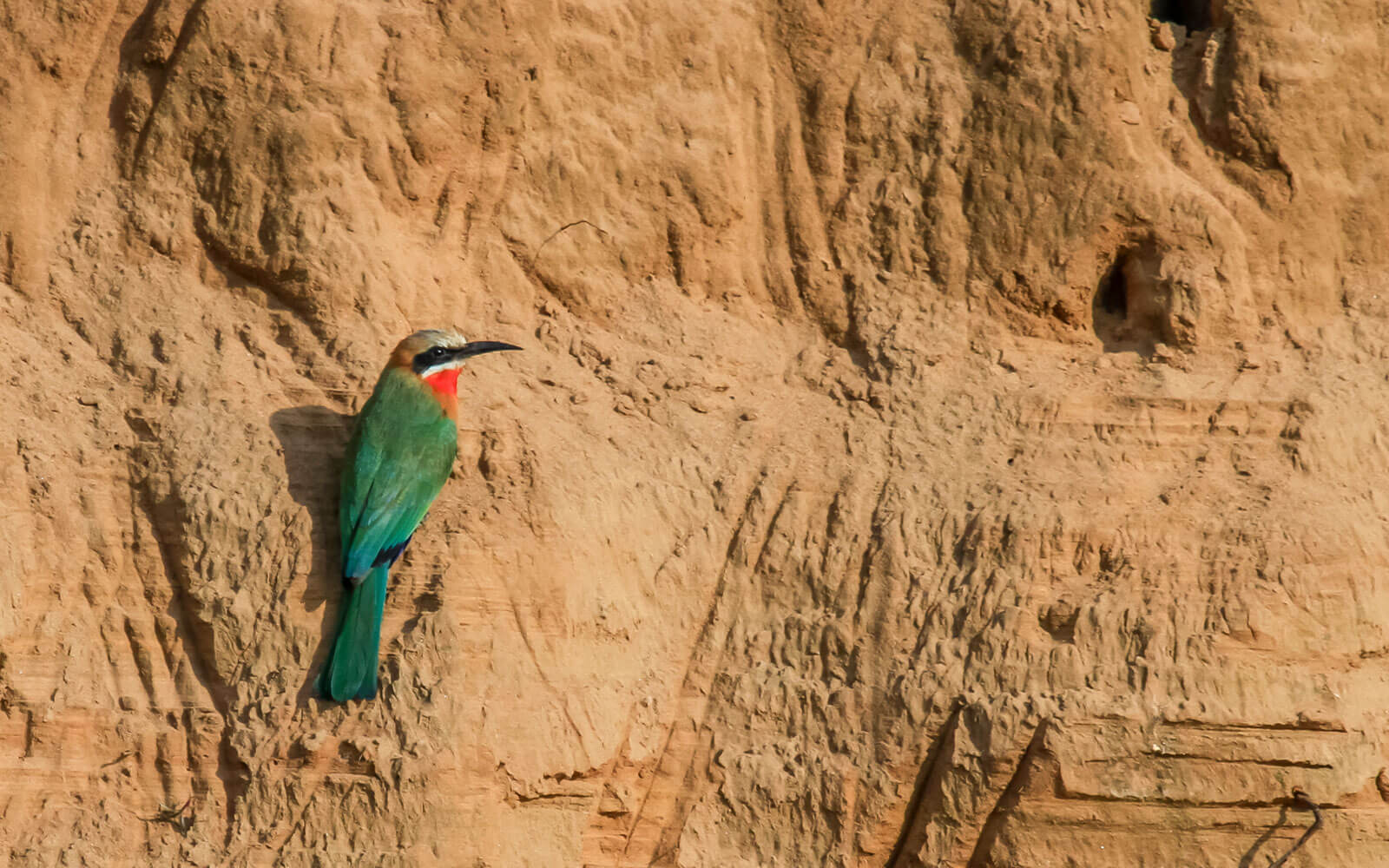
These birds even take advantage of construction areas where sandy cliffs are exposed.
African Jacana – Super-Dad and precocial marvels
In our wetlands and lily-covered backwaters, African Jacanas tiptoe on giant toes across floating vegetation. The nest is a flimsy raft of leaves anchored to water plants—easy to assemble, easy to move. The chicks are not helpless and hatch fully mobile, foraging within hours. But the real surprise is the parenting plan: sex-role reversal. Females are larger and may mate with multiple males; males incubate and raise the chicks. When danger looms, the male reshapes his body into a feathered basket, tucking tiny chicks under his wings and against his belly—then sprinting across the lilies with only a forest of little legs peeking out. Downy young feed themselves within hours of hatching but rely on dad’s protection for several weeks.
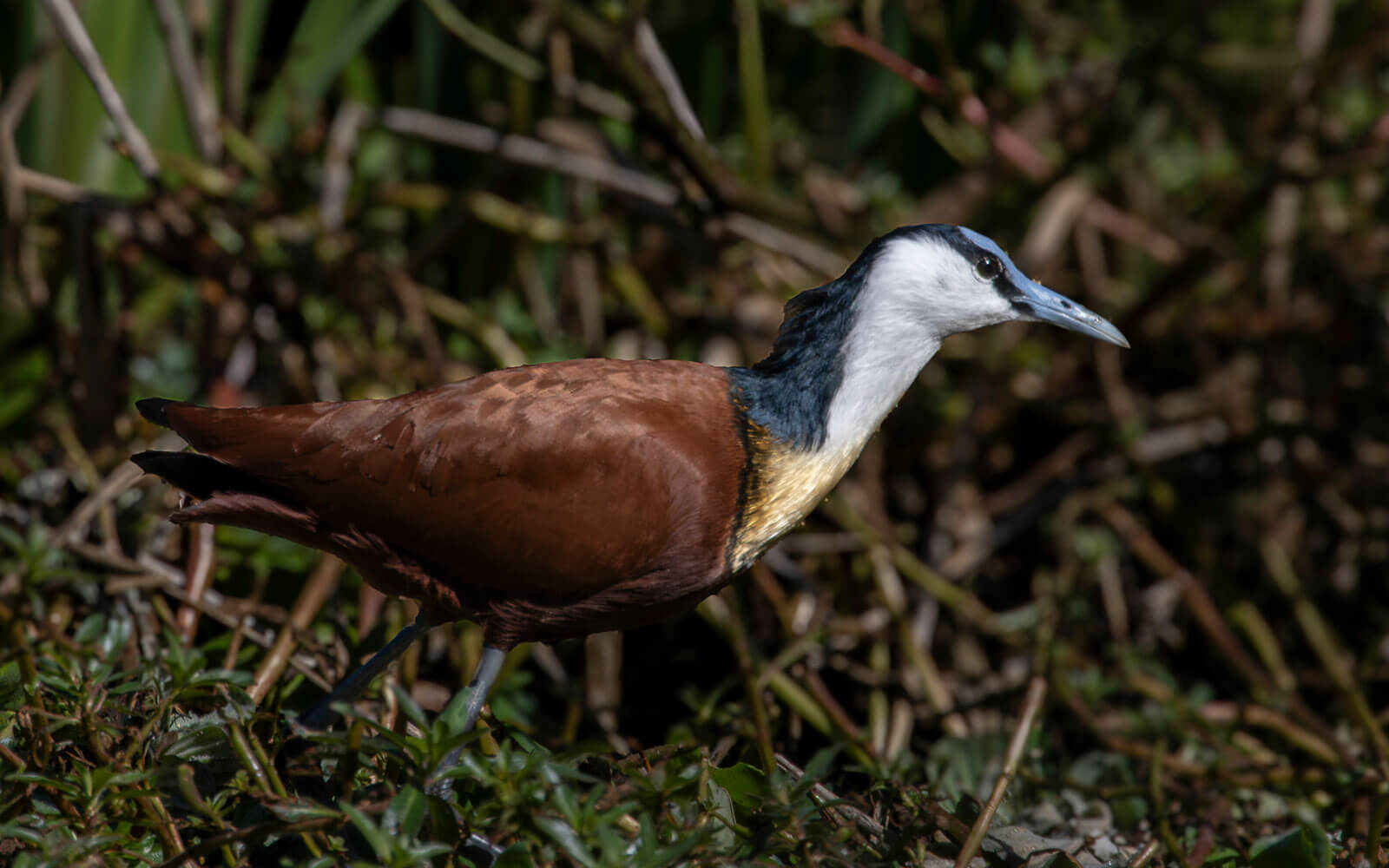
African Jacana
Egyptian Goose – feathered sprinters from day one
Ground nests, early mobility, vigilant parents
Egyptian Geese are a familiar sight across KZN’s dams, golf courses, rivers and wetlands, but their chick-rearing strategy is anything but ordinary. These bold, vocal birds raise fully precocial young – chicks that hatch downy, alert and ready to move almost immediately.
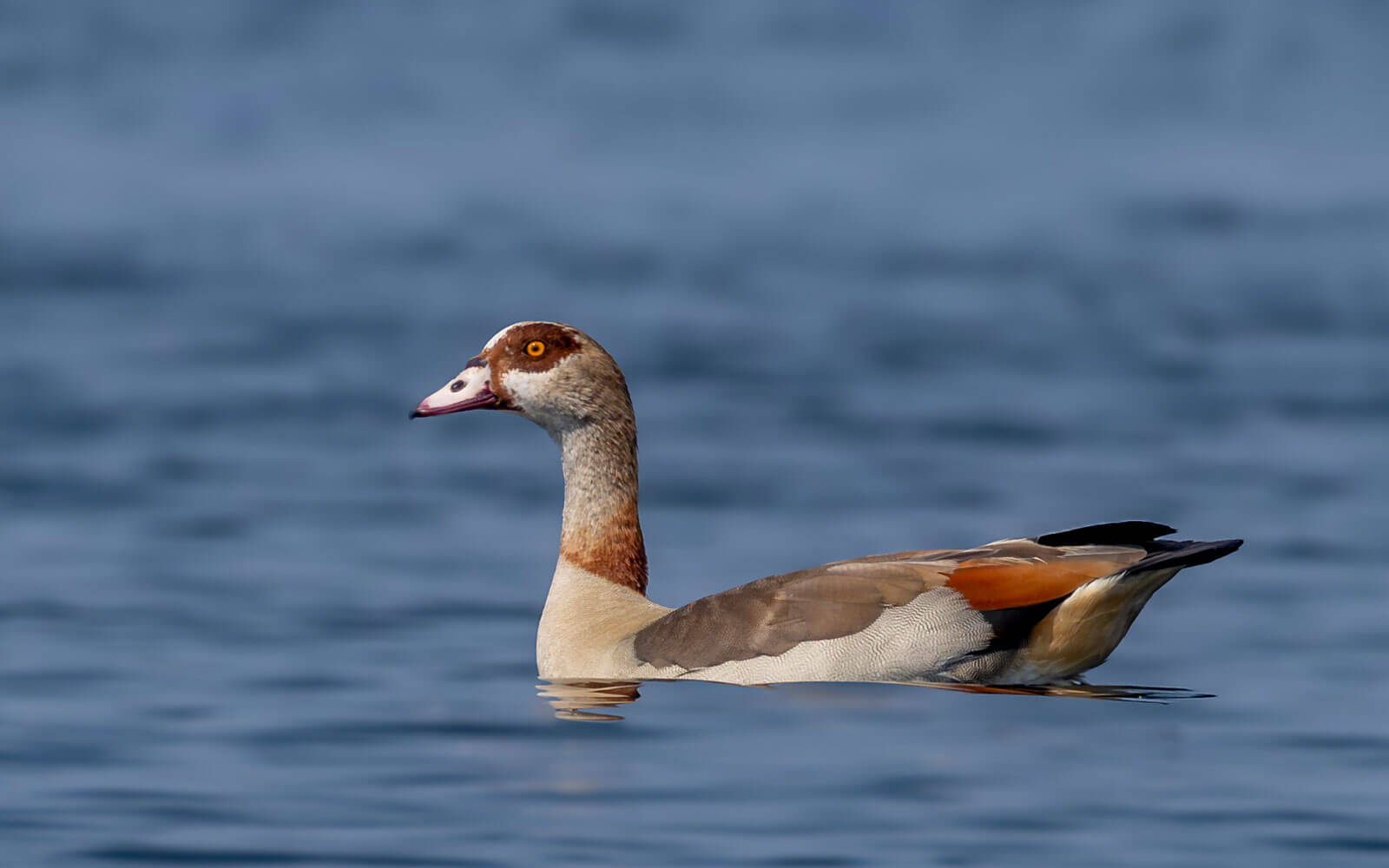
Adult, mature Egyptian Goose in breeding plumage
The nest itself is simple: a lightly lined scrape in vegetation, a hidden spot along a shoreline, the top of a Hamerkop nest or even a cavity in a tree or on a building ledge (a surprising choice they manage with ease). What the structure lacks in craftsmanship is made up for by intense parental vigilance. Both adults stand guard from the moment eggs are laid until the brood fledges. When the chicks hatch, the transformation is instant: within hours they are on their feet, their striking brown-and-white patterns providing superb camouflage against grass, reeds and mud. They feed themselves from day one—pecking at tender vegetation, insects and algae—but depend on their parents to lead them to the safest foraging patches and to sound the alarm at any sign of danger.
Egyptian Geese are fiercely protective during this period. Adults will charge at herons, monitor lizards, dogs, and even other geese if they venture too close. The family group stays tightly bound, with parents guiding the brood across water, through reeds, and onto open lawns where visibility is high.
This strategy — precocial young paired with highly defensive adults — allows the species to thrive in varied habitats, from wild wetlands to urban lakes. The chicks grow quickly, fledging within a few short weeks and soon joining the flocks that pepper the Highway area. This is also a result of the habitats we create with golf-courses, and other large lawned areas with water bodies creating the ideal habitat for this species. Remember to correct the perception that they are the problem – it is the facilitation by humans that is the issue.
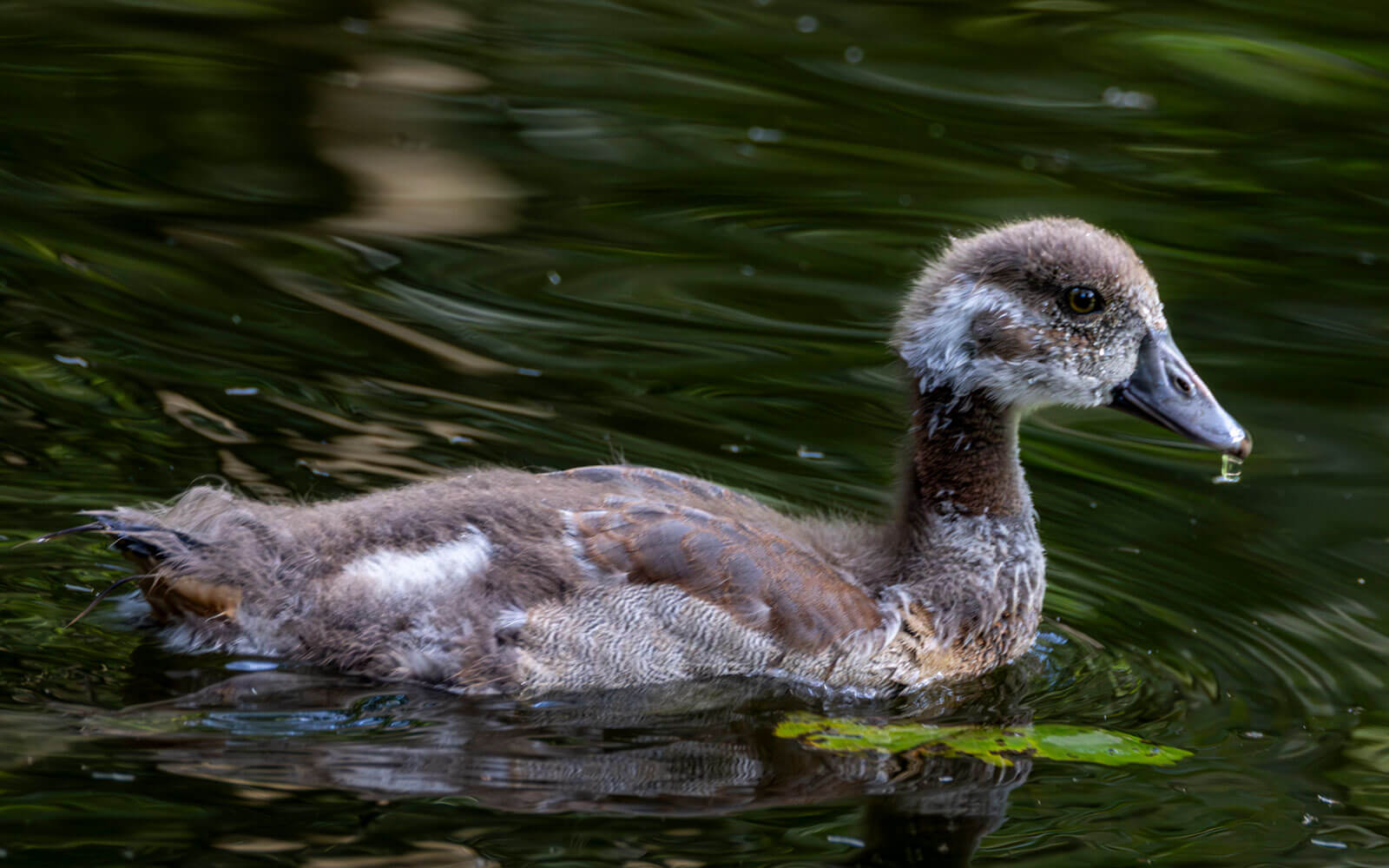
Egyptian Goose gosling
A continuum, not a dichotomy
It should be noted that this is not a clear split but rather a continuum with many species falling between these extremes. For example, there are semi-altricial chicks (e.g., owls) which hatch with down but remain dependent as well as semi-precocial chicks (e.g., some waders) are mobile but still need parental feeding. This continuum reflects the enormous ecological variety in avian life histories—especially evident across KwaZulu-Natal’s forests, wetlands, rivers, and savannas.
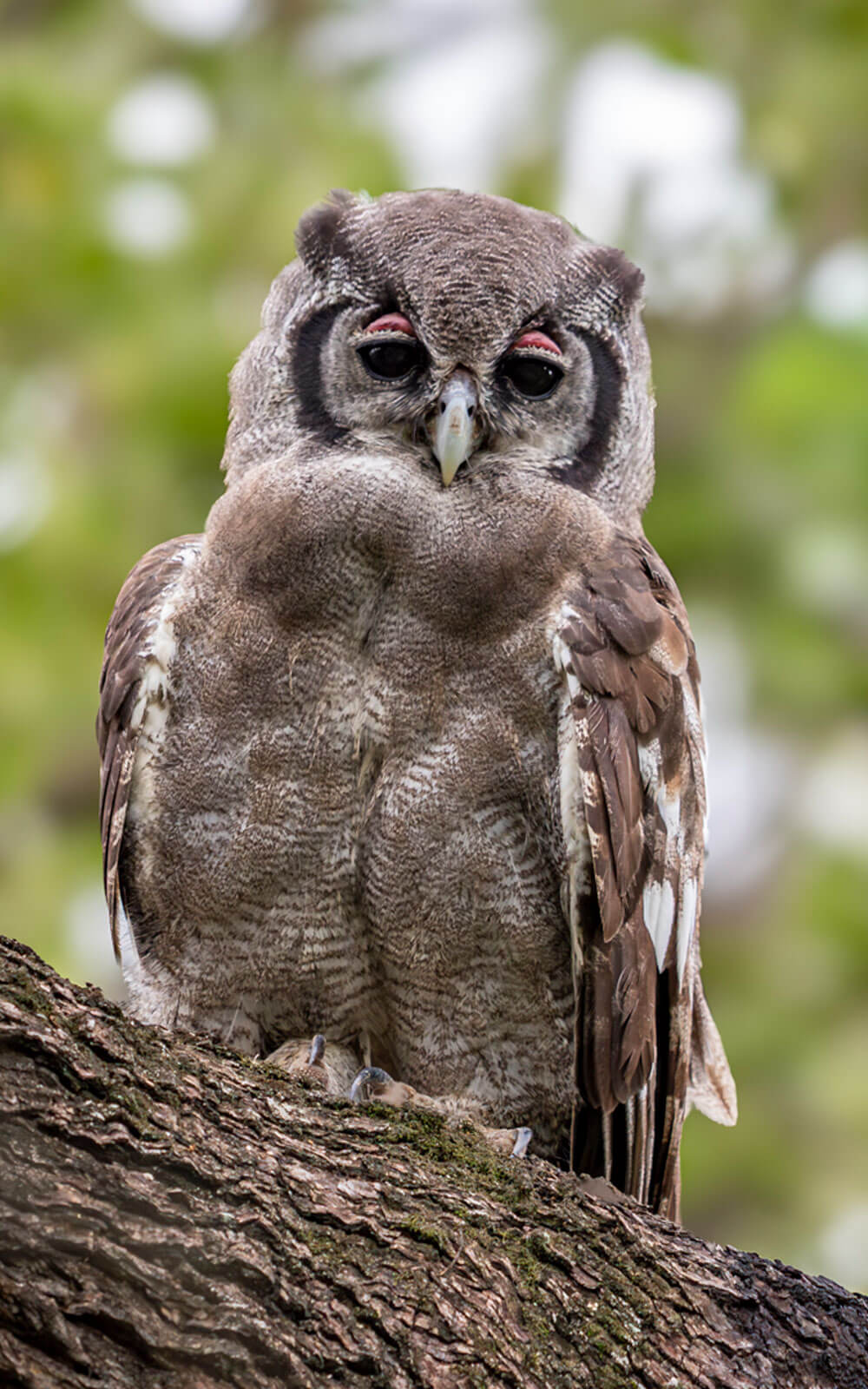
A Giant Eagle-owl, a species which has been turning up in the Kloof/Highway area causing much excitement amongst birders. Their babies are semi-altricial hatching with downy feathers but needing nest care in the form of feeding.
How these evolutionary strategies shape nesting in KZN
Altricial and precocial development patterns influence nearly everything about nesting and parenting. The species below illustrate how these strategies play out in the field.
Conservation takeaway
- Wetland protection supports precocial broods needing space to move freely.
- Old trees (think before you cut down big trees!) and stable riverbanks are vital for altricial species tied to fixed nest structures.
- Minimising disturbance is crucial near altricial nests that depend on secrecy and stability.
Take-home message
“From lily pads to riverbanks to forest canopies,
KZN is a living gallery of bird nursery designs.”
KwaZulu-Natal’s nesting diversity makes sense through the lens of chick development. Altricial species invest in sheltered nests and prolonged care; precocial species invest in well-developed chicks that can move immediately. Both strategies are ancient, successful, and beautifully adapted to the province’s mosaic of habitats.
Watch closely this season—whether it’s a jacana leading a brood across lilies or a bee-eater colony feeding invisible chicks deep in the banks, you’ll see evolution’s ingenuity at work in every nursery.

About the author
Nicolette Forbes was born in Durban and is passionate about all things KZN and its environments. With an interest in all things living from a young age it was no surprise that her chosen career path ended with her becoming a professional biologist having studied biological sciences at the University of Natal, Durban (now University of KwaZulu-Natal). Studying was followed by a lecturing stint to both biology and medical students for nine years before leaving the university to put her knowledge into practice with an ecological consultancy specialising in coastal habitat assessments.
Birding has been a passion from her high school days and birdwatching, atlassing. photography and being in the bush are her favourite things. Currently the Chair of BirdLife eThekwini KZN, the club covering the Greater Durban area, Nicolette has also through the non-profit EcoInfo Africa, partnered with Kloof Conservancy to run environmental courses focussed on birds.