
Stuck on the rocks
Hydrostachys polymorpha in the Molweni Splash
Text and photographs Neil Crouch
Few of Krantzkloof’s plants are as fascinating as one particular occupant of the Splash on the lower Molweni River, Hydrostachys polymorpha in the family Hydrostachyaceae. It belongs to an ecologically-specialised group of aquatic plants that are superbly adapted to surviving and reproducing in the rapids of fast-flowing rivers and across waterfall faces, hanging on for life by a submersed anchoring system which effectively glues them to the rocks. Members of this flowering plant genus, of which only one species occurs in South Africa (and that just in KZN), present as separate male and female plants, and are accordingly referred to as dioecious. Within the turbulent and often violent environment so characteristic of rapids and waterfalls—especially during peak summer rains—the pollen from male flowers on one plant must make its way to the ovaries of flowers found on separate female plants, and this across stretches of ‘boiling’ water. Hydrostachys polymorpha somehow manages, and although seed is evidently set and dispersed, this species is not exactly what one would refer to as commonly encountered. In fact, its conservation status is presently given as Vulnerable, meaning that its faces extinction threats altogether greater than many other South African species. The species was first documented from our province about 150 years ago, following the gathering of plants by Durban newspaper owner John Sanderson at the Umgeni Falls (now known as Howick Falls). His material was subsequently cited in the description of what for some time was known as Hydrostachys natalensis, but which species was later recognised as just a form of H. polymorpha which had earlier (in 1864) been described from Mozambique, and so the name ‘natalensis’ was dropped from use. Aside from KwaZulu-Natal, H. polymorpha is a species known also to occur quite widespread, albeit sporadically in suitable habitat, from south-central Africa to as far north as Tanzania. Although historically documented to occur also in Madagascar, on which island nearly two-thirds of the world’s 23 Hydrostachys species are to be found, a recent key to the species there now excludes it. It is likely that a form of what previously was taken to be H. polymorpha has more recently been described as a separate species, perhaps an endemic to Madagascar. Notably, the name ‘’polymorpha’’ which means ‘’many forms’’ alludes to a high degree of morphological variation once accepted as part of a very broad species concept.
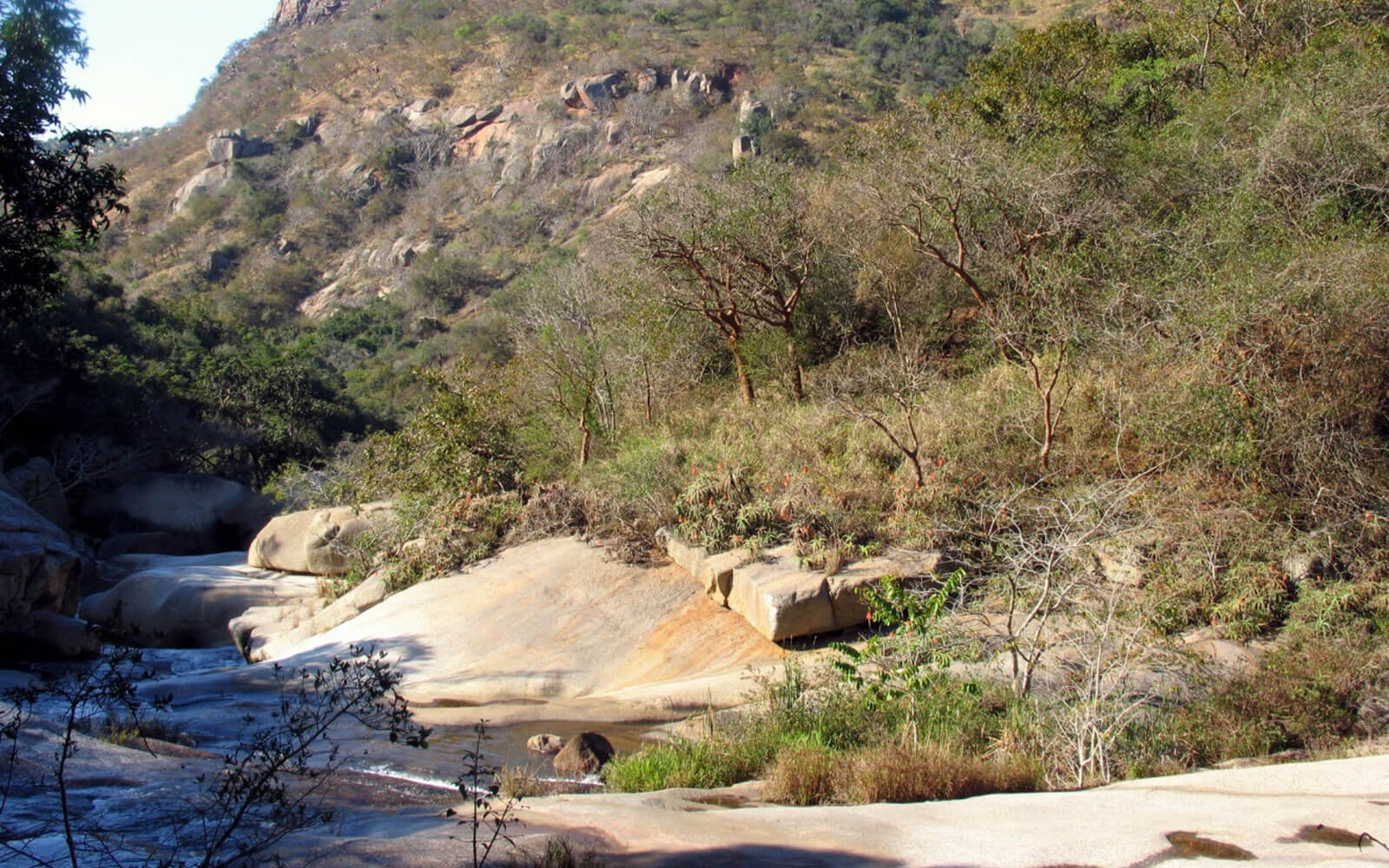
The Splash on the lower Molweni River within the Krantzkloof Nature Reserve, where a single colony of H. polymorpha is to be found submerged within the rapids.
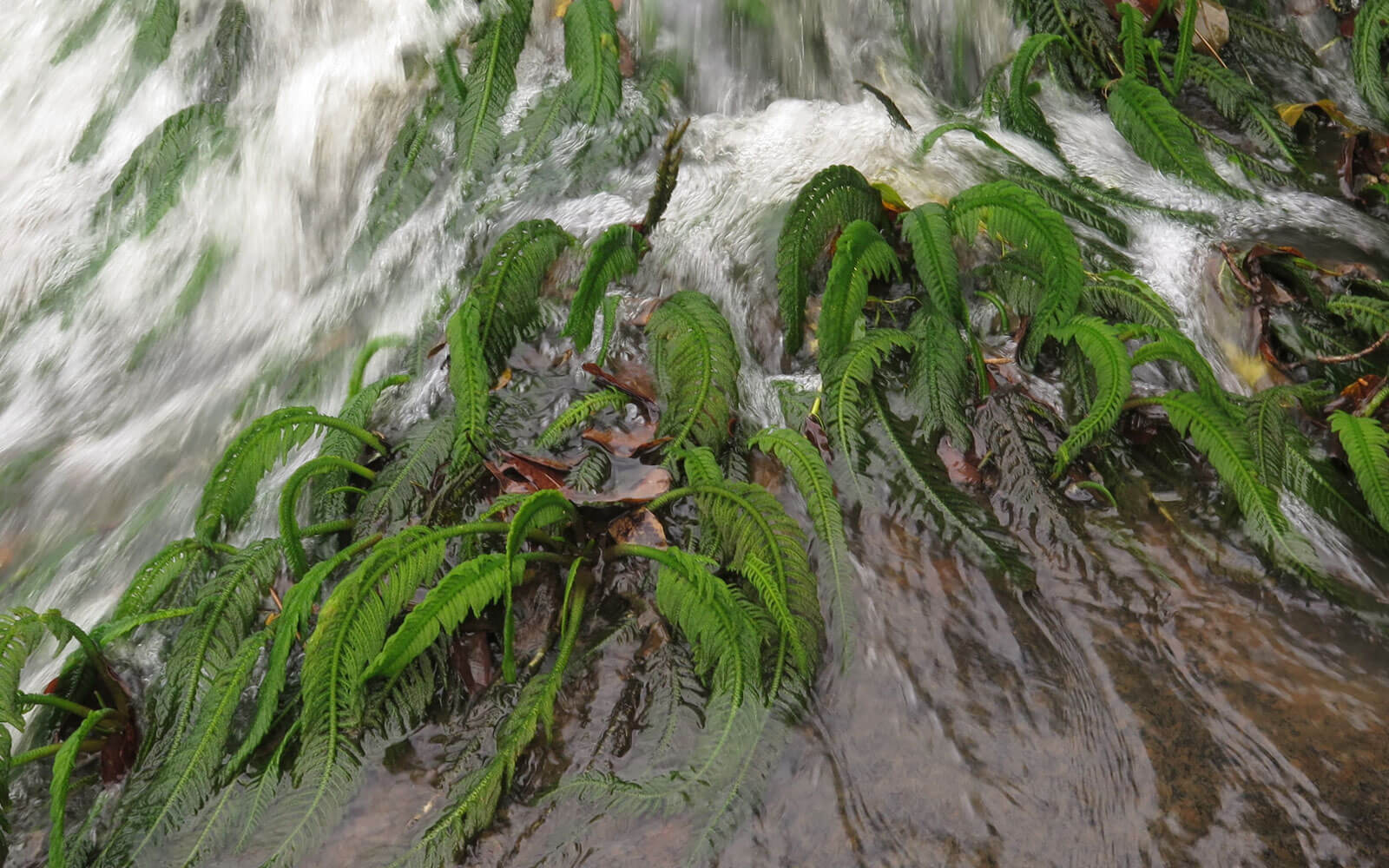
Plants are always found growing as colonies of plants that persist year-round, firmly attached to rocks in fast-flowing freshwater systems. The rhizomatous attachment point of the plant is disc-like, with a circle of radiating roots firmly stuck to the rocks, reducing the risk of it being washed away. Such plants are known as ‘’haptophytes’’ which translates as ‘’plants that hang on’’. During mid-summer the plants shown here are fully submerged in turbulent water and as just a haze beneath the white water can easily be mistaken for an alga. However, as the water level recedes towards late autumn the olive-green leaves become quite obvious, either fully exposed or trailing in the current.
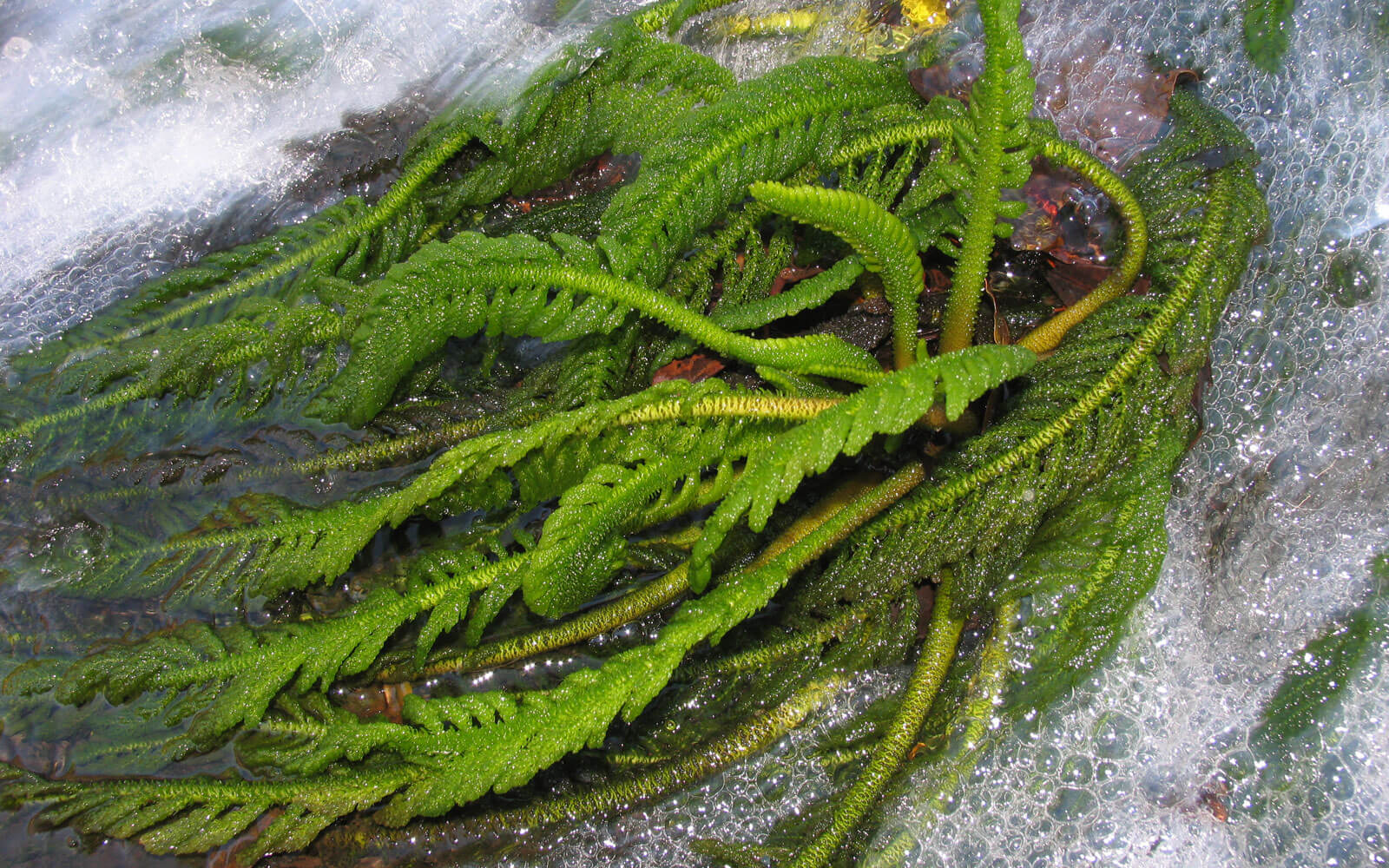
The plants are fern-like in appearance with their basal rosette of highly dissected feathery leaves, each up to 40 cm long, and the main axis covered with small warty to tongue-shaped protuberances. The final foxtail-like leaflet divisions form ‘gill-tufts’’ which have such a large surface area that effective transfer of gases can occur between the leaves and the highly aerated water that flows rapidly past them. The very design of the leaves allows for water to pass through the divisions without the leaf becoming torn or wrenched off by the turbulent action.
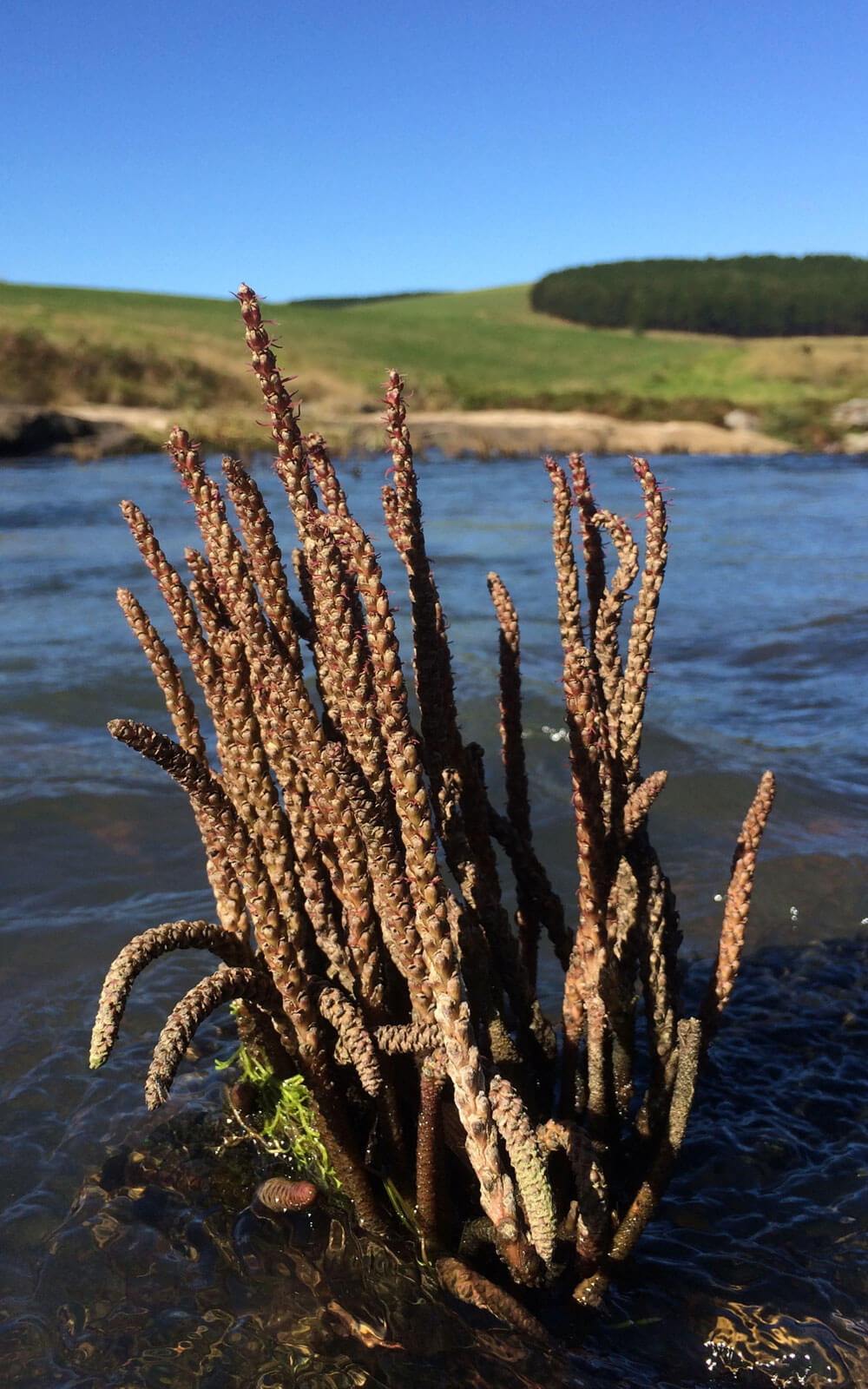
With the approach of winter, and a receding of water levels, it is time for Hydrostachys to flower, here shown at Woodhouse Falls on the Karkloof River. This female plant has sent up several emergent spikes of about 30 cm length, each of which arises from the base of the plant.
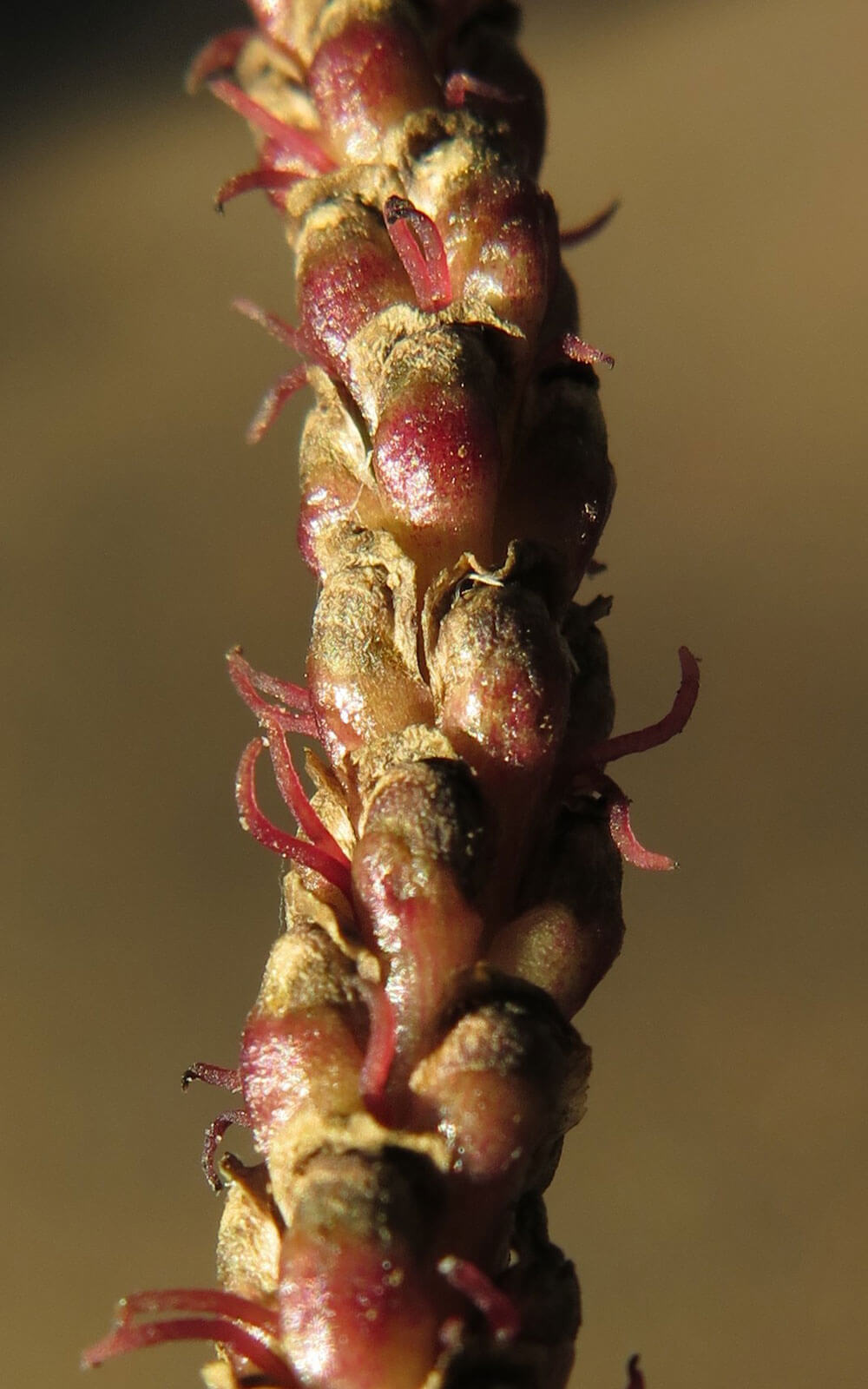
Close up of a female inflorescence showing the deep pink stigmas that pop out the top of the fleshy bracts behind which one finds the ovaries. There are two stigmas for each ovary. If fertilised by pollen that is blown across the water from male plants, then behind the bract a fruit capsule will develop, containing minute orange seeds. These seeds are released and distributed by the wind which gives them an opportunity to move across water basins, which is why we find H. polymorpha in both the Umkomaas and Umgeni River systems of our province. On contact with water the seeds will float before soon germinating to develop a small disc that adheres to a rock, and the cycle of life continues.
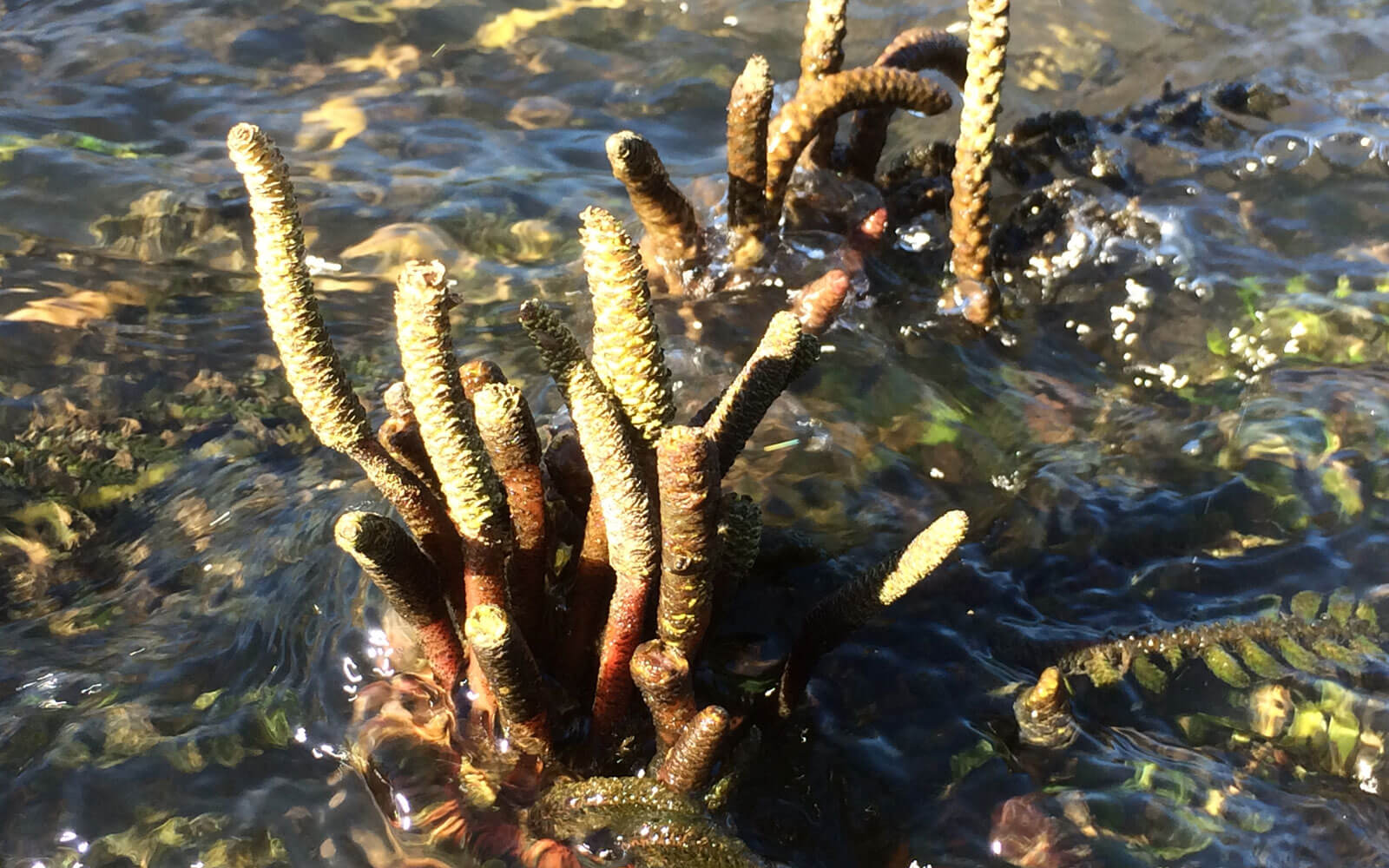
The inflorescences of male plants are generally similar in appearance to the dense flowering spikes of the females, though more creamy-coloured with their dusting of pollen that they release. They appear at the same time as the female plants produce their spikes. The genus name ‘’Hydrostachys’’ means ‘’water spikes’’ with reference to the inflorescences that stick out of the water.
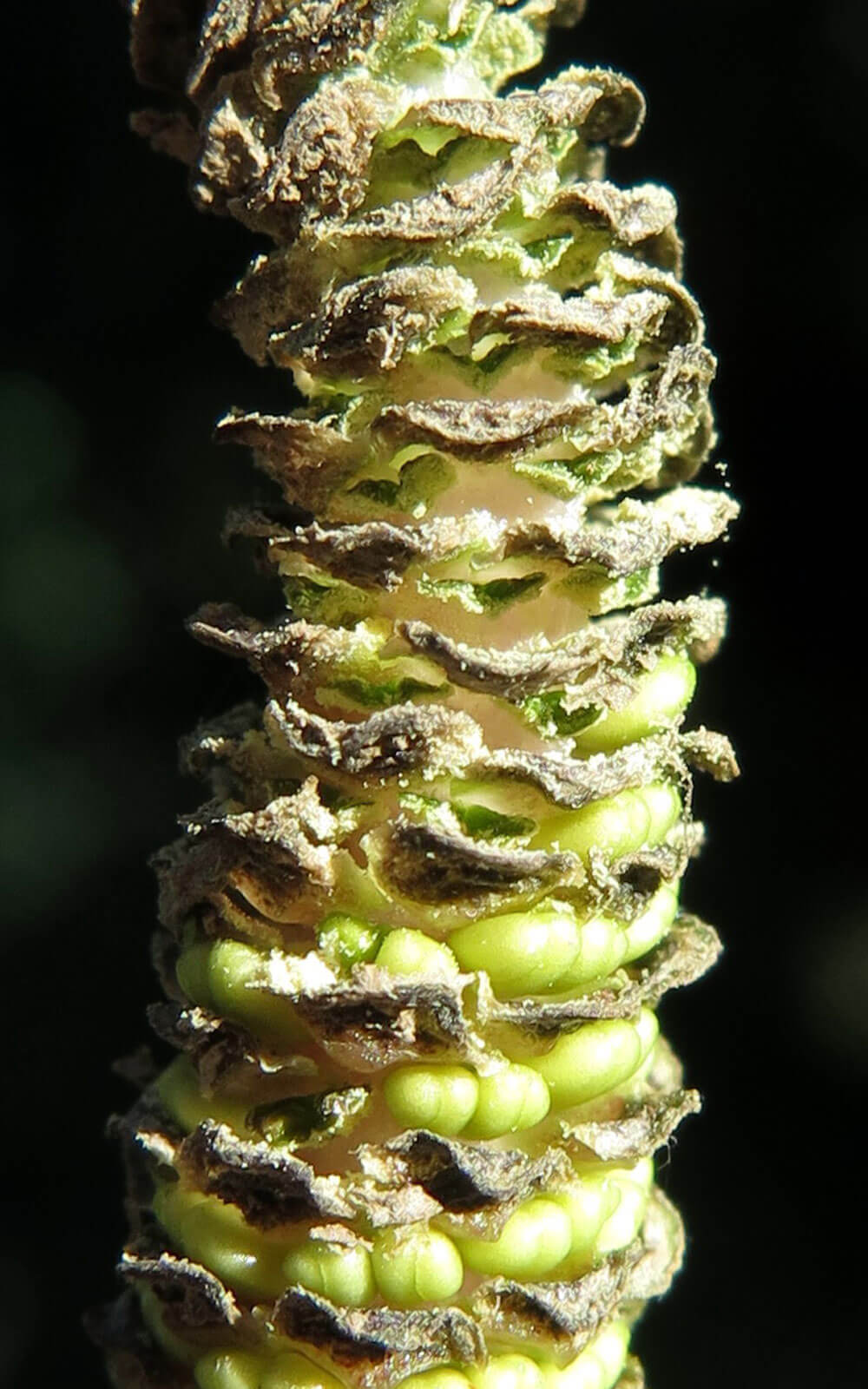
As with the female flowers the male flowers of H. polymorpha are tiny (about 3 mm long) and are without petals and sepals, for they have essentially become reduced to their bare essentials, in this case just anthers protected by a bract. In the upper part of this inflorescence section the anthers have matured and released their pollen to the wind, whilst in the lower part the greenish anthers are yet to fully develop and dehisce. This is quite unusual in that inflorescences typically mature from the base towards the top rather than the other way round (think of a Plectranthus inflorescence!).
References
Glen, R. (2004). Hydrostachys polymorpha. https ://pza.sanbi.org/hydrostachys-polymorpha
Obermeyer, A.A. (1970). Hydrostachyaceae. Flora of Southern Africa 13: 211–213.
Xu, Z. et al. (2020). Hydrostchys flabellifolia (Hydrostachyaceae), a new species from Madagascar. PhytoKeys 167: 45–56.

About the author
Neil Crouch, a Kloof resident, has a Ph.D in botany from the University of Natal and works in the biodiversity economy field. He has authored numerous scientific papers and articles and co-authored Field Guide to Succulents in Southern Africa, and Ferns of Southern Africa: A comprehensive guide, both published by Struik Nature.