
DIY or die: ingenious insect nurseries
Text and photographs Marlies Craig or as credited
When we hear ‘nesting’ and ‘insects’ in the same sentence, probably the first thing we all think about is the impressive structures built by social insects like termites, ants, bees and wasps. So let’s start there.
A termite nest, or termitarium, is an entire engineered civilization built from dirt, chewed wood and spit. Termitaria can tower several meters above-ground, while the underground foraging tunnels of a mature colony can radiate for 50 to 100 meters and down to depths of 6 to 7 meters to access moisture.
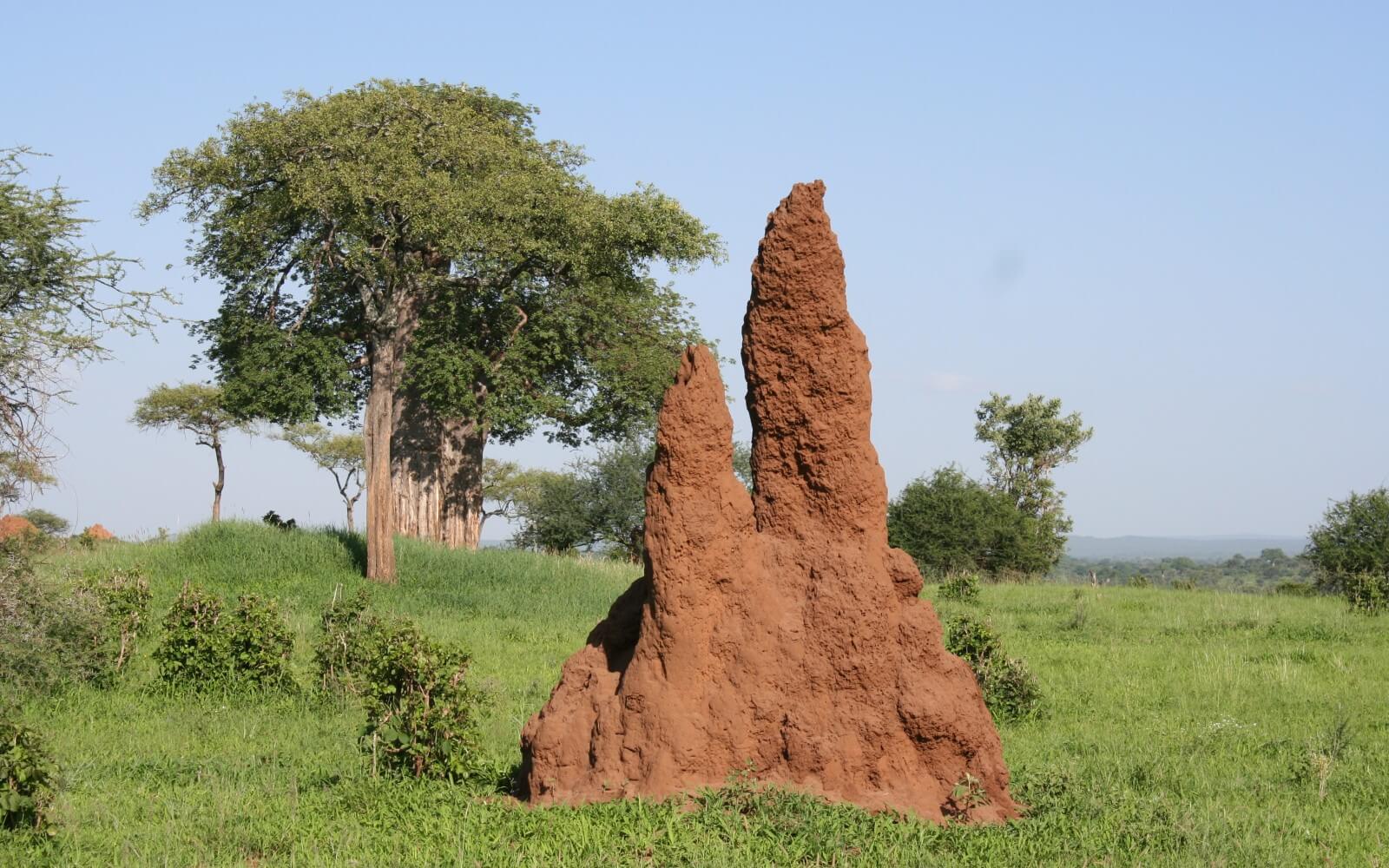
A massive termite mound in Tanzania
Termite nests are complicated, climate-controlled fortresses, with all the amenities needed for survival. Inside you will find intricate tunnels and specialised chambers for nurseries, networks of galleries serving as highways and storerooms, even advanced farming operations and fungus gardens in some species. Ventilation shafts, that act like air conditioning, maintain a remarkably stable temperature and humidity deep inside, sometimes within a single degree Celsius of the ideal. It’s a completely self-sustaining world of safety… until an aardvark breaks through the wall for a feast!
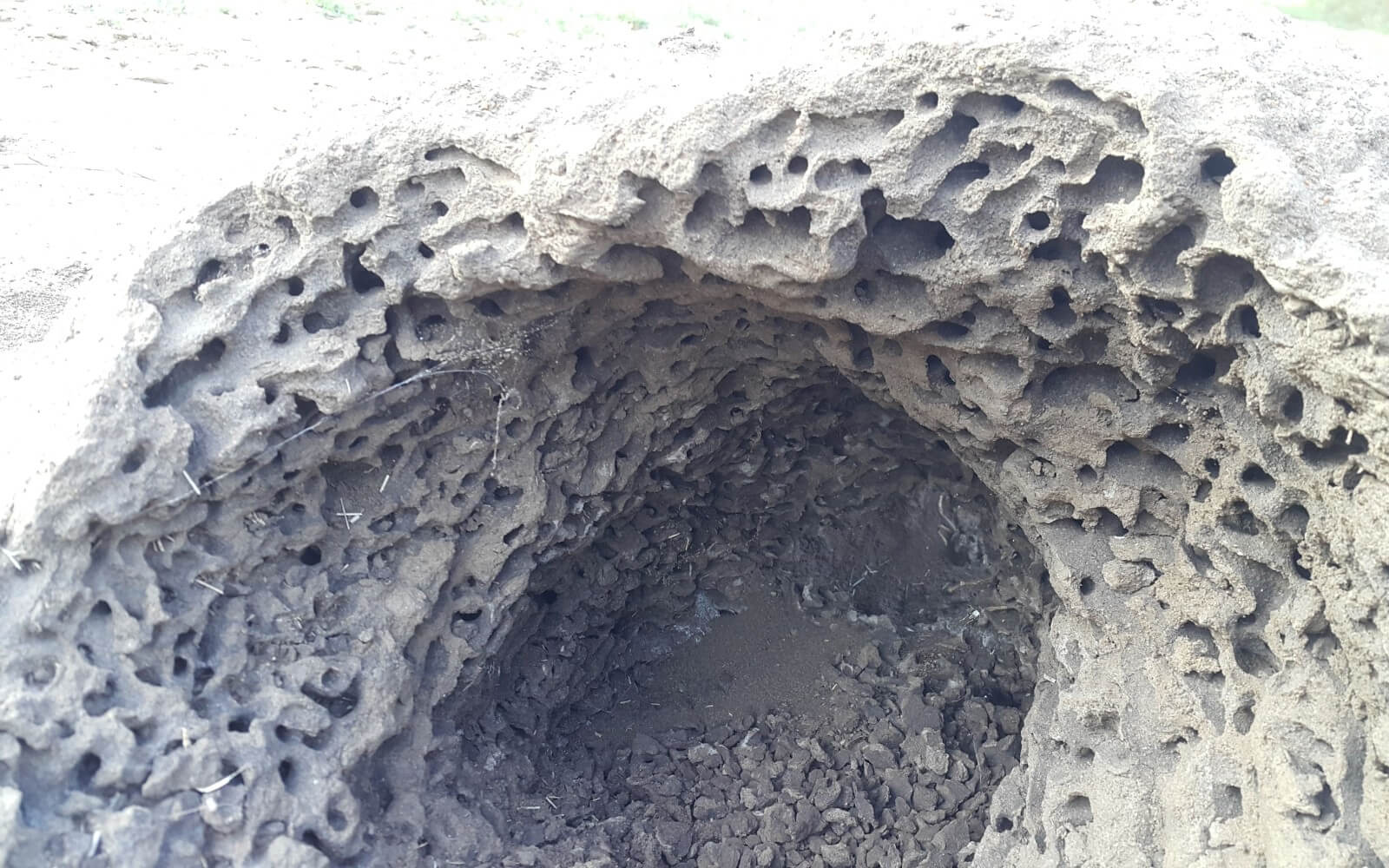
This termite mound has probably been raided by an aardvark. Some of the passages are clearly visible.
The social life of termites revolves around distinct castes, controlled (via pheromones) by the fertile king and queen who are responsible for reproduction. Termites hatch from an egg into a nymph that is basically a miniature, wingless version of the adult – no worm-like larval stage or cocoon required. In a new colony, the first babies to hatch immediately get to work to establish the new home. Through incomplete metamorphosis these little nymphs – both males and females – gradually mature into the colony’s adult but sterile workers (who forage and care for the young) and specialised soldiers (who defend the colony).
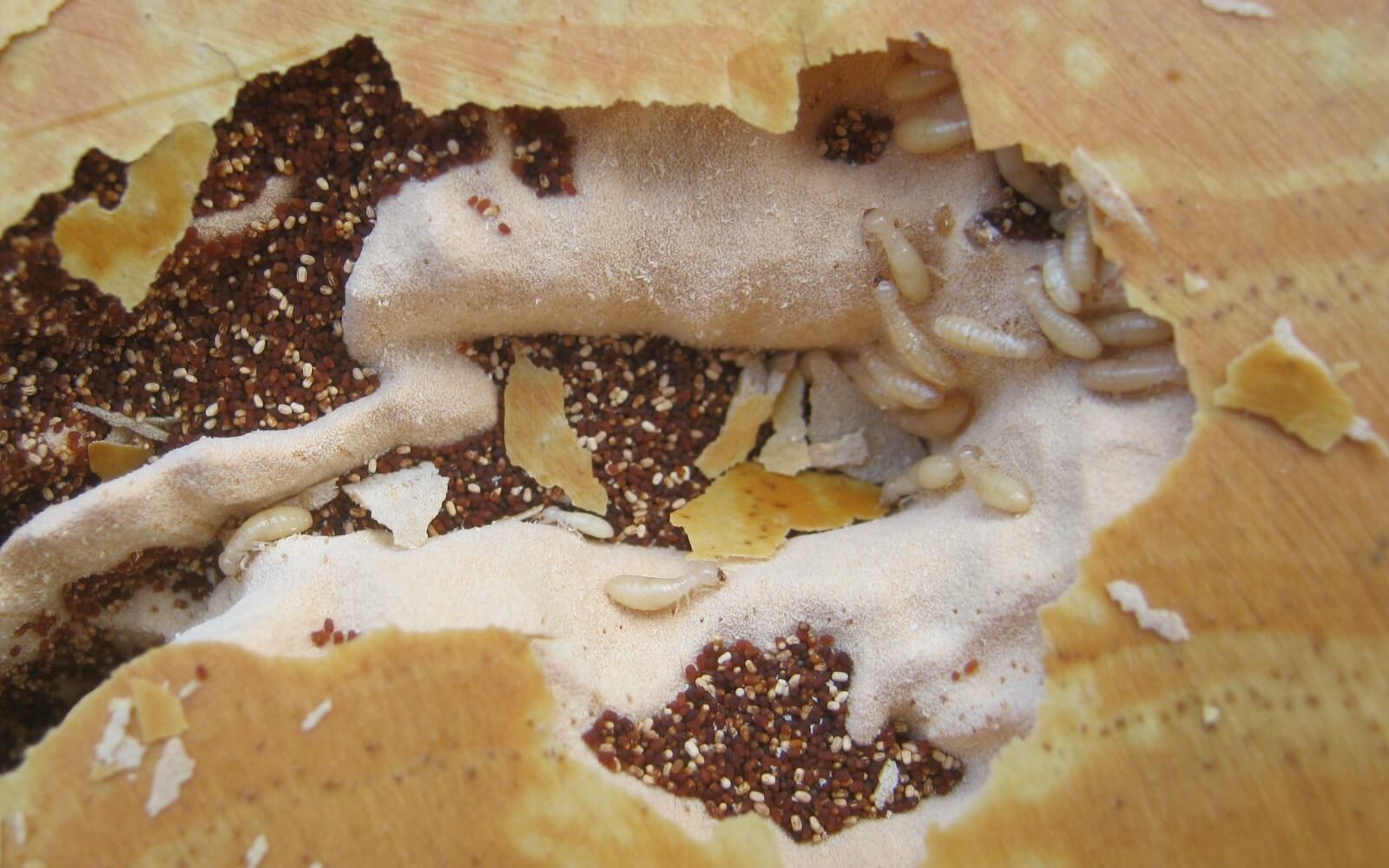
Woodboring drywood termites
Here in Durban, we are unpleasantly familiar with this type of woodborer that nests within the wood of furniture, roofs, picture frames, pianos, etc. These small drywood termites (family Kalotermitidae) require no contact with the soil or moisture. As they tunnel through the cellulose, they create clean galleries and push their distinctive, fecal pellets out through tiny ‘kick-out holes’. These pin-prick holes are often the first sign of an infestation. Their social structure is simpler than their subterranean cousins: they lack a true worker caste – immatures temporarily take on all the labour before developing into soldiers, or the winged reproductive alates (swarmers) that fly off to start a new colony.
Ants also build huge nests. Like termitaria, ant ‘formicaries’ are sprawling underground cities, extending several meters below ground, and include food storage and even waste management. Unlike termites, ants develop through complete metamorphosis: eggs hatch into larvae which later pupate before emerging as adults. Unlike termite hatchlings, which immediately get to work, ant hatchlings are helpless, grub-like larvae, that need to be cared for by adult workers. ‘Nurses’ constantly groom the larvae to prevent fungal infection, and meticulously move the entire brood (eggs, larvae, and pupae) around the nest to chambers with the precise optimal temperature and humidity for rapid development. The nurses also do the feeding, carefully processing solid food and then delivering nutrient-rich liquid directly to the larvae, controlling the diet to determine whether larvae mature into a future worker, soldier, or a new queen.
Nurseries are often placed under large sun-warmed stones during the day. This concentrated, stable heat allows the feeding larvae and transforming pupae to develop faster. Removing the stone triggers a frantic but organised evacuation. In no time countless soft-bodied young are carried off, out of the harsh sunlight back into the safety of the soil.
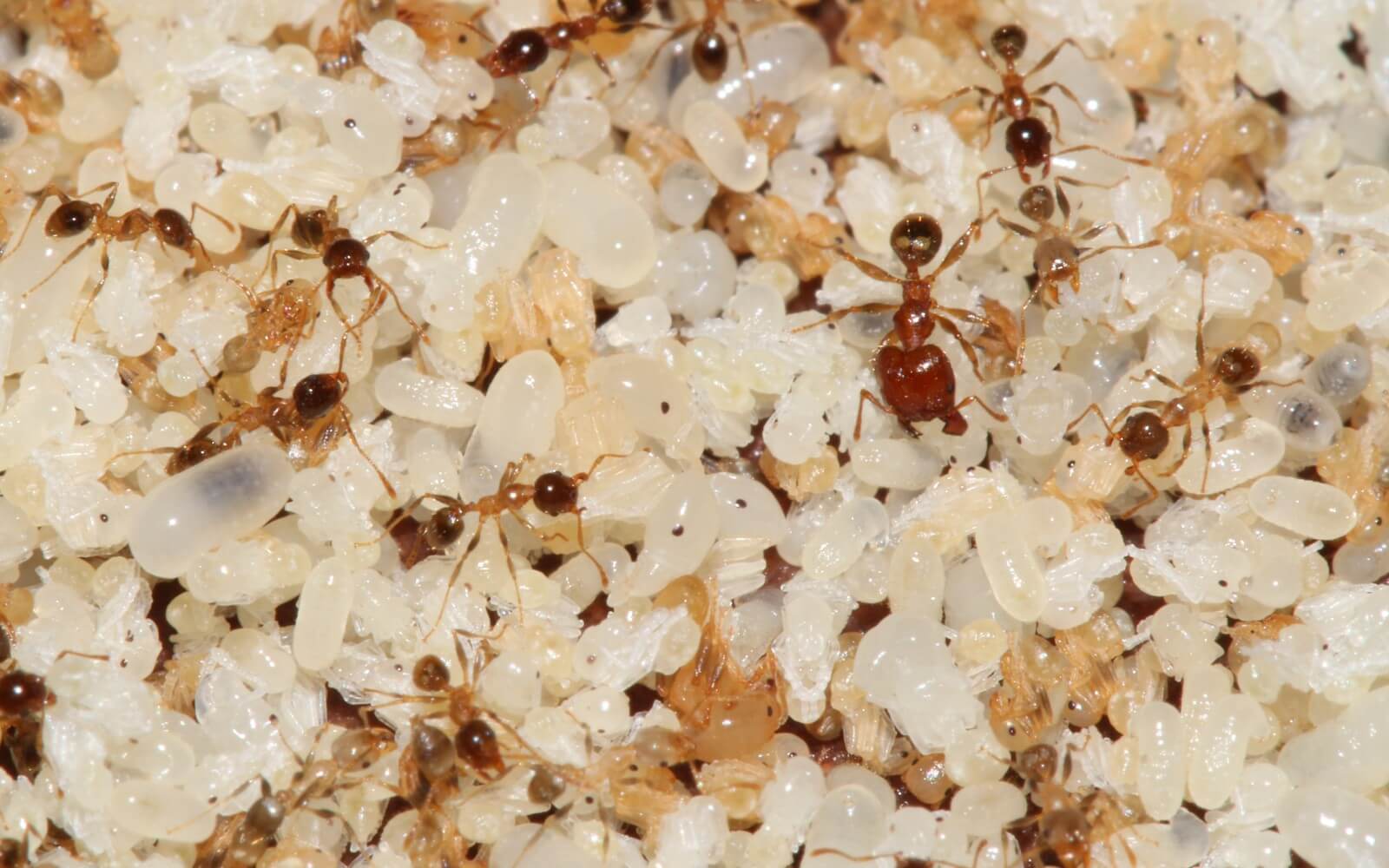
An exposed ant nursery. Look closely and notice larvae and pupae of every size, at every stage of development, watched over by several adult workers and a soldier.
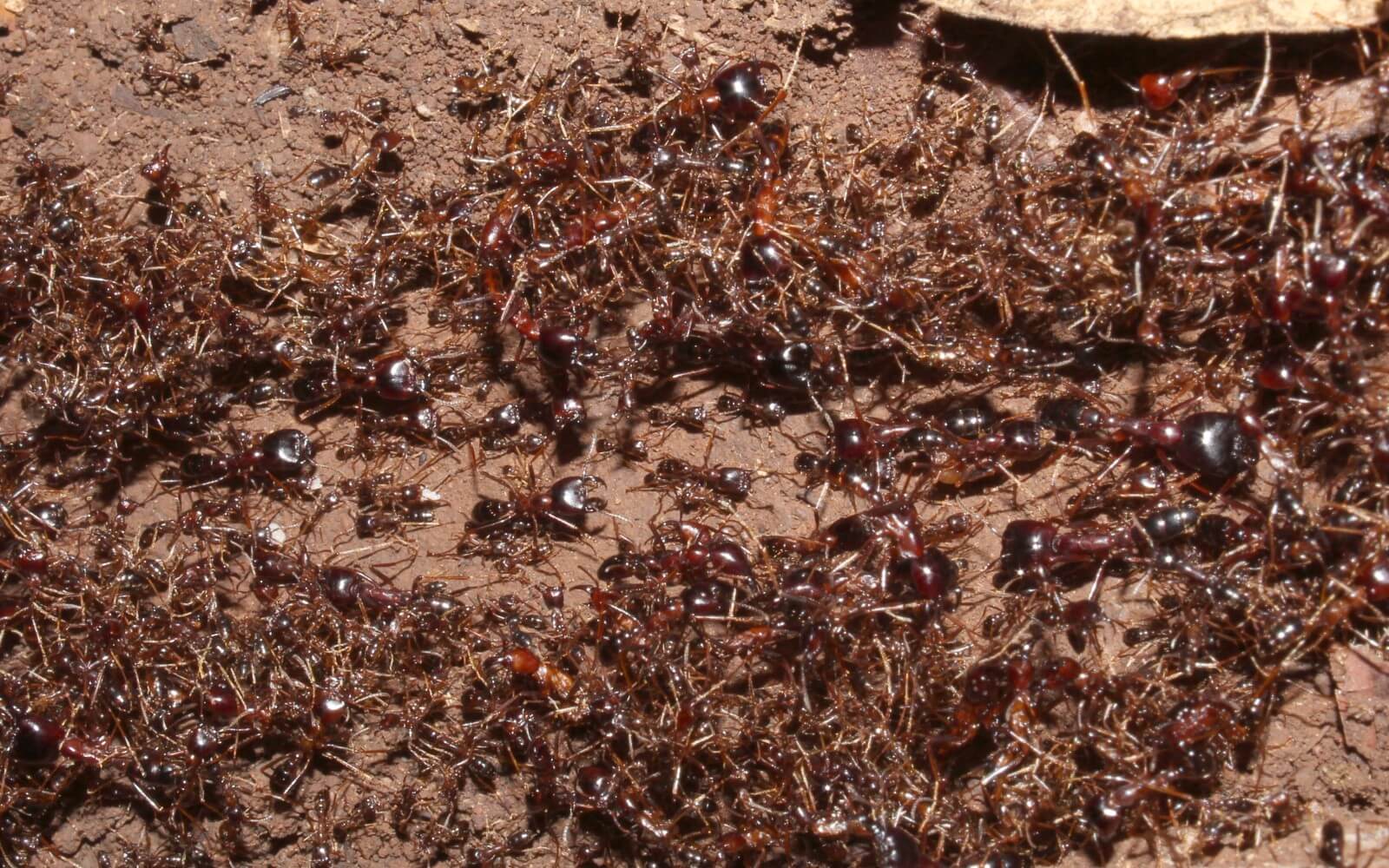
The nomadic African army ants, instead of building permanent nests, take their entire civilisation with them as they march across the land in vast columns. Notice (left of centre) the tiny nurse workers carrying white eggs, from one temporary resting place or ‘bivouac’ to the next. There are workers of all sizes, the largest of them taking defensive positions on the edge of the trail. A few oversized soldiers with massive mandibles can also be seen.
The cocktail ant (Crematogaster species) – called that because of its habit of raising its abdomen when alarmed, is a skilful arboreal engineer. These ants construct distinctive, melon-shaped nests in the branches of trees, using well-chewed vegetable matter mixed with their saliva to create a paper-mâché-like material. When the nest is disturbed, the colony swarms out, not just biting, but also extruding volatile defensive chemicals from their specialised rear end. This chemical weaponry, combined with their posturing, makes them formidable defenders of their tree-top homes.
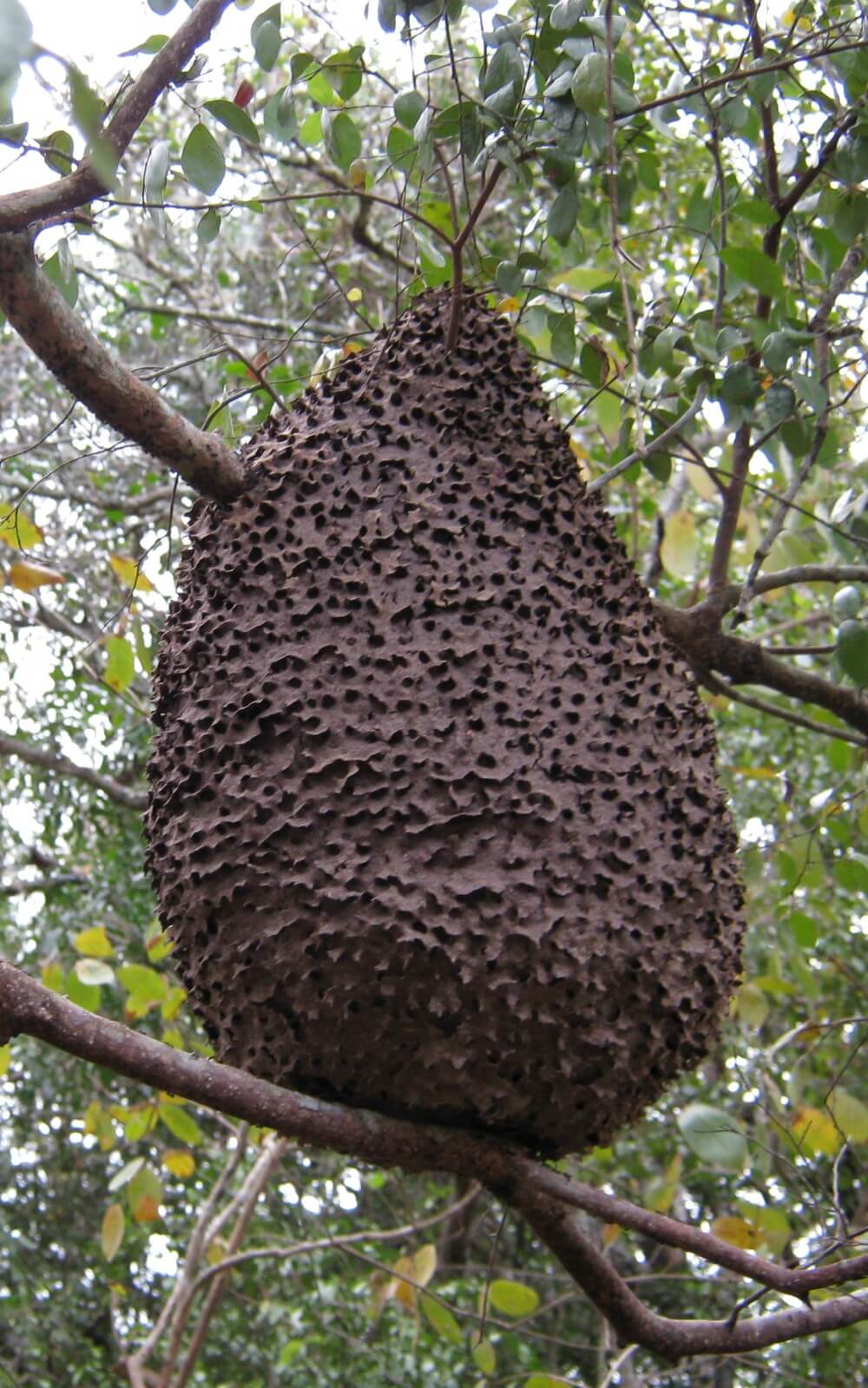
A cocktail ant nest, Umfolozi game reserve.
Paper wasps also build nests out of a papery substance. They chew wood fibres, mix them with their saliva, and then shape the resulting pulp into delicate, water-resistant cells. The structure is lightweight yet incredibly strong, providing a safe nursery for their developing larvae. Unlike ants, paper wasps do not form massive multi-caste societies. Instead, a dominant queen and her sisters cooperate to raise the broods. The females continuously add more hexagonal cells to the growing nest and feed the developing, carnivorous larvae pre-chewed meat from their insect prey.
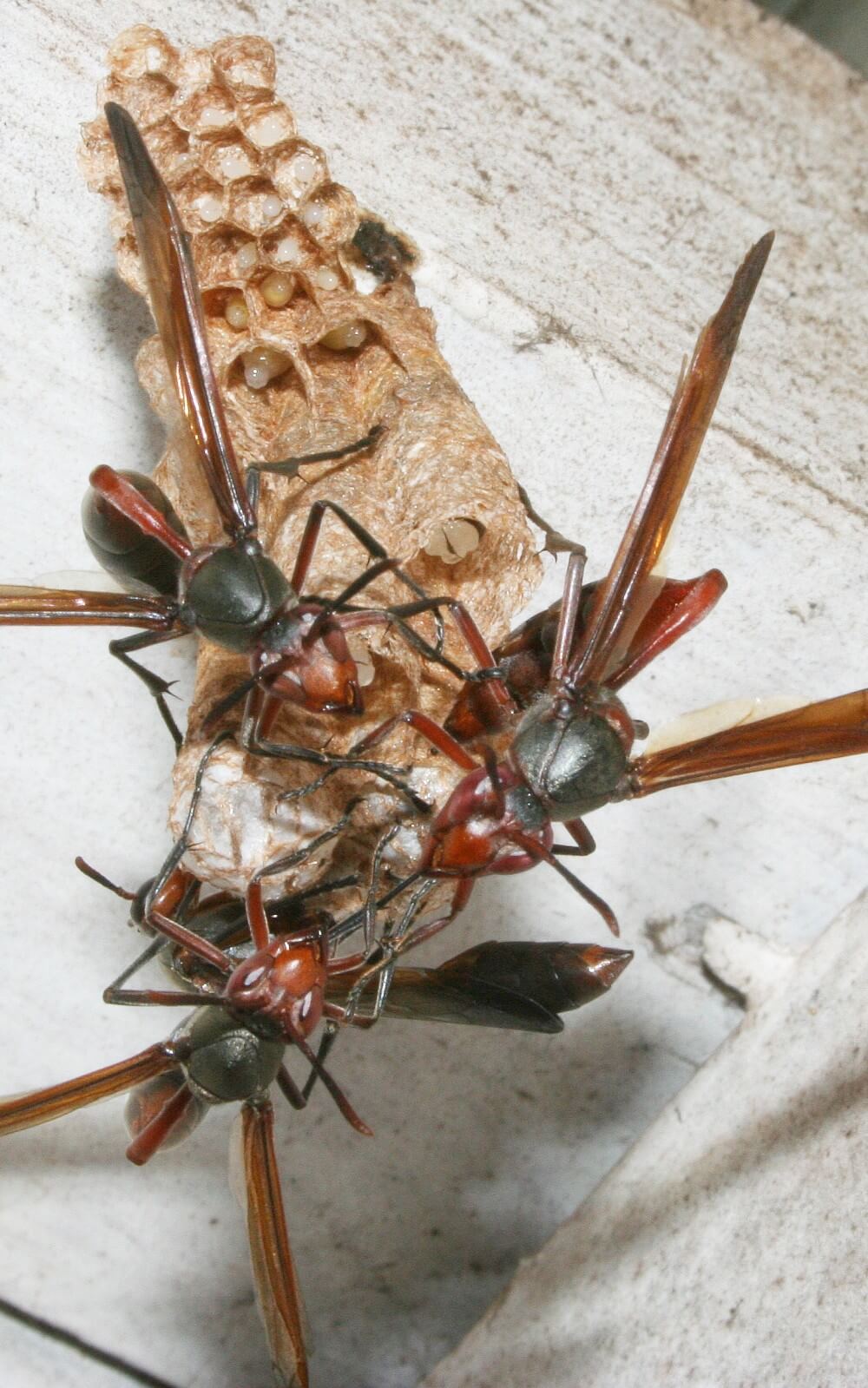
A paper wasp nest under the roof of our veranda in Pinetown.
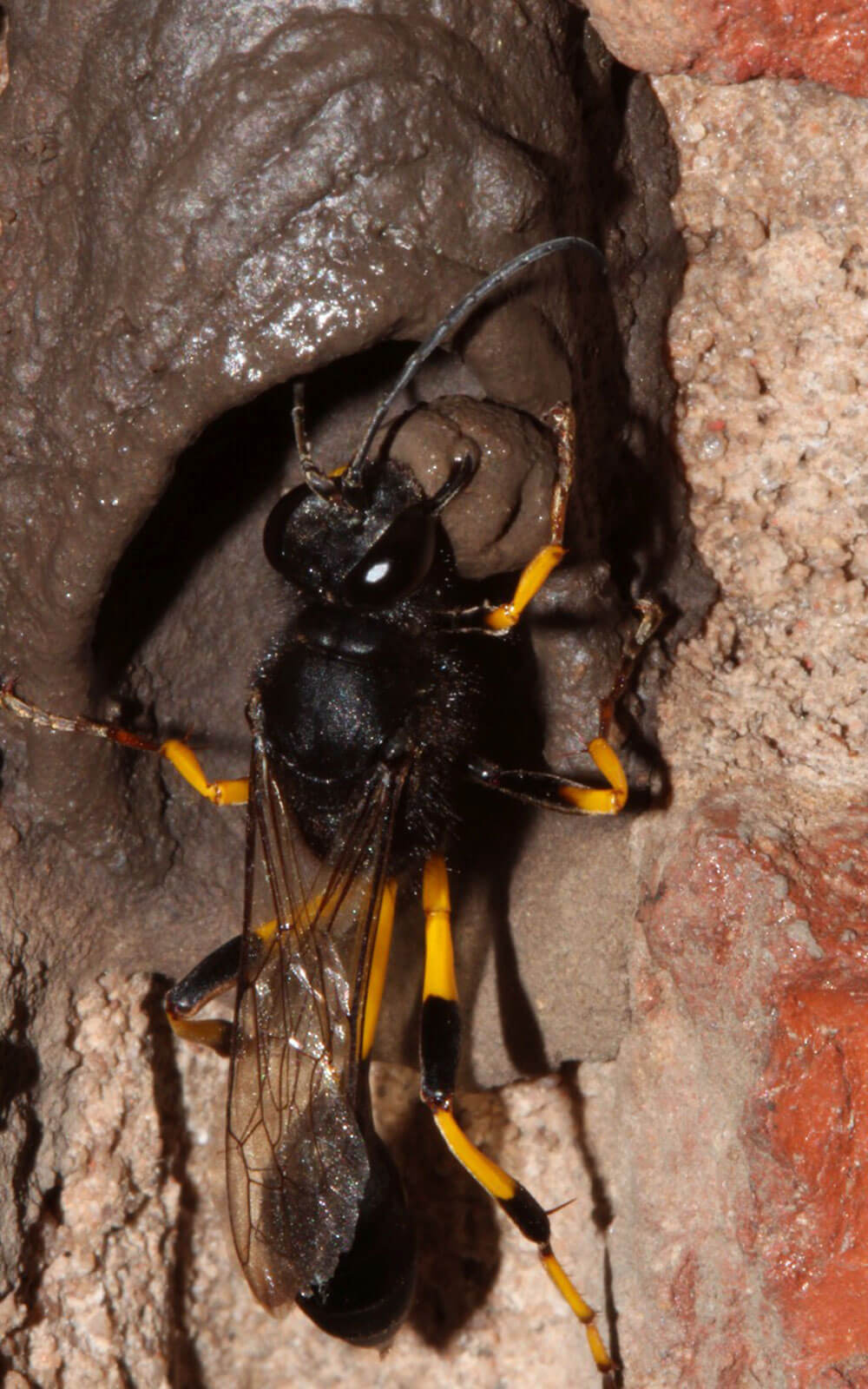
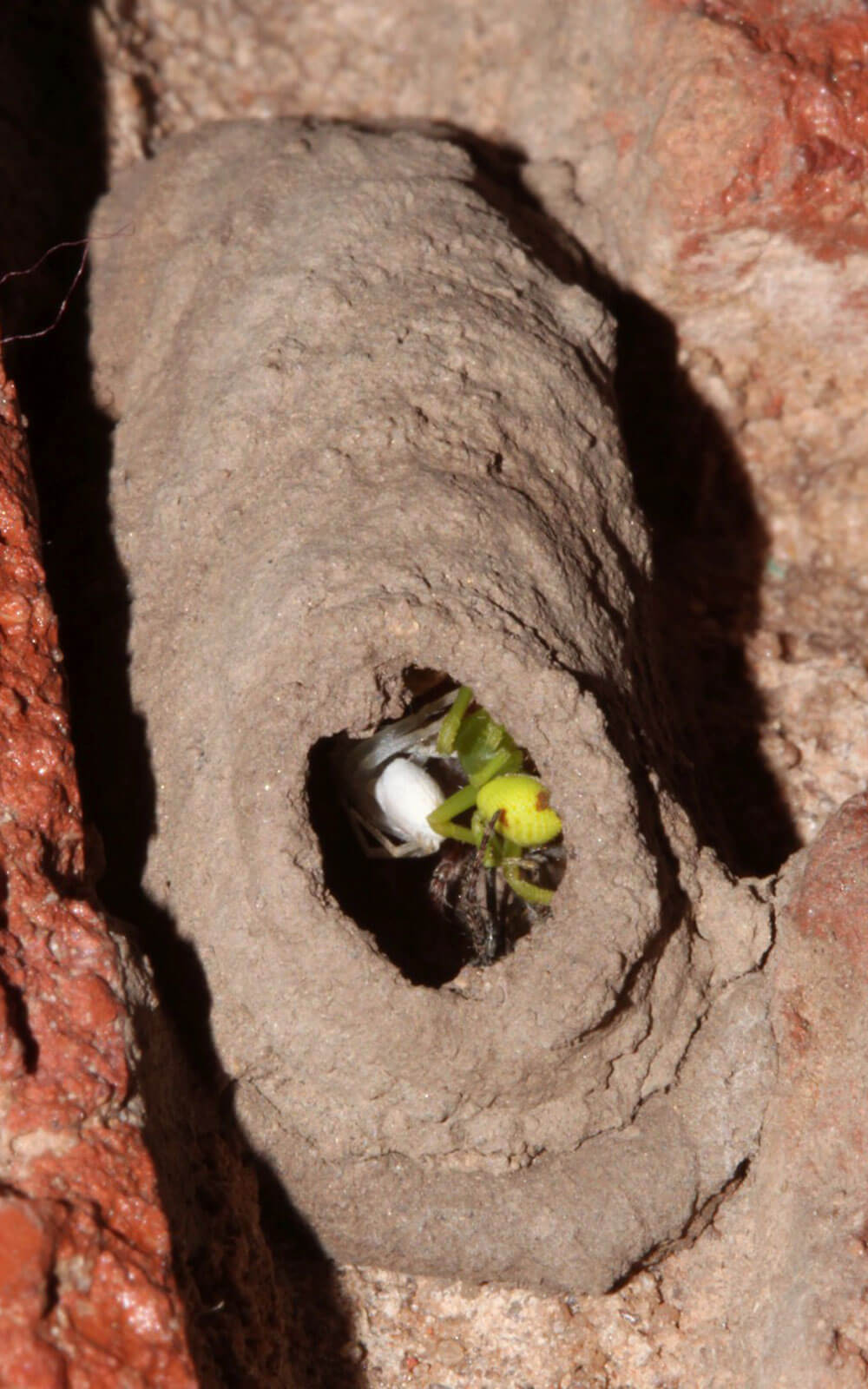
This mud dauber wasp is busy building a nest of mud. Two days later she has stocked the completed chamber with fresh, live food (immobilised spiders). After laying a single egg, she seals the cell entirely. The mother never meets her offspring, but the larva, safe inside its mud container, hatches to find an immediate, perfectly preserved food source waiting to sustain it to maturity.
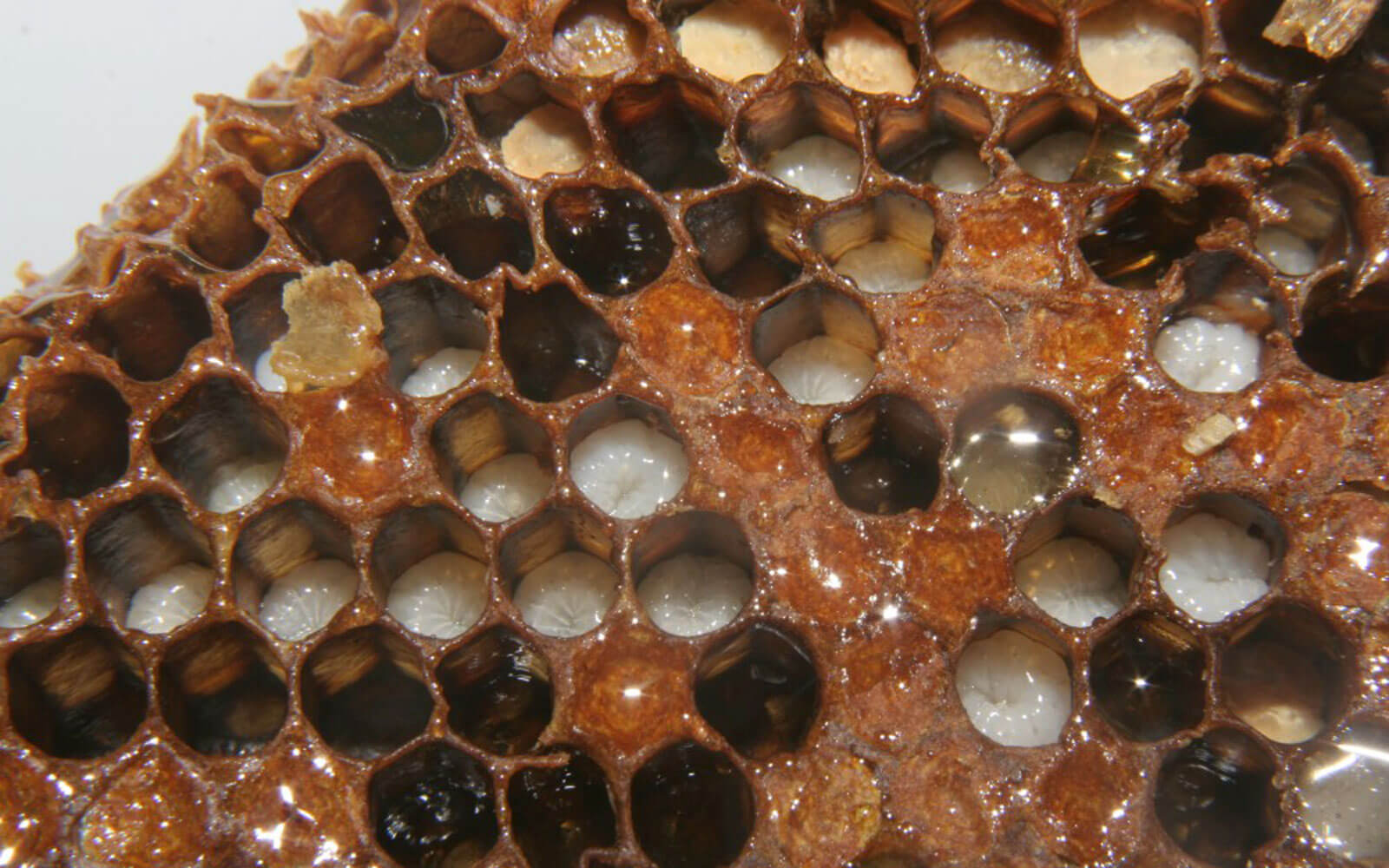
Bees also build nest of course – we all know about bee hives and their wax combs, so I won’t go into details. In wild hives brood cells (containing young bees of all ages: eggs to pupae) are interspersed with food cells (containing honey and ‘bee bread’). This ensures that new workers have immediate access to all the nutrients they need as soon as they emerge.
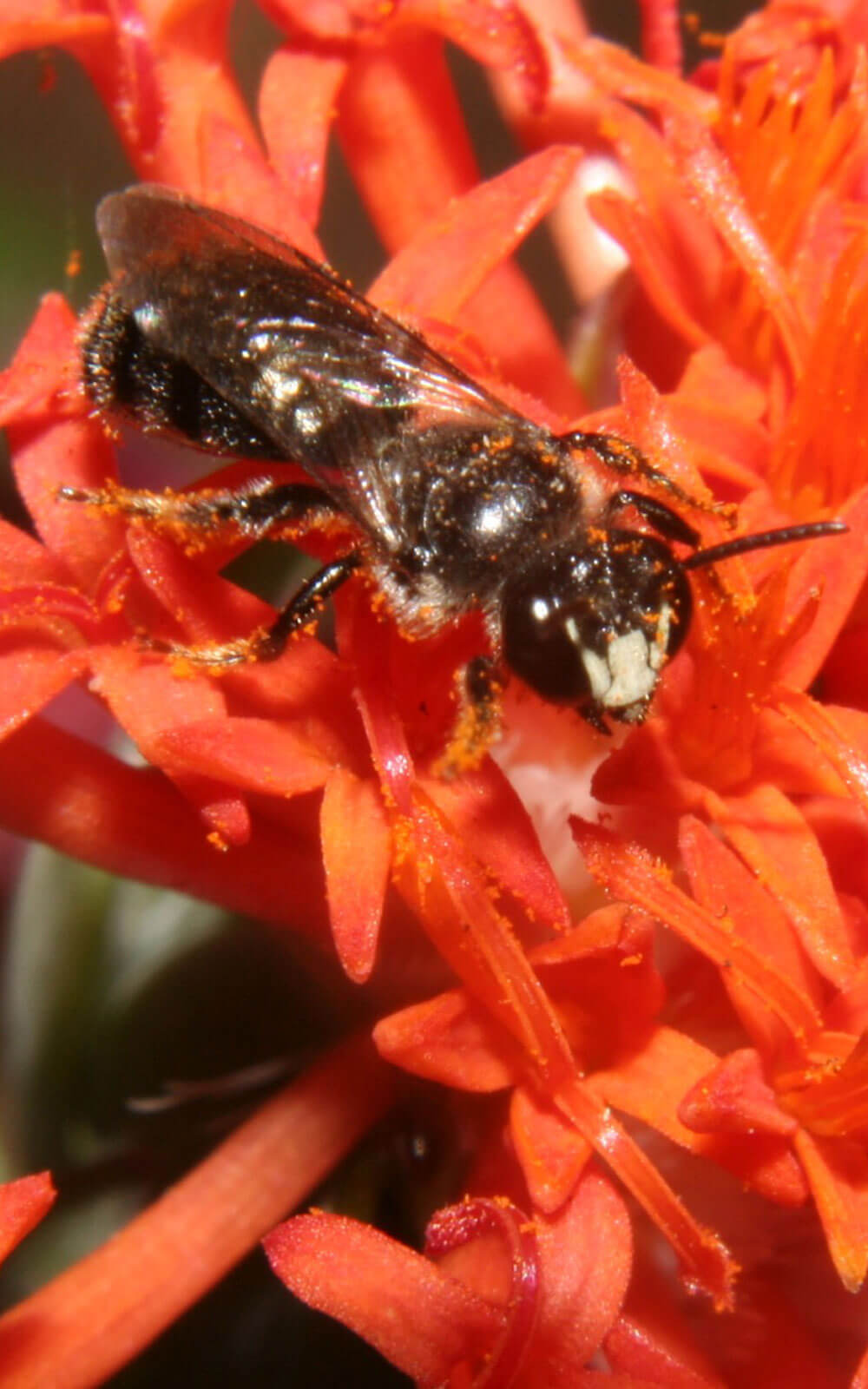
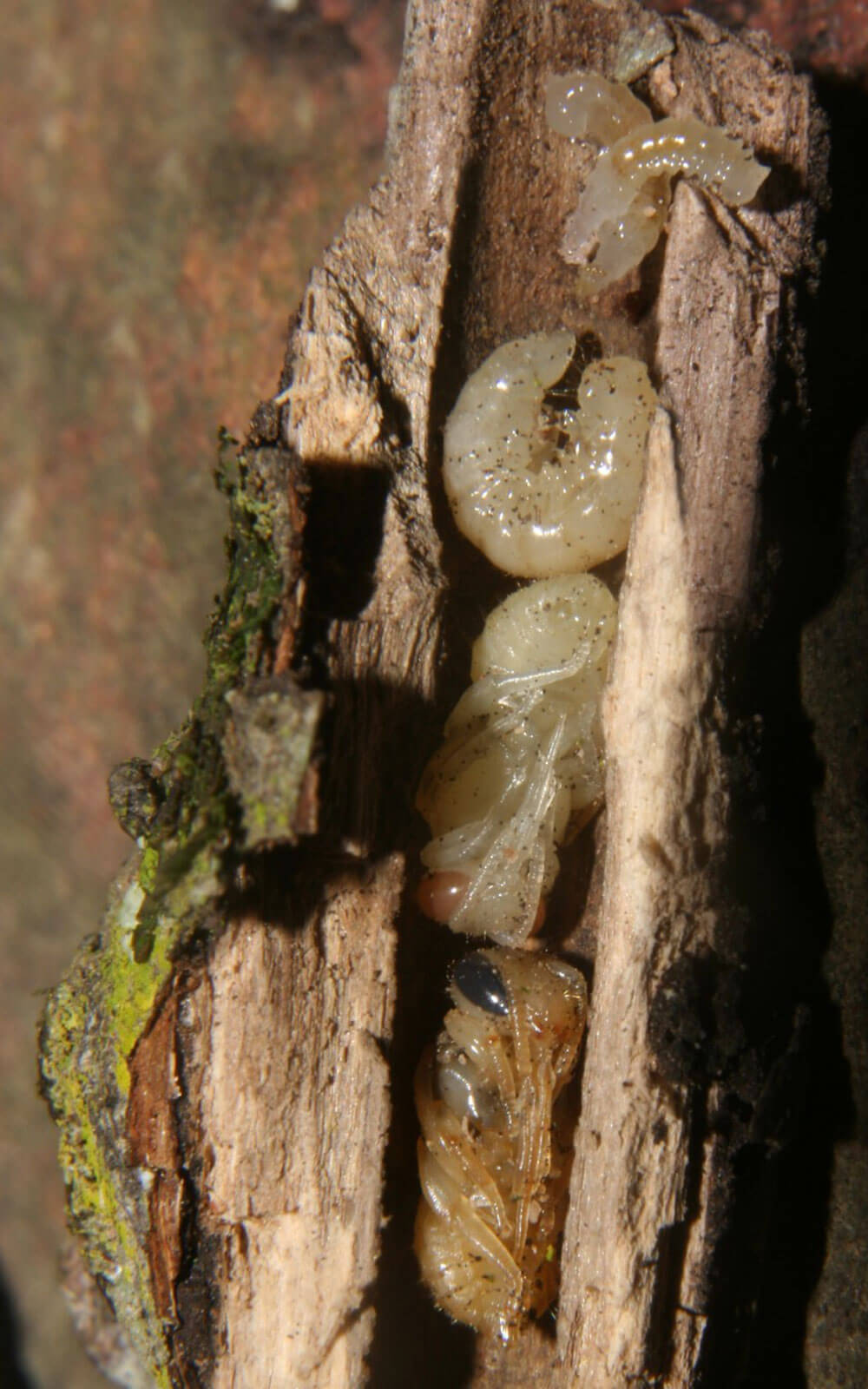
Though social insects provide the most spectacular examples of insect nesting behaviour, they are not the only insects that prepare a safe shelter for their offspring. Other insects also do this, and many other mothers feed, protect and groom their babies, like your pet cat or dog.
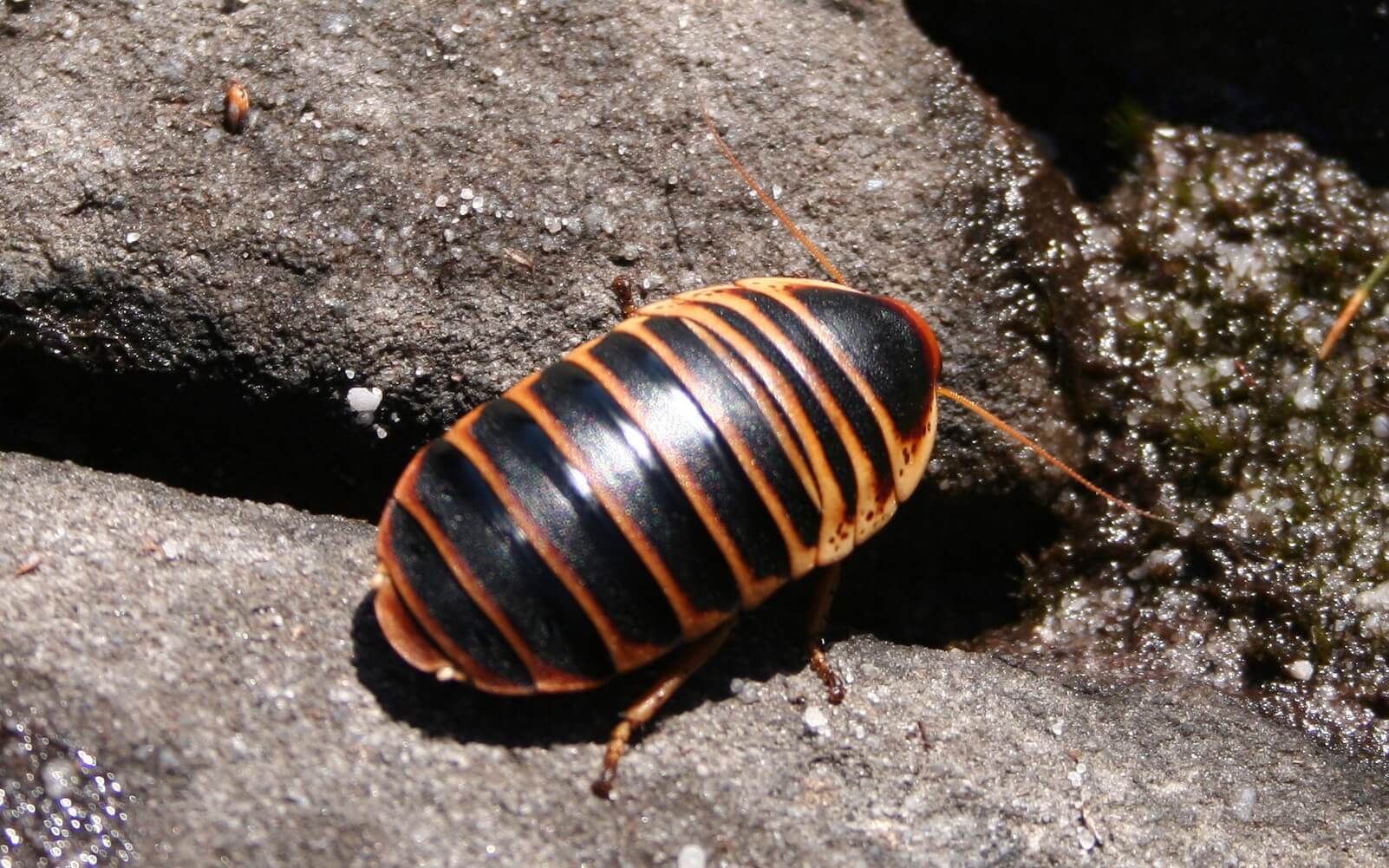
The Table Mountain cockroach gives birth to live nymphs and then actively guards and protects her offspring for a period after they are born, with family groups often found living together in hidden cracks and crevices.
Photo: Ian Turk on Flickr
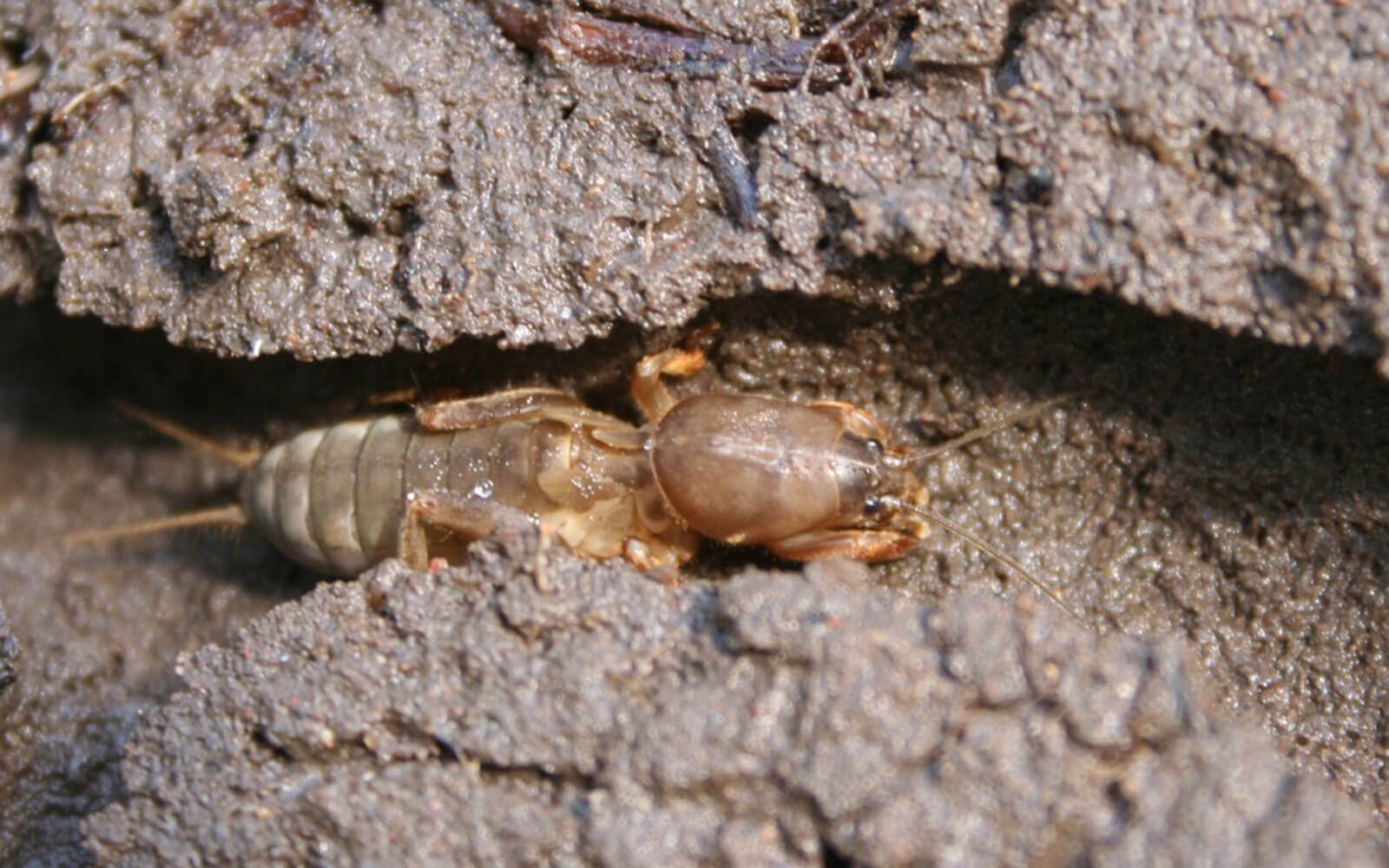
Mole Crickets use their shovelling front legs to tunnel through the soil, creating shallow feeding galleries just beneath the surface, feeding on plants and roots, as well as insects and other soil animals. They also dig deeper to excavate specialised chambers where the females lay their eggs. Gryllotalpa females are attentive parents, routinely returning to the nesting chamber to actively guard the eggs and care for the hatchlings until they are ready to venture out on their own.
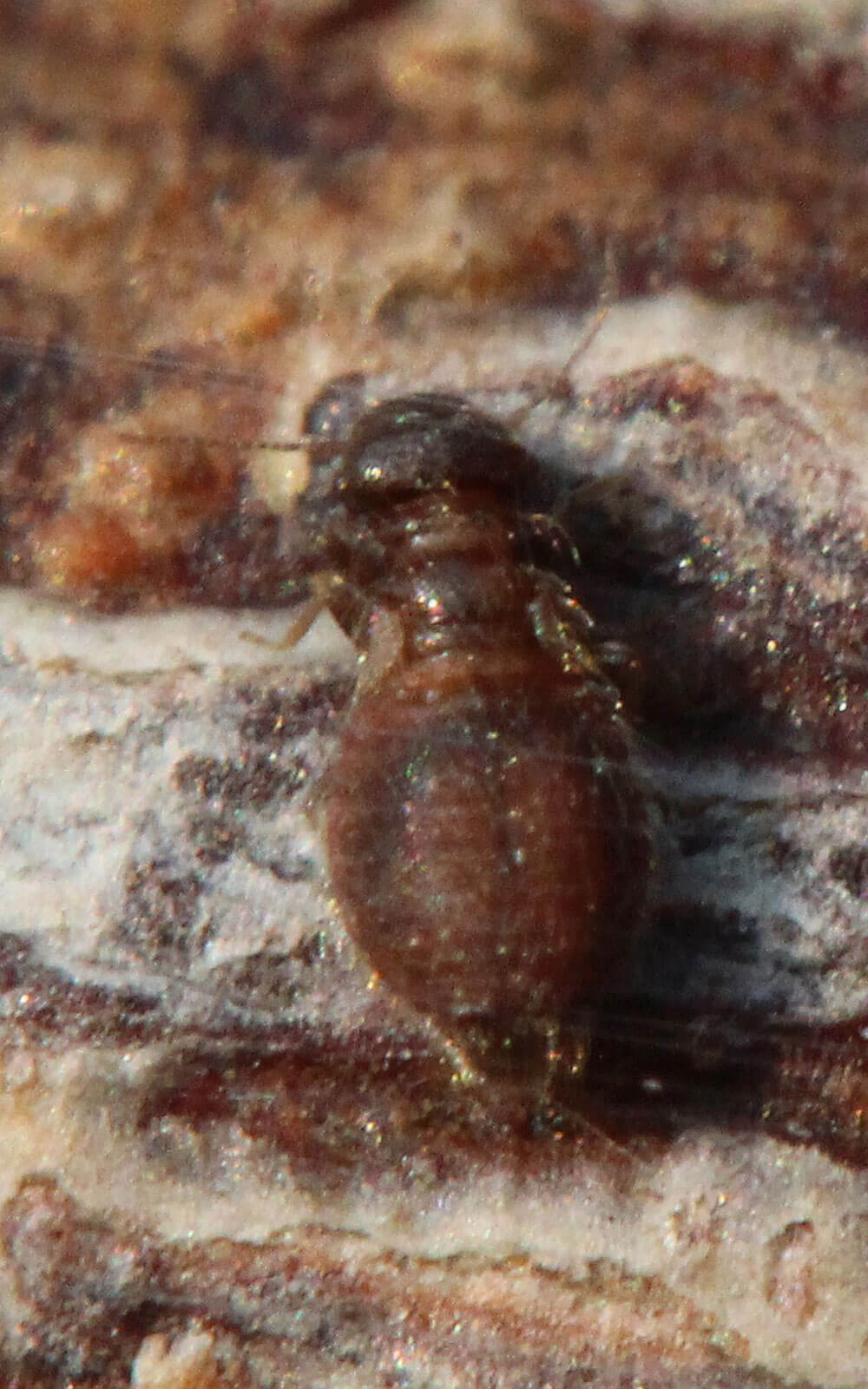
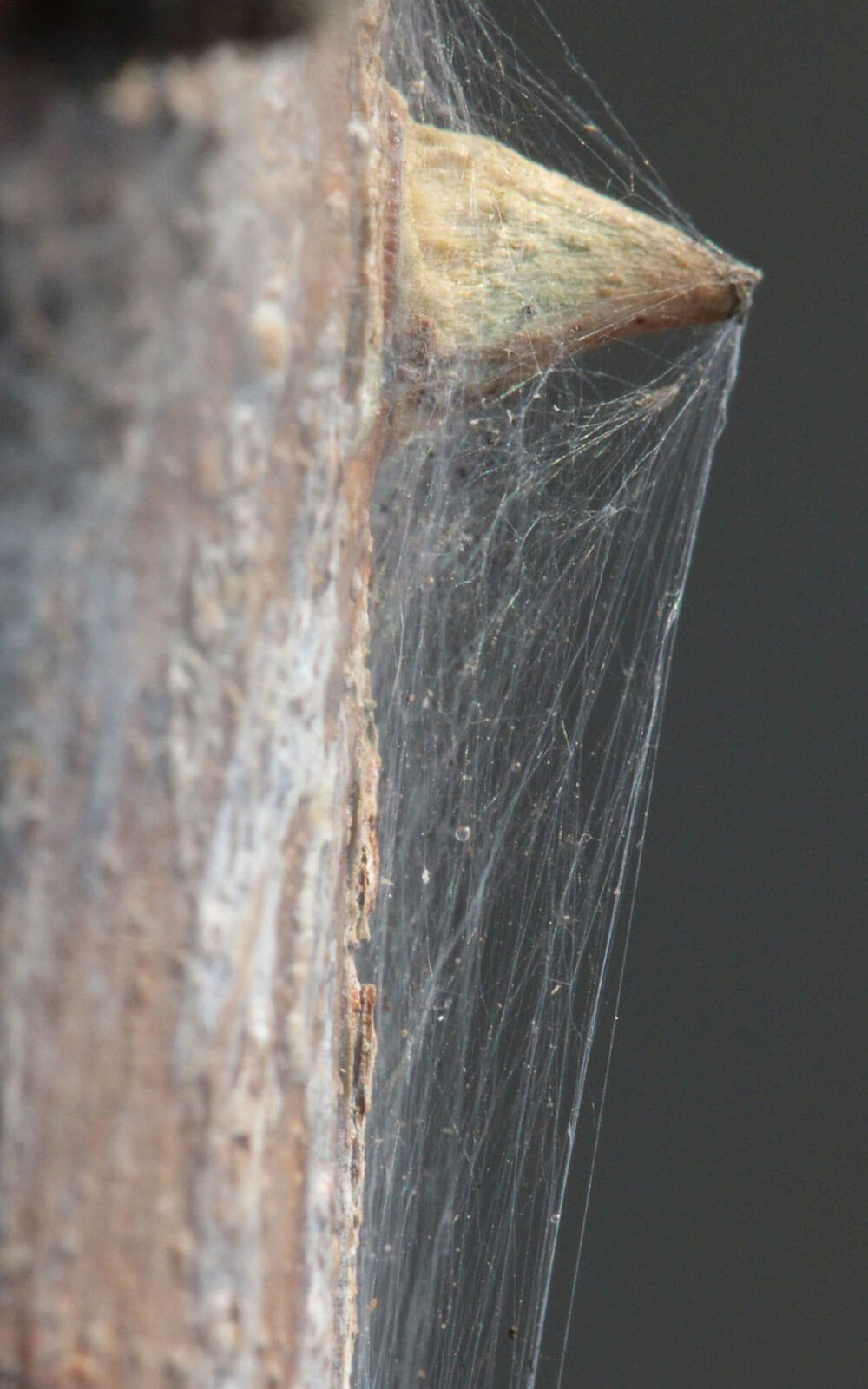
The tiny, often overlooked bark lice (or psocids) exhibit a fascinating, communal form of nesting behaviour. These obscure little creatures typically feed on algae, fungi, and lichen on tree bark. They work together to spin sheets of fine, white silk webbing that covers branches – including a thorn in this case. Underneath the tent, the colony lives, feeds, and raises its young. The silk shields the delicate nymphs from predators and drying air.
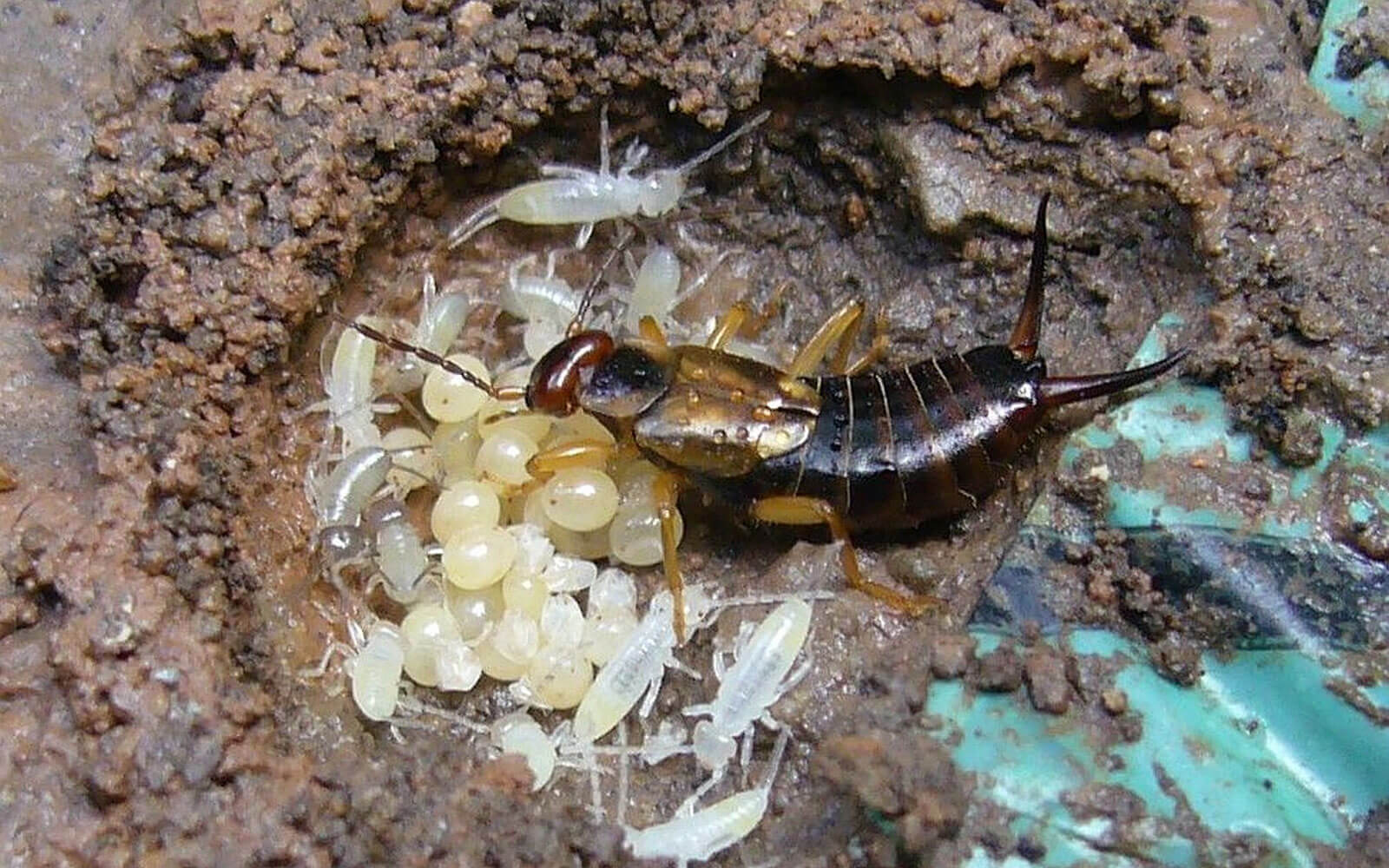
Earwigs are one of the best examples of insect maternal devotion
Photo: Nabokov
The female earwig digs a small, protective burrow and lay her eggs inside. She then grooms the eggs constantly to prevent fungal infection, and protects them from predators, including other earwigs! Even after the nymphs hatch, she continues to guard and feed them for weeks, an extraordinary level of attention usually associated with mammals, not insects.
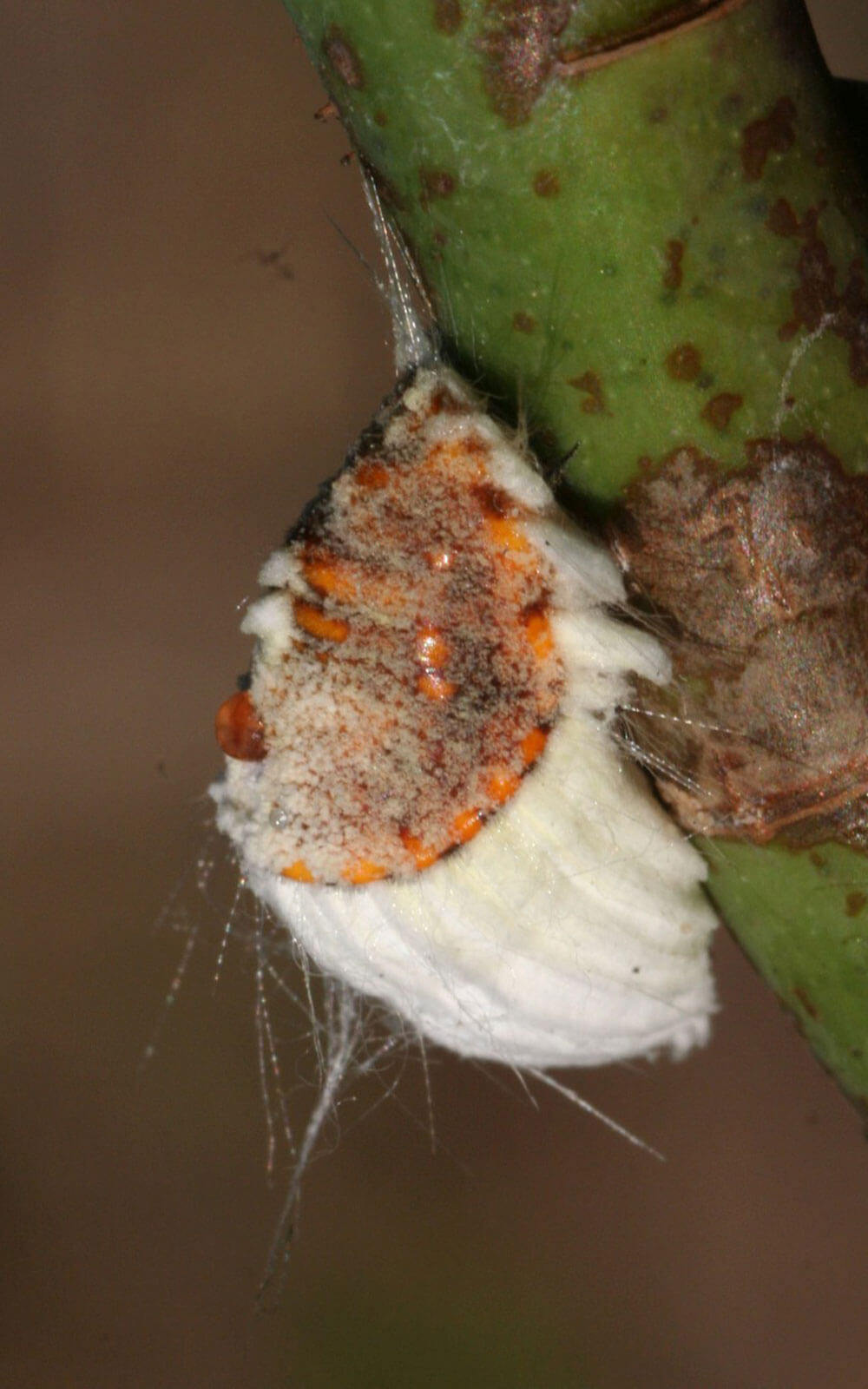
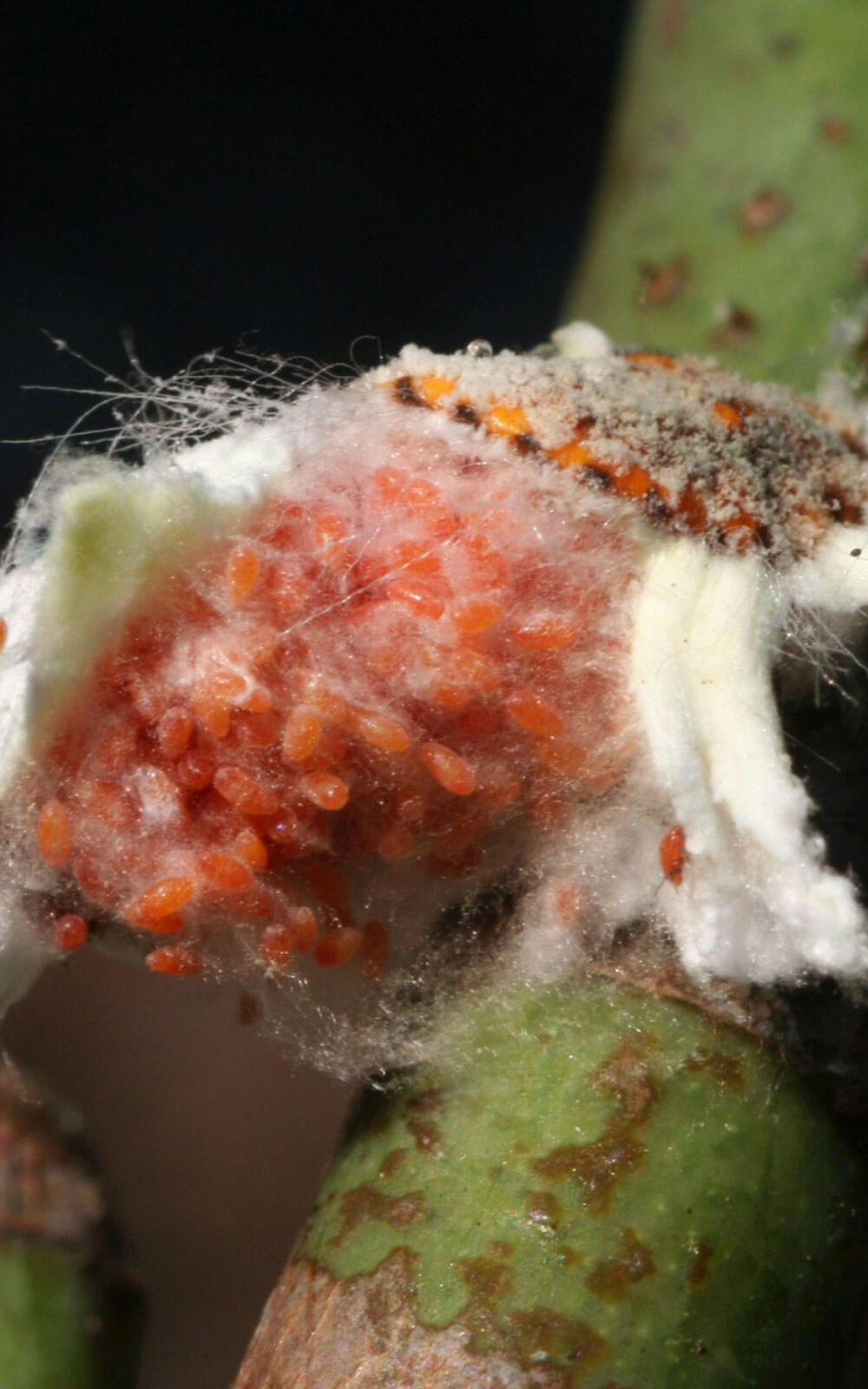
This cottony cushion (or fluted) scale bug does not exactly build a nest, but rather carries a white, fluted egg sac around with her as she feeds. The fluffy pouch holds bright orange eggs and nymphs, and is made of protective wax. Intriguingly, there is often no father required: this bug is a hermaphrodite—meaning it possesses both male and female reproductive organs—allowing it / her to self-fertilise and so reproduce asexually.
So far we’ve looked at insects that build their own nests. Let’s end with stick insects (order Phasmatodea), which outsource the nesting business. Many phasmids use deception to ensure their eggs are safely collected and protected by others. Their eggs are supplied with a small, fatty structure called a capitulum which mimics the elaiosome found on plant seeds. Harvester ants are tricked into collecting these eggs, and carrying them back to their own nest along with other seeds. The ants eat the fatty part, after which the tough egg is simply discarded in the underground refuse pile, where the stick insect safely hatches among the colony’s waste, protected from predators.
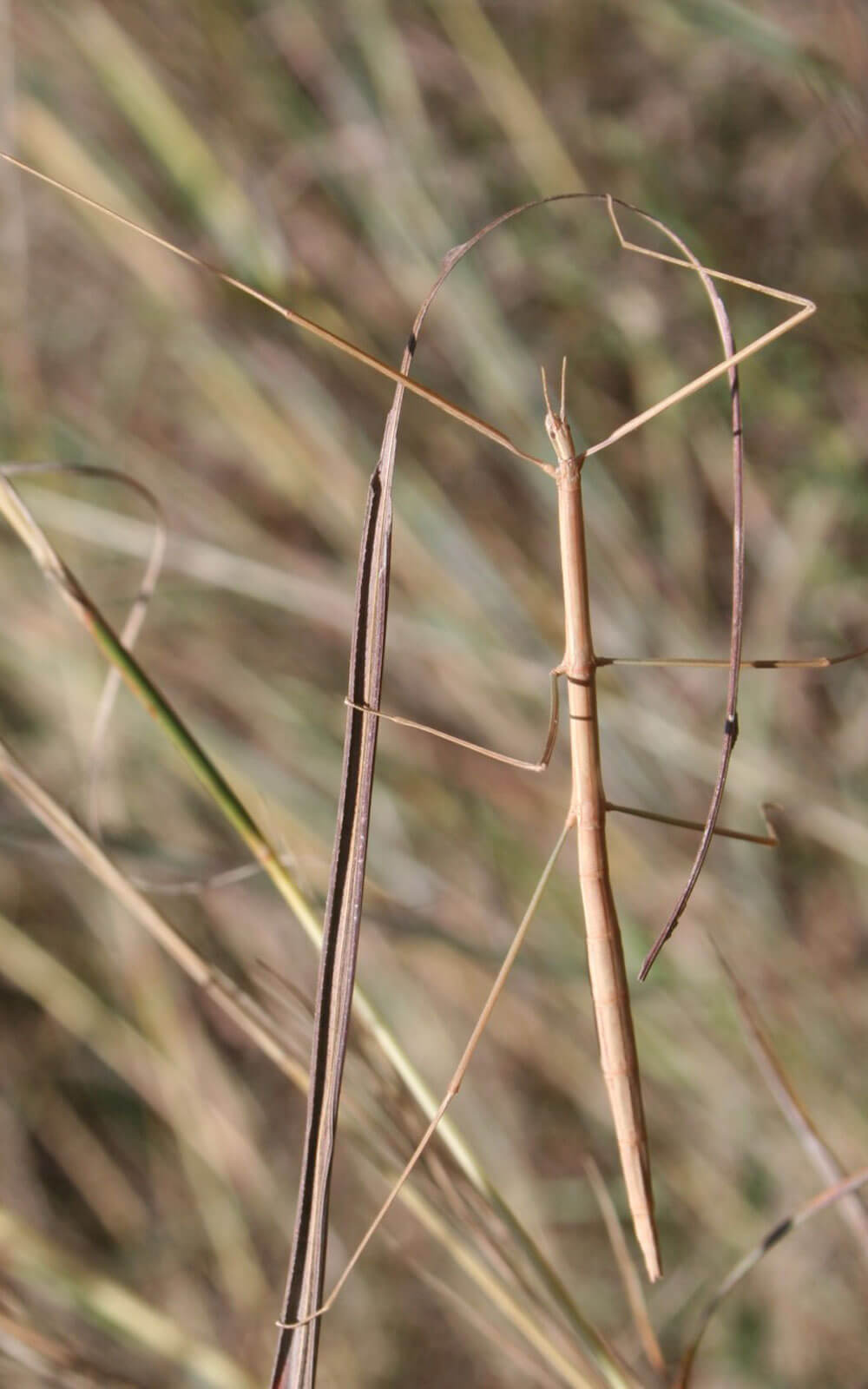
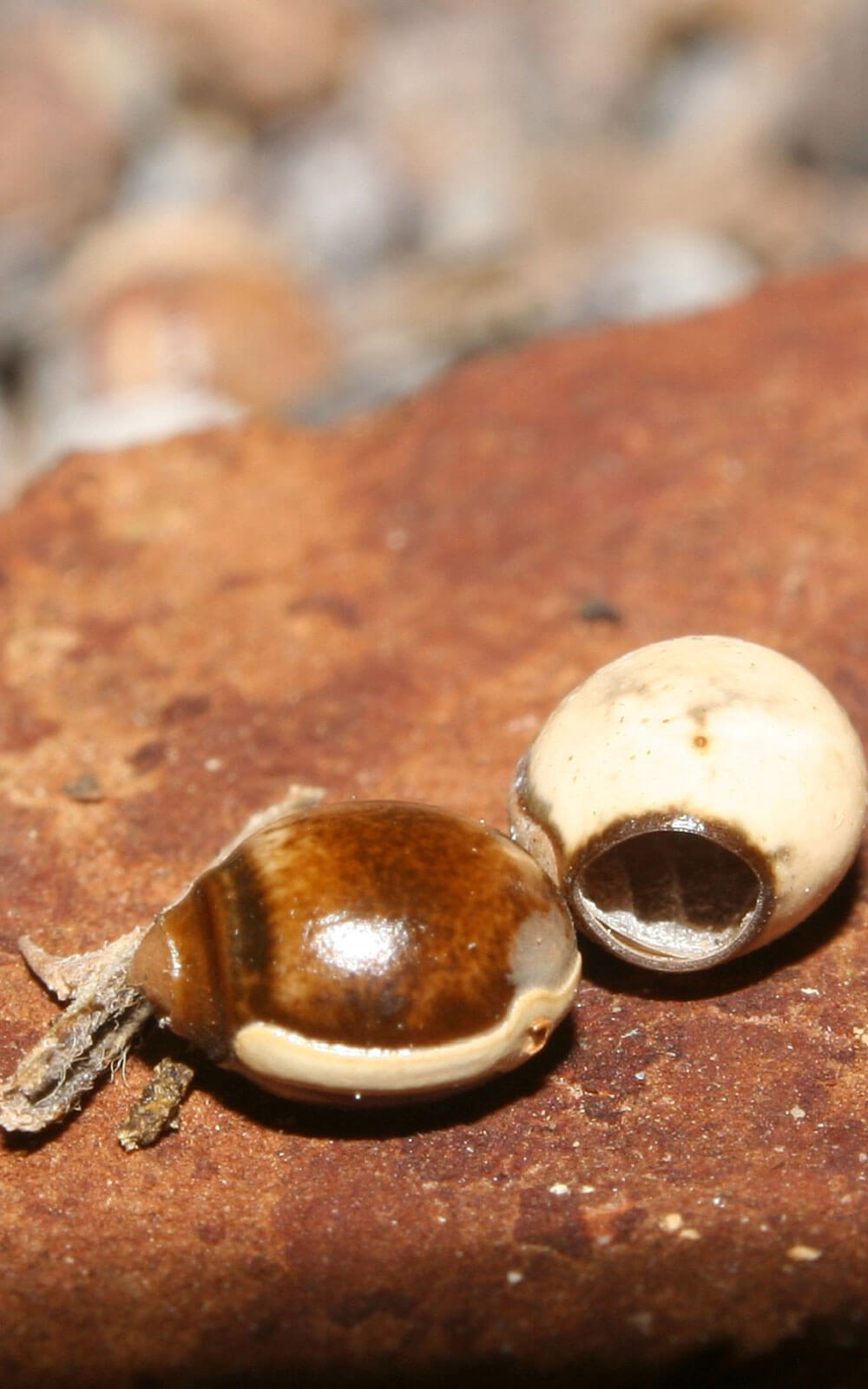
A beautiful grass stick insect spotted in the Drakensberg, and two eggs (one hatched) of the Australian giant prickly stick insect.

About the author
Marlies Craig is an epidemiologist currently working in Climate Change and Health at the Africa Health Research Institute. Previously she worked for the United Nations’ Intergovernmental Panel on Climate Change. Though she did originally study Biology and Entomology, her love affair with insects is very personal. In her book What Insect Are You? – Entomology for Everyone, she shares that passion with young and old. She also started a non-profit organisation called EASTER Action which promotes awareness and action on biodiversity, climate change, and sustainable living, see EASTERaction.org.